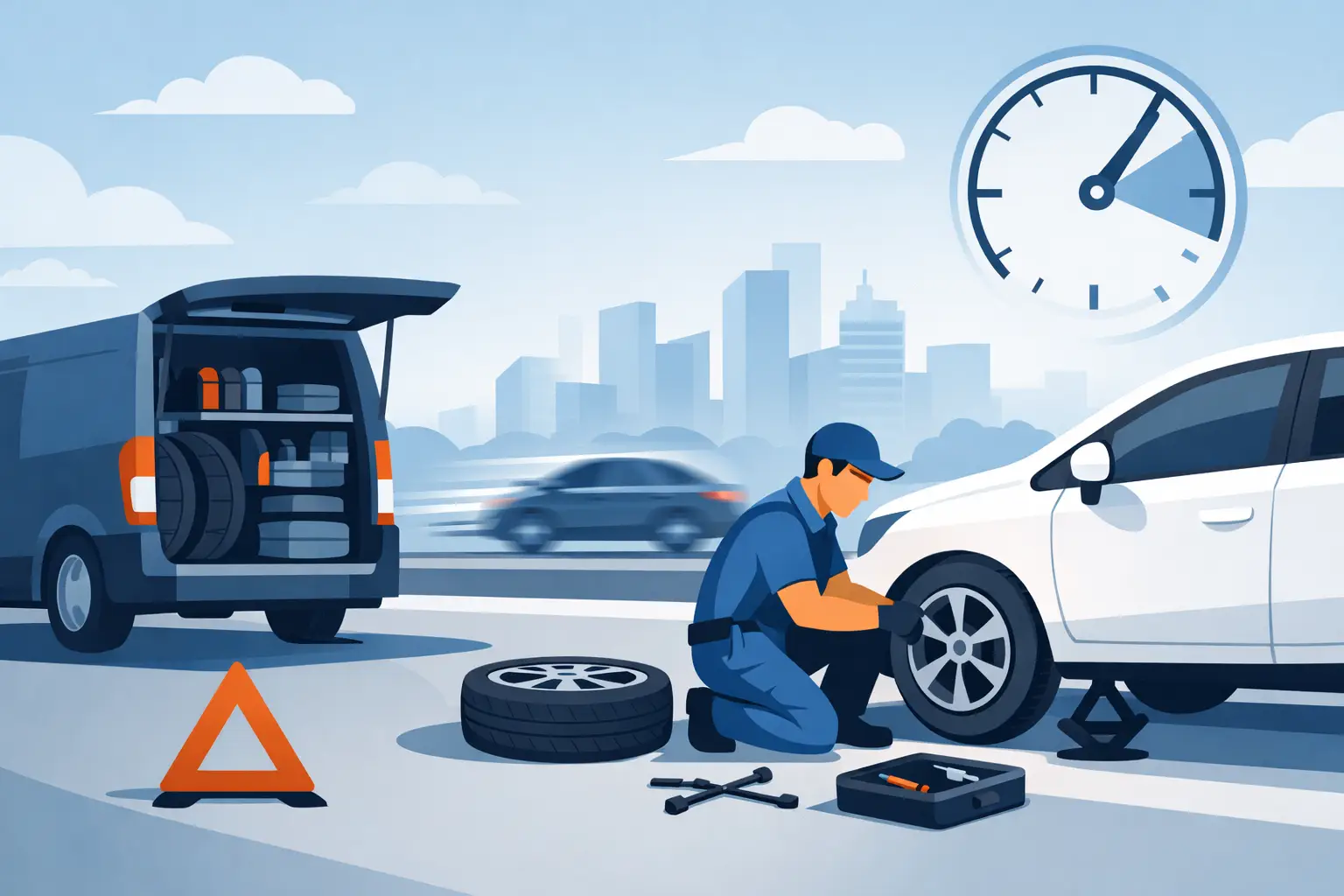

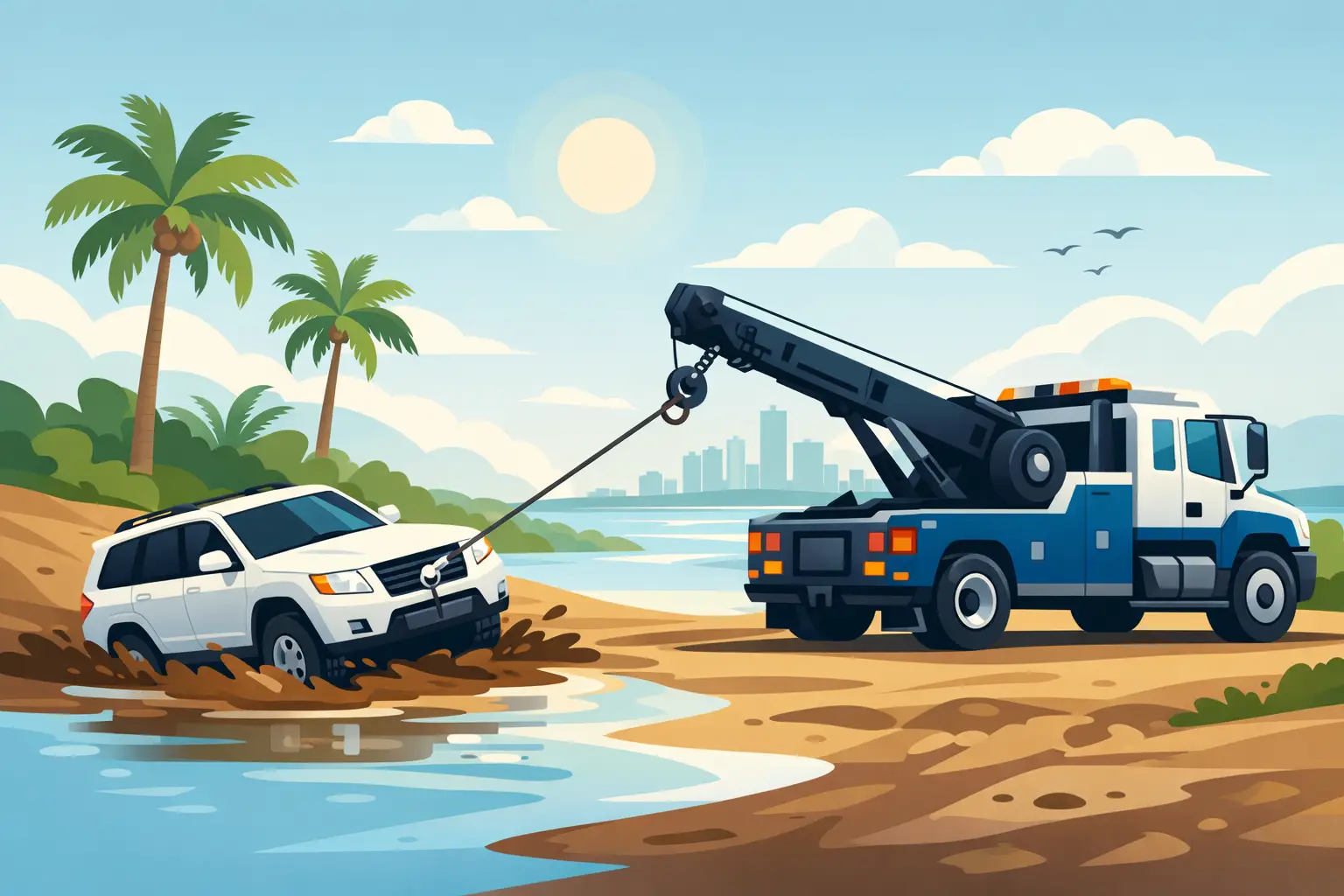
A car does not have to be totaled or deeply off-road to need a winch out recovery service. In South Florida, it can be as simple as one wrong turn onto a soft shoulder, a tire slipping into a muddy canal edge, or a vehicle sinking into wet grass after heavy rain. When your car cannot drive back onto solid ground under its own power, the right recovery equipment matters.
When a winch out recovery service is the right call
A standard tow is not always enough. If your vehicle is stuck, angled awkwardly, or sitting in a spot where it cannot be safely pulled by a normal hookup alone, a winch out recovery service is usually the safer option. The goal is to recover the vehicle carefully first, then decide whether it can be driven or needs towing.
This happens more often than many drivers expect in Miramar, Pembroke Pines, Weston, Hollywood, and Fort Lauderdale. South Florida roads, shoulders, parking areas, and undeveloped lots can shift fast after storms. Wet grass turns slick. Sand gives way under the tires. A shallow ditch becomes just deep enough to trap a front end. Even a low-speed slide off the roadway can leave a vehicle stuck hard.
A winch-out is commonly needed when a car, SUV, pickup, or work vehicle ends up in mud, sand, a ditch, a soft shoulder, a construction edge, or a parking area with poor ground support. It is also useful after minor accidents where the vehicle is no longer positioned safely for a standard tow.
What happens during a winch out recovery service
Most drivers just want one answer – how fast can you get my vehicle out without making things worse? That is exactly why the recovery process matters.
The first step is assessing the position of the vehicle. The operator checks the angle, ground conditions, available anchor points, and whether the wheels, suspension, or undercarriage are at risk. A proper recovery is not just about pulling hard. Too much force from the wrong direction can damage the bumper, steering components, or frame areas.
Next comes equipment setup. The truck is positioned on stable ground, and the winch line is attached to a secure recovery point. In some situations, the operator may need to control the pull slowly in stages to keep the vehicle straight and reduce strain. Once the vehicle is back on stable pavement or firm ground, the driver can determine whether it is safe to continue driving or if a tow is the smarter next step.
That last part matters. Some vehicles come out clean and can get back on the road. Others may have tire, suspension, alignment, or fluid issues after getting stuck. It depends on how long the vehicle sat, what it was stuck in, and whether there was any impact when it left the roadway.
Why local conditions make recovery work different in South Florida
South Florida creates recovery problems that look minor at first but can get worse fast. Afternoon storms can soak a shoulder in minutes. Neighborhood retention areas, canal-side roads, grassy medians, and sandy pull-offs can trap a vehicle before the driver realizes how soft the ground is.
Tourists and delivery drivers run into this often because they are following GPS, trying to turn around in unfamiliar areas, or pulling off to take a call. One tire leaves the pavement, then the rest of the vehicle follows. In some cases, trying to accelerate out only buries the tires deeper.
This is where local experience helps. Recovery in Broward County is not the same as recovery in dry inland areas. The operator has to account for rain-soaked ground, tight residential streets, traffic flow, and limited room to work. A fast response matters, but so does knowing how to recover the vehicle without creating a bigger problem.
Common situations that call for a winch out
Many people assume a winch-out only applies to off-road trucks or major accidents. In reality, most calls are everyday roadside situations.
A commuter may slide off the edge of the road during a storm. A family vehicle may get stuck leaving a soccer field or park on wet grass. A delivery van may sink into a soft lot while trying to make a stop. A driver may turn too sharply into a dirt or gravel shoulder and lose traction immediately. Even apartment complexes and shopping center overflow areas can create recovery calls after rain.
There are also cases where the vehicle is technically accessible but still unsafe to pull with a basic tow setup. If the angle is wrong, if the front end is lodged low, or if the car is too close to a ditch, wall, or embankment, controlled winching is usually the safer approach.
Why trying to get out on your own can make it worse
It is natural to try rocking the car, pressing the gas, or asking a passerby for a pull. Sometimes that works on a very light stick. Often, it does not.
Spinning the tires can dig the vehicle deeper into mud, sand, or soft ground. Using an untrained pull from another vehicle can damage both vehicles or snap a strap under load. If the car is angled near a canal edge, slope, or drainage ditch, one bad pull can shift the vehicle into a much more dangerous position.
There is also the issue of hidden damage. If the undercarriage is already resting on the ground, adding more throttle may scrape lines or components underneath. What started as a recovery job can turn into a towing and repair bill that could have been avoided.
Calling for professional help early is usually the cheaper move and almost always the safer one.
What to expect when you call for help
When you need roadside recovery, speed matters, but clear information helps the dispatcher send the right truck. Be ready to explain whether the vehicle is in mud, sand, water-adjacent ground, a ditch, or a shoulder. Let them know if the car is blocking traffic, if it has accident damage, or if the wheels are turned awkwardly.
It also helps to share your exact location as clearly as possible. In South Florida, similar-looking roads and entrances can delay access if the location is vague. Landmarks, nearby intersections, gated access instructions, and photos can all help.
A dependable company will focus on getting the right equipment to you quickly and handling the vehicle with care once on site. That means a practical plan, not guesswork. If towing is needed after recovery, that should be handled without making you start over with a second call.
Fast service matters, but careful recovery matters more
No driver wants to sit stuck on the roadside in heat, rain, or traffic. Quick dispatch is a real priority, especially at night or in bad weather. But there is a difference between fast arrival and rushed work.
A proper winch out recovery service should balance urgency with control. The vehicle needs to come out without unnecessary damage. The work area needs to be managed safely. And if the car cannot continue, the transition to towing should be straightforward.
That is especially important for families with kids, working drivers trying to stay on schedule, and fleet vehicles that cannot afford long downtime. Getting the vehicle out is only part of the job. Reducing stress is the other part.
Winch out recovery service for cars, trucks, and fleet vehicles
Recovery needs vary by vehicle type. A compact car stuck in wet grass requires a different approach than a loaded work van or pickup. Weight distribution, tire position, clearance, and ground pressure all affect the recovery plan.
For commercial drivers and fleet operators, these calls can disrupt routes, schedules, and customer commitments. A local provider that handles both recovery and towing can save time when the vehicle needs more than a pull back onto the road. That is one reason many South Florida drivers and businesses keep a dependable recovery company in mind before an emergency happens.
ITow&Recovery serves drivers across Miramar, Pembroke Pines, Hollywood, Weston, Fort Lauderdale, and surrounding Broward County areas with 24/7 roadside and towing support when vehicles get stuck and need professional recovery.
If your vehicle is stuck, the next step is simple
If the tires are spinning, the vehicle is sinking, or the angle feels wrong, stop trying to force it out. A fast call for the right help can protect your vehicle, your time, and your safety. Whether you are stuck in mud after a storm, buried in sand near a shoulder, or hanging at the edge of a ditch, the right recovery response can turn a stressful moment into a manageable one.
When your vehicle cannot get back to solid ground on its own, the best move is to get experienced help on the way and let the recovery be done the right way.