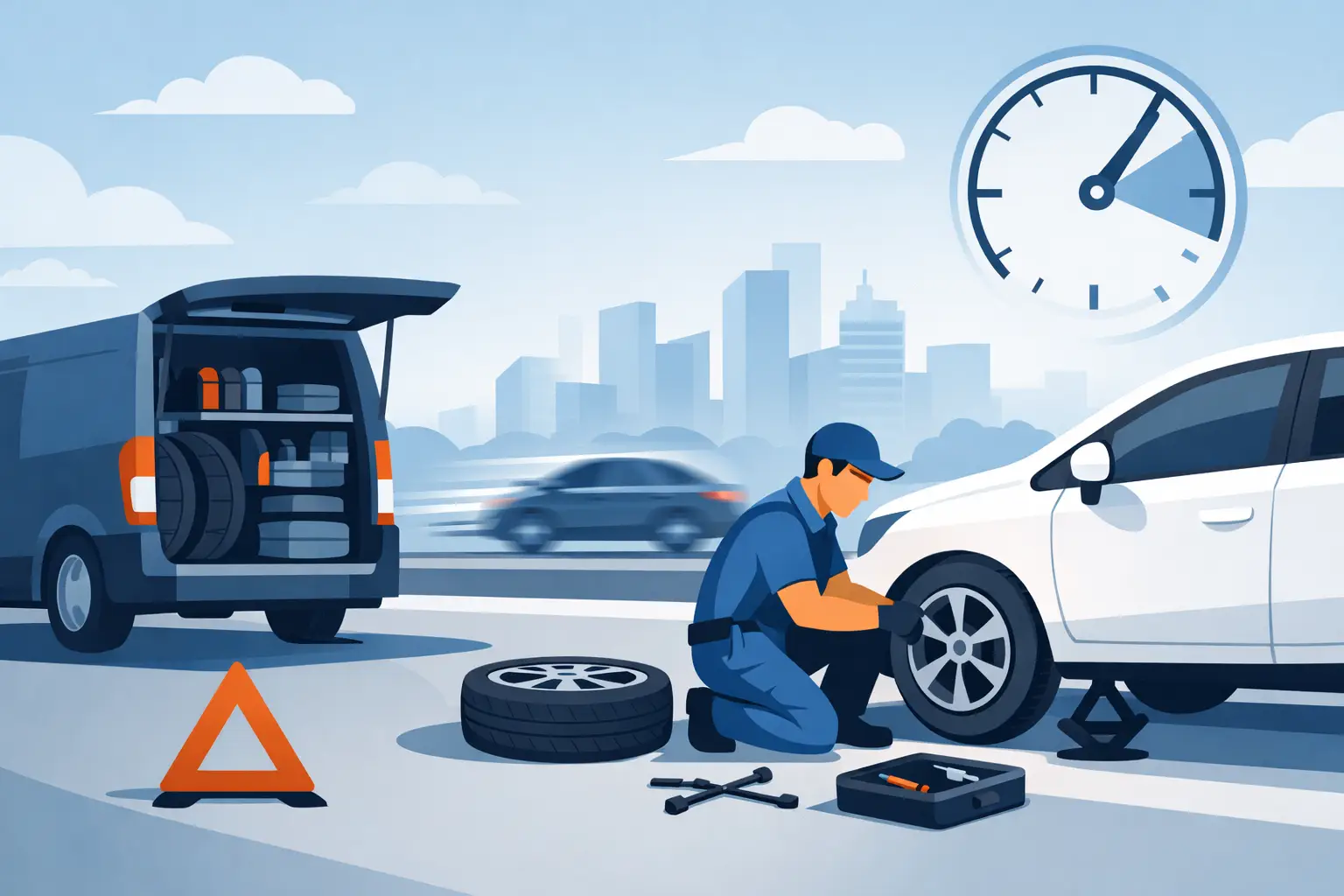

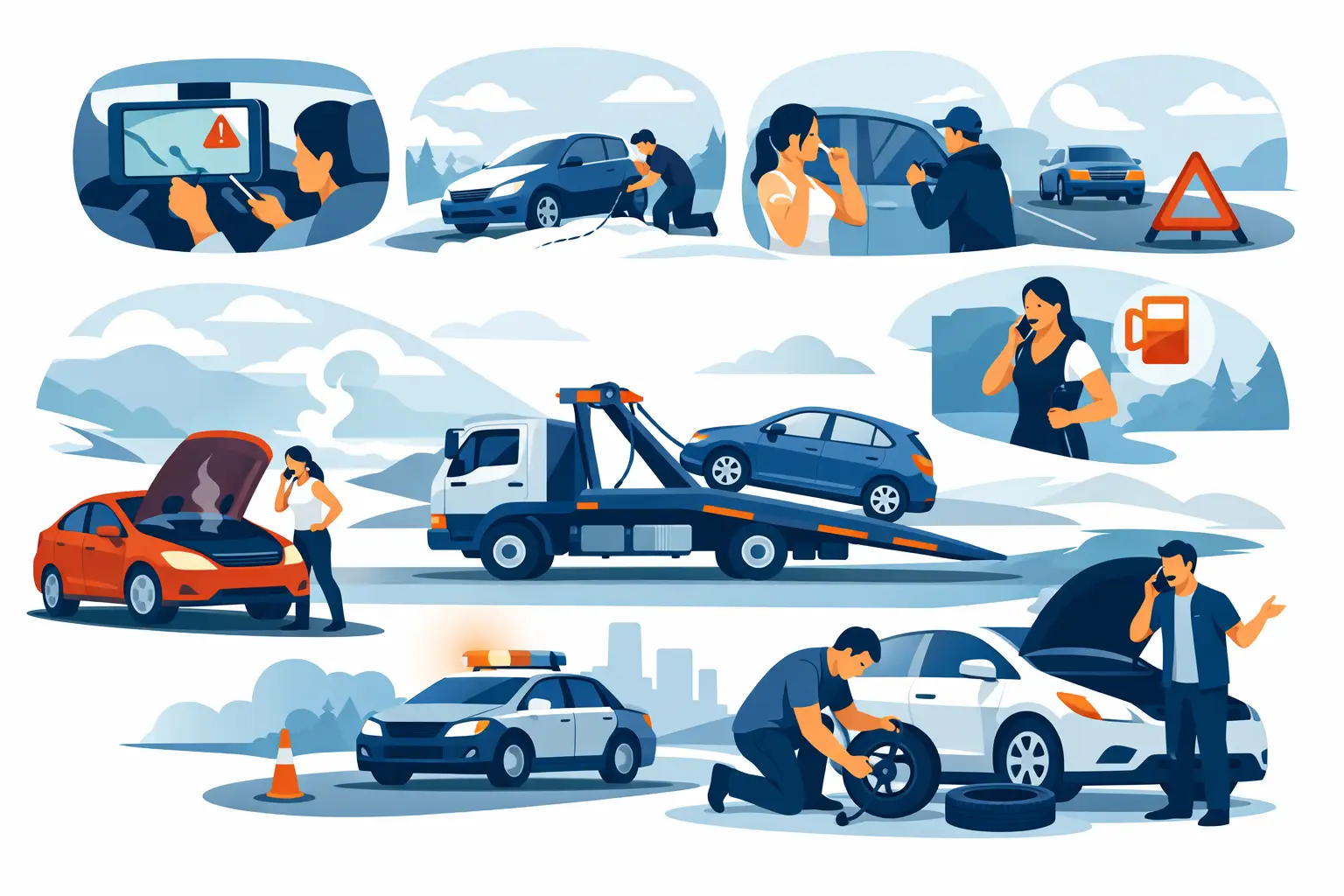
A dead battery in a hot parking lot. A flat tire on I-75 during rush hour. Keys locked in the car outside a grocery store in Pembroke Pines. These are the top roadside help situations drivers run into across South Florida, and they almost never happen at a convenient time. When your vehicle stops cooperating, what matters most is getting safe, fast help from a local team that knows the area and can respond without wasting time.
Why top roadside help situations happen so often in South Florida
South Florida driving puts extra stress on vehicles. Heat drains battery life faster than many drivers expect, daily commuting adds wear to tires and brakes, and stop-and-go traffic can turn a small vehicle problem into a roadside emergency. Add heavy rain, flooded shoulders, crowded highways, and long local travel between Miramar, Weston, Hollywood, and Fort Lauderdale, and roadside issues become a lot more common.
Some problems build up slowly, like weak batteries or worn tires. Others hit without warning, like a collision, a blown tire, or running out of gas when traffic turns a short trip into an hour. Either way, the goal is the same: get your vehicle handled safely and get you moving again if possible.
The 8 top roadside help situations drivers call about
1. Dead battery and no-start issues
This is one of the most common service calls for a reason. A battery can seem fine one day and fail the next, especially in Florida heat. If you turn the key or press the start button and hear clicking, or the lights come on but the engine will not start, a jump start may be all you need.
That said, it depends on the cause. Some no-start situations come from a bad alternator, corroded terminals, or an older battery that will not hold a charge even after a jump. If the vehicle starts and then dies again quickly, the problem may be bigger than the battery itself. In that case, roadside assistance can help assess whether you need a quick fix or a tow.
2. Flat tire or blowout
A flat tire always feels urgent because it is. Driving too far on a damaged tire can ruin the wheel, affect your steering, and create a serious safety risk. In South Florida, road debris, potholes, low tire pressure, and worn tread all contribute to sudden flats and blowouts.
Some drivers have a usable spare and just need a fast tire change. Others find out too late that the spare is missing, flat, or not safe for longer travel. If you are on a busy road shoulder or in poor weather, waiting inside the vehicle in a safe location is often smarter than trying to change it yourself.
3. Vehicle lockout
Lockouts happen fast. One second you are unloading groceries or stepping out for gas, and the next your keys are sitting on the seat with the doors locked. Modern vehicles can still lock with the fob inside, and older cars create their own problems with worn locks and automatic systems that misfire.
A lockout may seem minor compared to a breakdown, but it can become a bigger issue if a child, pet, phone, or medication is inside the vehicle. In that moment, speed matters. Professional lockout support helps you avoid broken glass, door damage, and expensive mistakes from trying to force the car open.
4. Running out of gas
This catches more drivers than they like to admit. Traffic detours, long workdays, broken fuel gauges, and pure distraction all play a role. In areas like Fort Lauderdale and Hollywood, a simple short trip can turn into a much longer drive than expected.
Fuel delivery is usually the quickest solution, especially if the vehicle is otherwise fine. But if you ran the tank completely dry and the car still will not restart after fuel is added, there may be another issue involved. Some vehicles are more sensitive to fuel system problems than others, so this is one of those situations where a fast response can keep a small problem from becoming a longer delay.
5. Overheating engine
Florida heat is rough on cooling systems. If steam is coming from under the hood or your temperature gauge climbs into the red, pull over as soon as it is safe. Continuing to drive an overheating vehicle can lead to major engine damage.
Overheating can come from low coolant, a radiator leak, a failed thermostat, or a cooling fan issue. Sometimes the fix is simple, but often it is not something to guess at on the shoulder of the road. A tow is usually the safer call if the engine is overheating badly, especially if you are stuck in traffic or far from a repair shop.
6. Accident towing after a collision
Not every crash leaves a vehicle totaled, but even a minor collision can make a car unsafe to drive. Bent suspension parts, leaking fluids, wheel damage, or body panels rubbing against a tire can turn a drivable-looking vehicle into a hazard.
This is one of the top roadside help situations where drivers often underestimate the risk. If the airbags deploy, steering feels off, or the vehicle is leaking anything, it should not stay on the road. Quick accident towing helps clear the scene, protect the vehicle from further damage, and get it where it needs to go without adding another problem after the crash.
7. Stuck in mud, grass, sand, or a ditch
South Florida drivers do not need snow to get stuck. Wet grass, soft shoulders, sandy edges, flooded areas, and shallow ditches create plenty of trouble. It often happens after rain, at job sites, in parking areas, or when a driver moves off the road just a little too far.
A winch-out or recovery service can usually handle this without needing full towing, but it depends on how deep the vehicle is stuck and whether there is undercarriage damage. Spinning the tires harder rarely helps. In fact, it usually sinks the vehicle deeper and makes recovery take longer.
8. Mechanical breakdown that needs towing
Some roadside calls are not quick fixes. Transmission failure, broken belts, steering issues, brake trouble, and electrical problems can leave the vehicle disabled with no safe way to continue. In these cases, towing is not a last resort. It is the right move.
The key is recognizing when the vehicle should not be pushed any farther. If it makes grinding noises, loses power, leaks heavily, will not shift, or feels unsafe to control, do not gamble on getting a few more miles out of it. A short tow now can save you from a much more expensive repair later.
What to do while waiting for roadside assistance
Your first priority is safety, not speed. If the vehicle can be moved, get it to a safe shoulder, parking lot, or side street away from active traffic. Turn on your hazard lights and stay aware of your surroundings, especially on major roads through Broward County where traffic moves fast and space is limited.
If you are on a highway shoulder, it may be safer to stay inside with your seat belt on than to stand near passing traffic. If you are in a safer area like a parking lot, keep your phone charged and be ready to share your exact location, vehicle type, and the problem you are experiencing. Clear details help the right help get dispatched faster.
When a quick fix is enough and when you need a tow
This is where a lot of drivers hesitate. A jump start, tire change, lockout service, or fuel delivery can usually get you back on the road quickly. But if the vehicle has been in a collision, is overheating, leaking fluid, making severe noises, or refusing to stay running, towing is often the safer and cheaper choice in the long run.
There is a trade-off here. Everyone wants the fastest solution, but the fastest option is not always the one that protects the vehicle. A professional roadside team can help make that call based on what is happening in real time.
Local response matters in urgent roadside situations
When you are stranded in Miramar, Weston, Pembroke Pines, Hollywood, or Fort Lauderdale, local coverage makes a difference. A provider that already works these roads knows the traffic patterns, common breakdown spots, and how to reach drivers faster. That matters when you are stuck before work, on the way home, or trying to keep a delivery vehicle in service.
ITow&Recovery handles these urgent calls with the kind of practical, fast-response service South Florida drivers need. Whether it is a battery issue, flat tire, lockout, fuel shortage, recovery, or towing job, the goal is simple: show up quickly, solve the problem the right way, and take some stress off your shoulders.
Roadside problems rarely give you a warning. The best move is to treat them seriously, stay safe where you are, and get help from a team that knows how to respond when time matters.