
You turn the key, hear a click, and suddenly your whole day is on hold. When drivers in South Florida search for jump start vs battery replacement, they usually are not looking for theory. They want to know one thing fast – can this be fixed right now, or is the battery done for good?
That answer depends on what caused the battery to die in the first place. Sometimes a jump start gets you back on the road in minutes. Other times, a jump only delays the problem and leaves you stranded again at the next stop. Knowing the difference can save time, money, and a second roadside emergency later the same day.
Jump start vs battery replacement: what is the difference?
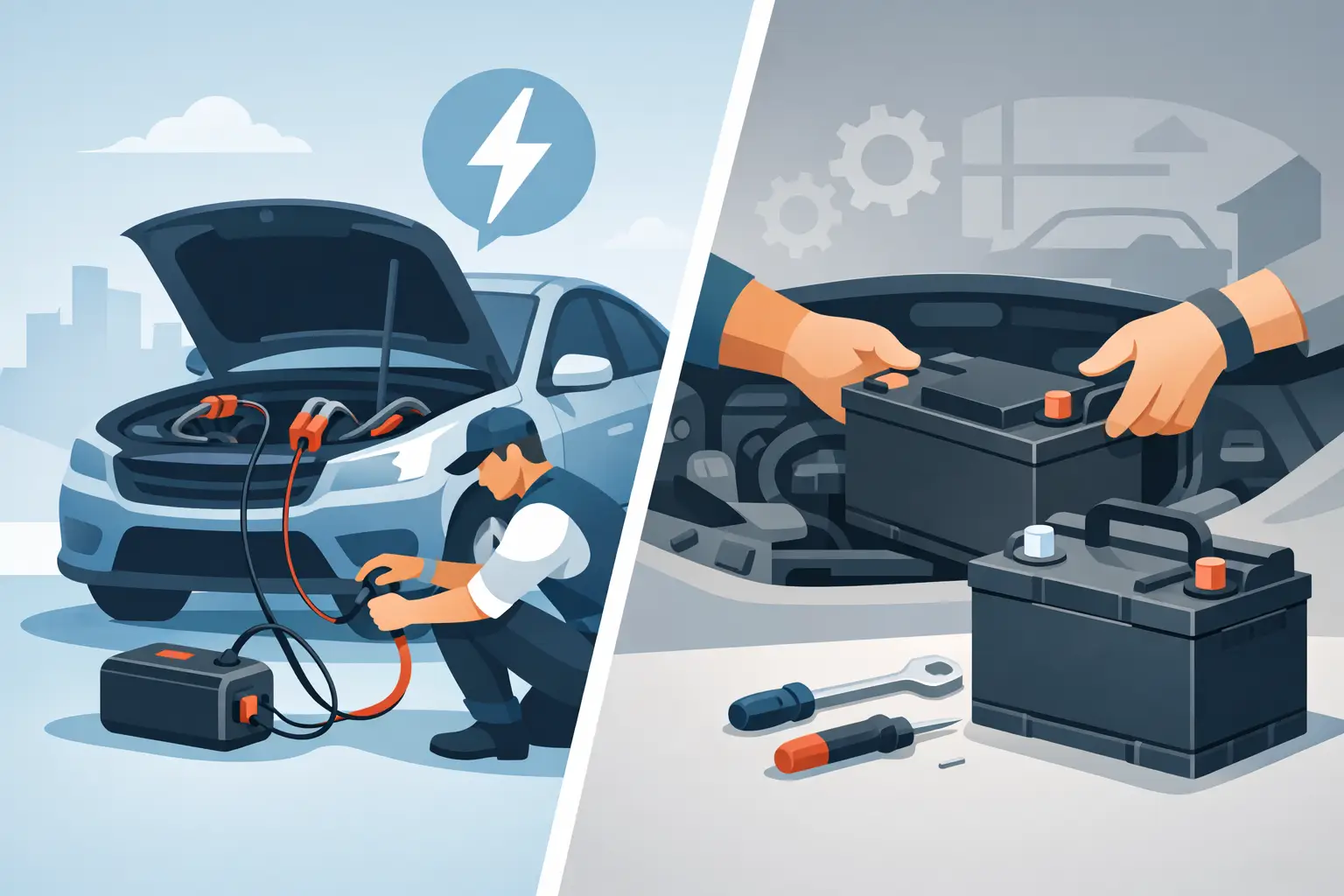
A jump start is a temporary solution. It gives your battery enough power to start the engine by using another power source, whether that is another vehicle or professional roadside equipment. Once the engine is running, your alternator helps recharge the battery while you drive.
Battery replacement is the permanent fix when the battery can no longer hold a charge, has reached the end of its life, or has internal damage. If the battery is worn out, corroded, swollen, leaking, or repeatedly going dead, replacing it is usually the right call.
The key point is simple. A dead battery is not always a bad battery. But a bad battery often starts by acting like it only needs a jump.
When a jump start is usually enough
If your battery died because of a one-time mistake, a jump start may be all you need. This is common when headlights were left on, a door stayed cracked overnight, interior lights drained the battery, or the car sat too long without being driven.
In these situations, the battery may still be healthy. It was simply discharged. Once the vehicle is started and driven long enough, the battery may recover and continue working normally.
A jump start also makes sense when the battery is fairly new and there have been no previous warning signs. If the car starts normally most days and this is the first time it has failed, there is a good chance the issue is temporary.
That said, temporary does not mean guaranteed. Even after a successful jump, the battery should still be watched closely. If the car struggles again within a day or two, the problem may be deeper than a simple drain.
When battery replacement is the smarter move
If your battery is several years old, a jump start may only buy you a little time. Most car batteries last around three to five years, but South Florida heat can shorten that window. High temperatures speed up battery wear, especially when the vehicle spends long hours parked outside.
Replacement is usually the better decision when the battery keeps dying, the engine cranks slowly, or you have needed more than one jump in a short period. Those are strong signs the battery is losing its ability to hold a charge.
You should also think replacement if you notice visible battery damage. Corrosion around the terminals can interfere with performance, and a swollen battery case can point to overheating or internal failure. If there is a rotten egg smell, leaking fluid, or obvious cracking, the battery should not be trusted.
A battery that tests weak under load is another clear sign. It may still have enough power for lights or accessories, but not enough to turn the engine over reliably. That is how many drivers end up stuck in parking lots, driveways, office complexes, and gas stations.
Signs your car needs more than a jump
The most common warning is repeated failure. If you got a jump last week and need another one today, the battery may be done. A healthy battery should not need frequent outside help.
Slow cranking is another red flag. If the engine turns over sluggishly before finally starting, the battery may be fading even if the car has not gone fully dead yet. Dimming headlights, flickering dashboard lights, and weak power to electronics can also point to battery trouble.
There is also the possibility that the battery is not the only issue. If a jump start works but the vehicle dies again while driving, the problem may involve the alternator or charging system. In that case, replacing the battery alone will not solve it.
This is why jump start vs battery replacement is not always a simple either-or choice. Sometimes the battery is weak. Sometimes the charging system is failing. Sometimes both problems show up together.
How South Florida weather affects battery life
Drivers often assume cold weather is the main battery killer, but heat is just as hard on automotive batteries, and often worse over time. In Broward County and the surrounding South Florida area, heat can evaporate battery fluid and accelerate internal breakdown.
Add short trips, heavy traffic, frequent stops, and long periods with the AC running, and your battery works harder than many drivers realize. Vehicles used for deliveries, rideshare, commuting, or family errands can wear batteries down faster simply because they are constantly cycling through starts and stops.
That means a battery that might last longer in a milder climate may fail earlier here. If your battery is near the three-year mark and starting to show symptoms, waiting for a full breakdown is a gamble.
What to do if your car will not start
First, do not keep turning the key over and over. If the battery is weak, repeated attempts can drain it further. If you hear clicking, see dim lights, or get no response at all, stop and assess the situation.
Check for obvious causes like lights left on or visible corrosion on the battery terminals. If the vehicle was working normally before this and the battery is not old, a jump start is a reasonable first step. If the battery has been giving you trouble for a while, replacement may be more practical than trying to revive it one more time.
If you are in a parking lot, roadside shoulder, apartment complex, or worksite, professional roadside help is often the safest move. Using the wrong cables, connecting them incorrectly, or trying to jump a damaged battery can create bigger problems fast.
Why professional roadside help matters
When you are stuck, speed matters, but so does getting the diagnosis right. A quick jump can get the engine running, but it does not answer the bigger question of whether the battery will hold. Professional roadside service helps take the guesswork out of the moment.
An experienced roadside technician can look at the symptoms, check for visible battery failure, and help you decide whether a jump start is worth trying or whether replacement should be your next stop. That matters even more when you are dealing with a tight schedule, bad weather, a family in the car, or a commercial vehicle that needs to get moving again.
For drivers in Miramar, Pembroke Pines, Hollywood, Weston, and Fort Lauderdale, waiting too long to deal with a failing battery usually ends the same way – one more no-start situation at the worst possible time.
Jump start vs battery replacement: the practical answer
If the battery went dead because of a one-time drain and has otherwise been reliable, a jump start may solve the problem. If the battery is old, weak, damaged, or repeatedly dying, replacement is usually the safer and more cost-effective choice.
The real risk is treating every dead battery like it only needs a boost. That can work once. It rarely works for long when the battery is already failing.
A lot of drivers try to stretch a battery just a little further. Sometimes that works for a week. Sometimes it works until the next grocery stop, school pickup, or work shift. Then the car will not start again, and now the problem is bigger because the timing is worse.
If you are dealing with a dead battery in South Florida and need fast roadside help, ITow&Recovery can respond with the urgency the situation calls for. A good battery gives you confidence. A failing one gives you warnings. The smart move is listening to them before your car makes the decision for you.