
A bad tow can turn a simple vehicle problem into a second emergency fast. If you are looking for a driver guide to towing, the most important thing to know is this: towing is not just about hooking one vehicle to another and getting moving. Weight, braking, visibility, road conditions, and the type of disabled vehicle all matter, especially on busy South Florida roads where traffic can change in seconds.
Most drivers do not tow every day. That is why mistakes happen. A strap gets attached to the wrong point, the load shifts, the trailer starts to sway, or a driver underestimates stopping distance. The result can be damage to your car, damage to someone else’s vehicle, or a dangerous situation on I-75, I-595, US-27, or local roads through Miramar, Weston, Hollywood, Pembroke Pines, and Fort Lauderdale.
Driver guide to towing basics
Before anything moves, you need to know whether your vehicle is actually rated to tow the load in front of it. This includes the towing capacity of the vehicle, the hitch rating, and the total weight of what you plan to pull. That total is not just the trailer itself. It also includes cargo, fuel, equipment, and anything else loaded onto it.
A lot of drivers focus only on engine power. That is only part of the picture. Suspension, brakes, frame strength, cooling system performance, and tire ratings all affect towing safety. A vehicle that can move the load is not always a vehicle that can control the load safely.
If you are towing another vehicle, the setup matters even more. Flat towing, a tow dolly, and a full trailer all place different demands on both vehicles. Some cars can be towed with all four wheels on the ground. Others cannot without major transmission damage. If you are unsure, stopping and checking is cheaper than replacing driveline components later.
Know your weight limits
The most common towing mistake is exceeding the rated capacity. Your owner’s manual and door sticker give you key numbers, including gross vehicle weight rating and gross combined weight rating. Those numbers exist for a reason. When you exceed them, braking gets weaker, steering gets less responsive, and heat builds up where you do not want it.
There is also the issue of tongue weight. Too little tongue weight can cause trailer sway. Too much can overload the rear axle and lighten the front end, which hurts steering and braking. Good towing feels controlled and balanced. Bad towing often feels unstable before it becomes dangerous.
Use the right equipment
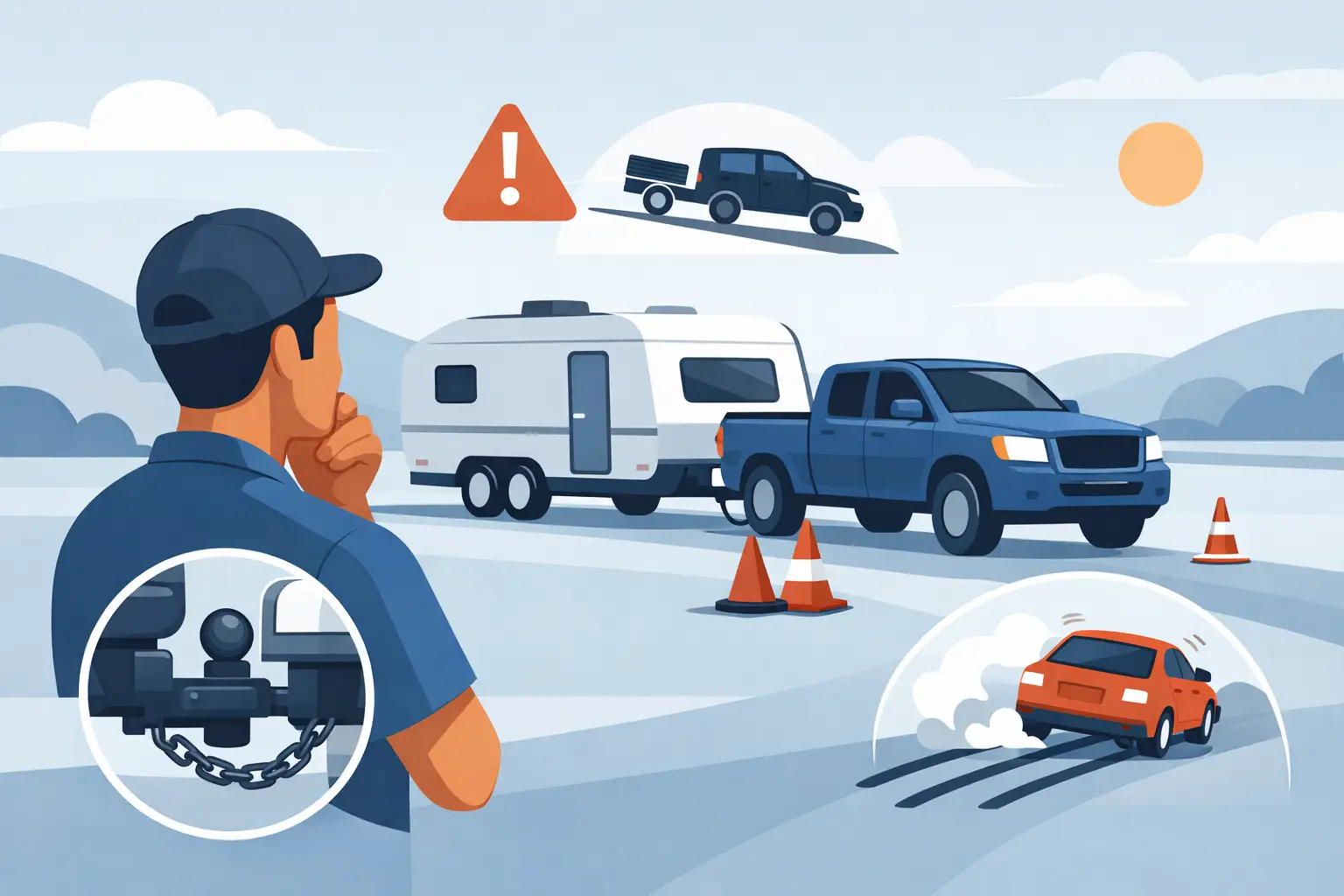
A proper hitch, correct ball size, safety chains, working lights, and secure tie-down points are not optional. They are the minimum. A mismatched ball hitch or worn coupler can fail under stress. Straps that are not rated for the load can snap. Chains that drag can be damaged before you even notice.
If you are towing a disabled vehicle, attachment points matter. Never guess where to hook. Modern vehicles often have specific recovery or tow points, and using the wrong area can bend suspension parts, damage bumpers, or tear underbody components loose.
How to drive when towing
Driving with a tow load requires patience. You need more time to accelerate, much more room to stop, and wider turns than usual. If you drive the same way you do without a load, you are already behind the situation.
Start slower than you think you need to. Brake earlier than normal. Leave a larger gap in traffic. South Florida driving can be aggressive, but when towing, your job is to stay predictable. Sudden lane changes, hard braking, and quick steering corrections can start sway or make a small problem much worse.
Backing up is another point where drivers get into trouble. Trailers respond in the opposite direction of the steering input, and small movements make a big difference. If visibility is limited, get out and check your path. If someone can guide you safely, use them. A few extra seconds beats hitting a curb, another vehicle, or a wall.
Weather and road conditions matter more than usual
Rain changes towing fast. Wet pavement means longer stopping distances and less traction, especially when the load pushes forward under braking. South Florida storms can reduce visibility in minutes. If the weather turns bad, slowing down is not enough in every case. Sometimes the safer move is to pull over until conditions improve.
Road surface matters too. Potholes, standing water, soft shoulders, and uneven pavement can upset a trailer or make recovery harder if you are already dealing with a breakdown. What feels manageable on a dry, open road can become risky in traffic or heavy rain.
When not to tow it yourself
This part of any driver guide to towing deserves extra attention. There are times when towing your own vehicle is a reasonable short-distance solution. There are also times when you should stop and call a professional towing company right away.
If the vehicle has major front-end or rear-end damage after a collision, do not improvise. If a wheel is bent, the steering is damaged, the brakes are compromised, or fluids are leaking heavily, the safest option is professional transport. The same goes for all-wheel-drive vehicles that require a specific towing method, low-clearance vehicles that can scrape badly, and heavier trucks or vans that need the right equipment.
You should also avoid DIY towing if you do not have rated equipment, if the route includes highways with fast-moving traffic, or if you are stuck in an unsafe location. On a narrow shoulder, in an active intersection, or after dark with limited visibility, speed and proper recovery equipment matter more than saving a few dollars.
Signs you need professional towing now
If the disabled vehicle will not roll freely, if the transmission type is unclear, if the tow points are not obvious, or if you feel unsure about the setup, that uncertainty is your answer. Towing is not the place to wing it. Professional towing crews do this every day, and that experience matters when the situation is already stressful.
For drivers across Broward County, that is often the smartest move. A local team that knows Miramar, Pembroke Pines, Weston, Hollywood, and Fort Lauderdale can usually get to you faster and handle the vehicle the right way from the start.
Common towing mistakes drivers make
One of the biggest mistakes is rushing. Drivers want to clear the road, get home, or move a broken-down car quickly. That urgency is understandable, but it leads to skipped checks. Lights go untested. Chains stay loose. Tire pressure gets ignored. The load is not balanced correctly.
Another common mistake is assuming all tow methods are basically the same. They are not. A pickup towing a small utility trailer is one thing. Recovering a disabled sedan after an accident is another. Moving a commercial van is different again. Each job has its own risks, and the right equipment changes with the vehicle and the problem.
Drivers also underestimate stopping distance. This is where close calls happen. The extra weight behind you does not care that traffic stopped suddenly. If your trailer or towed vehicle starts pushing your tow vehicle, control gets harder very quickly.
A practical towing checklist for drivers
Before towing, check the vehicle ratings, confirm the total weight, inspect the hitch and coupler, connect safety chains properly, test brake lights and turn signals, and verify tire pressure on both the tow vehicle and trailer. Make sure the load is secure and balanced. If you are towing a vehicle, confirm the correct towing method for that exact make and model.
Once you are moving, keep speeds moderate and avoid distractions. Listen for unusual noises, watch your mirrors, and stop if anything feels off. Sway, clunking, smoke, burning smells, or poor tracking are all reasons to pull over and inspect the setup.
If you are already stranded, focus on safety first. Move out of traffic if possible, turn on hazard lights, and do not stand near moving lanes while trying to figure out a tow setup. In many roadside situations, waiting for proper help is the safer and faster option.
Towing in South Florida traffic
Local conditions add pressure. Heavy traffic, sudden rain, tight roadside shoulders, and busy commercial corridors make towing harder than it looks. What works in a quiet parking lot may not work safely on a crowded road in Fort Lauderdale or along a fast-moving stretch near Weston.
That is why many drivers choose to call experienced help instead of risking vehicle damage or a roadside injury. A company like ITow&Recovery handles towing, accident recovery, long-distance transport, winch-outs, and emergency roadside situations around the clock, which matters when a breakdown does not happen at a convenient time.
Towing should solve a problem, not create a bigger one. If you have the right vehicle, the right equipment, and a short, manageable route, towing can be done safely with care and patience. If anything about the setup feels uncertain, trust that instinct and get professional help. The safest tow is the one that gets everyone off the road without more damage, more delay, or more stress.