
A lot of drivers ask the same question right after a breakdown or crash: what does towing include? Usually, they are standing on the shoulder, dealing with traffic, heat, stress, and a car that will not move. In that moment, you do not want vague answers. You want to know what service is coming, what the tow truck will actually do, and whether you need towing or a different kind of roadside help.
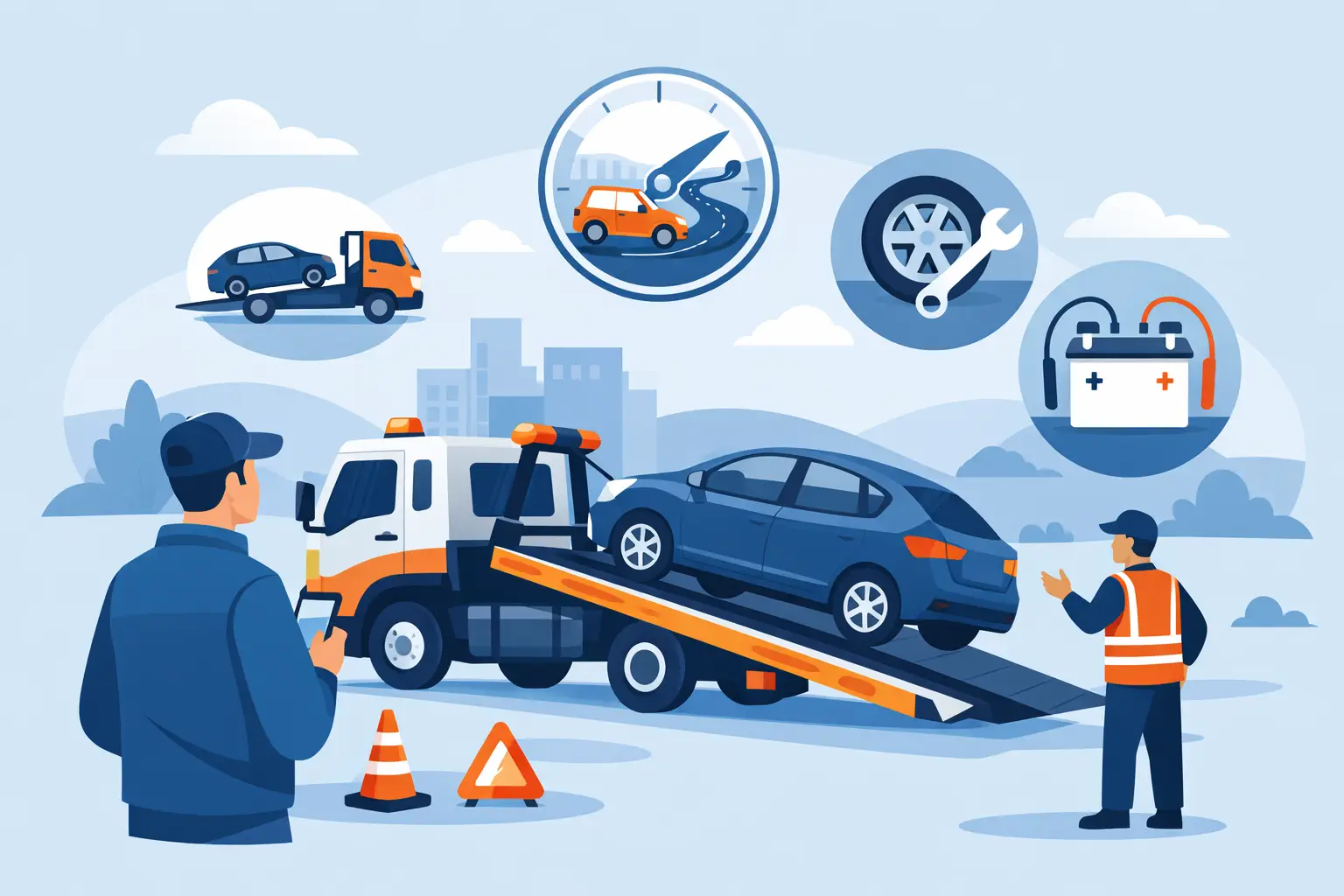
The short answer is that towing usually includes transporting a disabled, damaged, or non-running vehicle from one location to another. But that is only the base service. Depending on the situation, towing can also include loading the vehicle safely, securing it for transport, basic scene safety, and delivery to a repair shop, home, body shop, or another approved destination. In some cases, it may also involve accident recovery, winching, or special handling for low-clearance, luxury, commercial, or heavily damaged vehicles.
What does towing include in a real roadside situation?
In practical terms, towing starts with getting a truck to your location and assessing whether your vehicle can be loaded and moved safely. If your car is stuck in a driveway, parked in a garage, disabled in traffic, or sitting after an accident, the tow operator first checks the condition of the vehicle, access to the vehicle, and the best way to load it.
That often includes hooking up the vehicle with the right equipment, placing it on a flatbed or lifting it with a wheel-lift setup, securing the tires or frame as needed, and transporting it to the destination you choose. If the steering is locked, the wheels are damaged, the car is in neutral trouble, or the vehicle has been in a collision, the process may take more care and more equipment.
For many South Florida drivers, towing also includes quick coordination. You may need the vehicle moved from Miramar to a repair shop in Pembroke Pines, from a Fort Lauderdale parking garage to your home, or from a crash scene in Hollywood to a body shop. The service is not just about pulling a car. It is about getting a disabled vehicle off the road and into the right place without adding more damage or more delay.
The core services most towing jobs cover
Standard towing usually includes dispatch, arrival, loading, transport, unloading, and placement of the vehicle at the destination. If your car broke down because of engine failure, transmission trouble, electrical issues, overheating, or another mechanical problem, this is the basic service most people need.
Accident towing is a little different. When a vehicle has front-end damage, suspension issues, broken axles, deployed airbags, or missing tires, extra care may be needed to load it without causing more harm. In those cases, towing still includes transport, but it may also involve recovery steps before the vehicle can even be moved.
Long-distance towing generally includes the same transport process, just over a much greater mileage range. This is often used when a driver wants a vehicle taken to a preferred mechanic, another city, or even back home after a breakdown far from where they live.
Commercial and fleet towing can also fall under the same umbrella, but these jobs may require handling vans, work trucks, or vehicles with business equipment inside. That changes how the tow is planned, scheduled, and priced.
What towing usually does not include
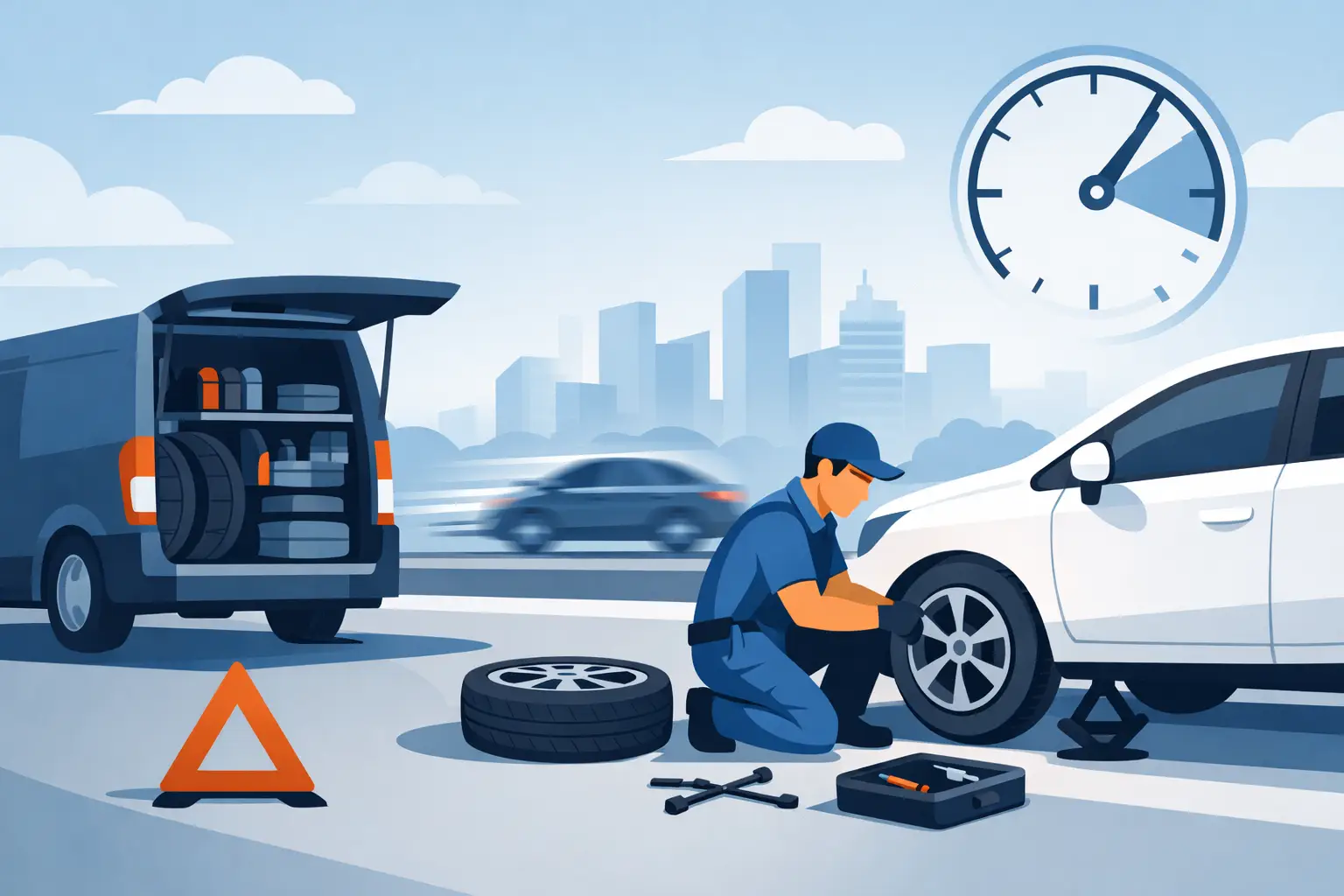
This is where confusion happens. Towing does not always mean every roadside problem will be solved on the spot. If your battery is dead, your tire is flat, your gas tank is empty, or your keys are locked inside the car, you may not need a tow at all. You may need roadside assistance instead.
A jump start, tire change, fuel delivery, or lockout service is usually separate from towing, even if the same company offers all of those services. If the problem can be fixed safely where the vehicle is sitting, roadside assistance is often faster and less expensive than loading the car and moving it.
Towing also may not include heavy recovery, deep mud extraction, off-road pull-outs, major accident cleanup, storage, after-hours release fees, or waiting time at a shop. Some jobs look simple from the driver side but require extra labor or specialized equipment once the operator arrives. That does not mean the service is overpriced. It means the work changed.
When roadside assistance is enough
A lot of calls that start as towing requests become roadside service calls once the problem is identified. If your car will run after a jump start, if your spare tire can be installed, or if fuel delivery gets you back on the road, a tow may not be necessary.
That matters because the right service saves time. If you are in Weston before work, stranded in a shopping center in Pembroke Pines, or stuck at night in Hollywood, the goal is not to order the biggest service possible. The goal is to get moving again as quickly and affordably as possible.
Still, there are situations where roadside help is only a temporary fix. A battery that keeps dying, a tire blowout with no usable spare, a severe overheating issue, or an engine that will not turn over may still end in a tow. A good dispatcher will usually ask the right questions so you do not pay for the wrong service.
What affects the final towing service you receive
Not every tow is the same, and that is why prices and service details can vary. Distance is a major factor, but it is not the only one. Vehicle type matters. A compact sedan is easier to move than a large SUV, lifted truck, cargo van, or commercial vehicle.
Condition matters too. A vehicle that rolls freely is much simpler than one with locked wheels, severe collision damage, or no safe loading points. Location also affects the job. Pulling a car from a tight garage, a busy roadway, a flooded shoulder, or soft ground takes more planning than a basic parking lot pickup.
Time can matter as well. Late-night emergencies, holiday calls, and high-traffic dispatches across South Florida may affect response timing depending on availability and road conditions. The best towing service is not just the cheapest quote on paper. It is the one that shows up fast, uses the right equipment, and handles your vehicle correctly the first time.
What does towing include if your car is stuck?
If your vehicle is stuck in sand, mud, a ditch, a curb edge, or a flooded area, standard towing may not be enough by itself. In these cases, service may begin with a winch-out or recovery. That means the vehicle must first be pulled into a position where it can be loaded safely onto the truck or moved to stable ground.
This is common in South Florida after heavy rain, roadside shoulder drop-offs, or parking situations where a car slides into a spot it cannot get out of. Recovery work is closely related to towing, but it is more technical. It may require additional equipment, extra setup time, and a different pricing structure.
Why clear communication matters before dispatch
If you are calling for help, the most useful thing you can do is describe the situation honestly and clearly. Tell the dispatcher whether the car starts, whether it rolls, whether there is accident damage, and where exactly it is located. Mention if you are in a garage, on a highway shoulder, blocked in, or dealing with a flat tire or dead battery.
That helps send the right truck the first time. It also helps avoid delays and surprise costs. If you say you need a simple tow but the vehicle is actually wrecked with locked wheels, the wrong equipment can slow everything down.
For drivers in Miramar, Fort Lauderdale, Weston, Hollywood, and nearby Broward County areas, fast local response matters just as much as price. A dependable company like ITow&Recovery is built around that reality – urgent calls, real roadside problems, and the need to solve them without wasting time.
The better question is what problem needs solving
When people ask what towing includes, what they really want to know is whether help is on the way for their exact situation. Sometimes that means a tow to a shop. Sometimes it means a jump start, fuel delivery, lockout service, or recovery before transport can even begin.
The right answer depends on what happened to the vehicle, where it is, and whether it can be made roadworthy on the spot. If you are stranded, do not get stuck on the wording. Focus on the problem, explain it clearly, and get the right service moving your way.