
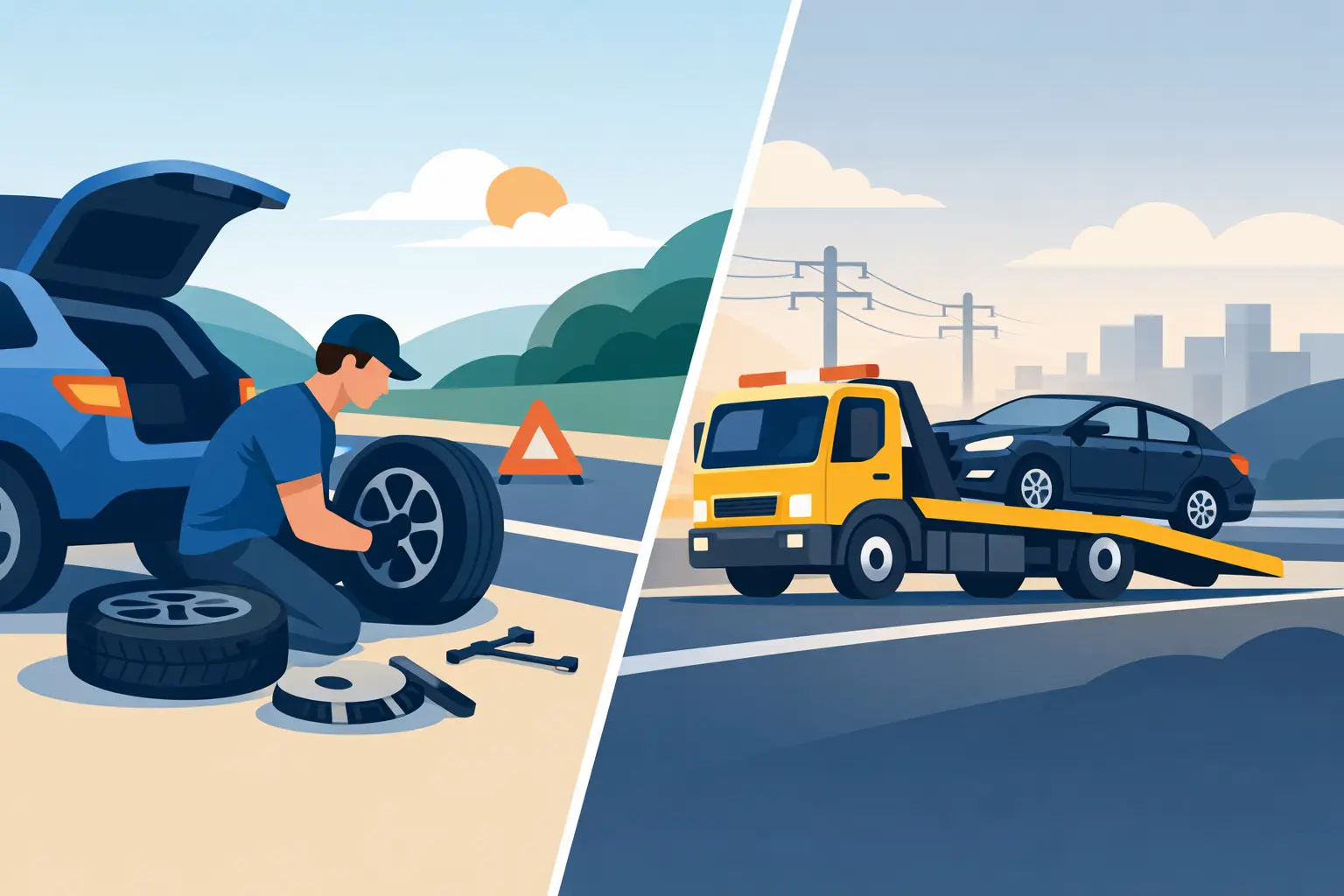
A flat tire on I-75, near a busy Fort Lauderdale intersection, or in a dark Pembroke Pines parking lot creates one immediate question: roadside tire change versus towing – which service actually gets you out of trouble safely? The answer depends less on the flat itself and more on your spare tire, your location, your vehicle condition, and whether driving after the change is a safe option.
A roadside tire change is often the fastest, most affordable solution when the rest of the vehicle is in good shape. Towing is the better call when the tire damage is severe, there is no usable spare, the wheel is damaged, or the vehicle should not be driven. Knowing the difference can save time, avoid further damage, and keep a stressful roadside problem from becoming a larger repair.
When a Roadside Tire Change Is the Right Call
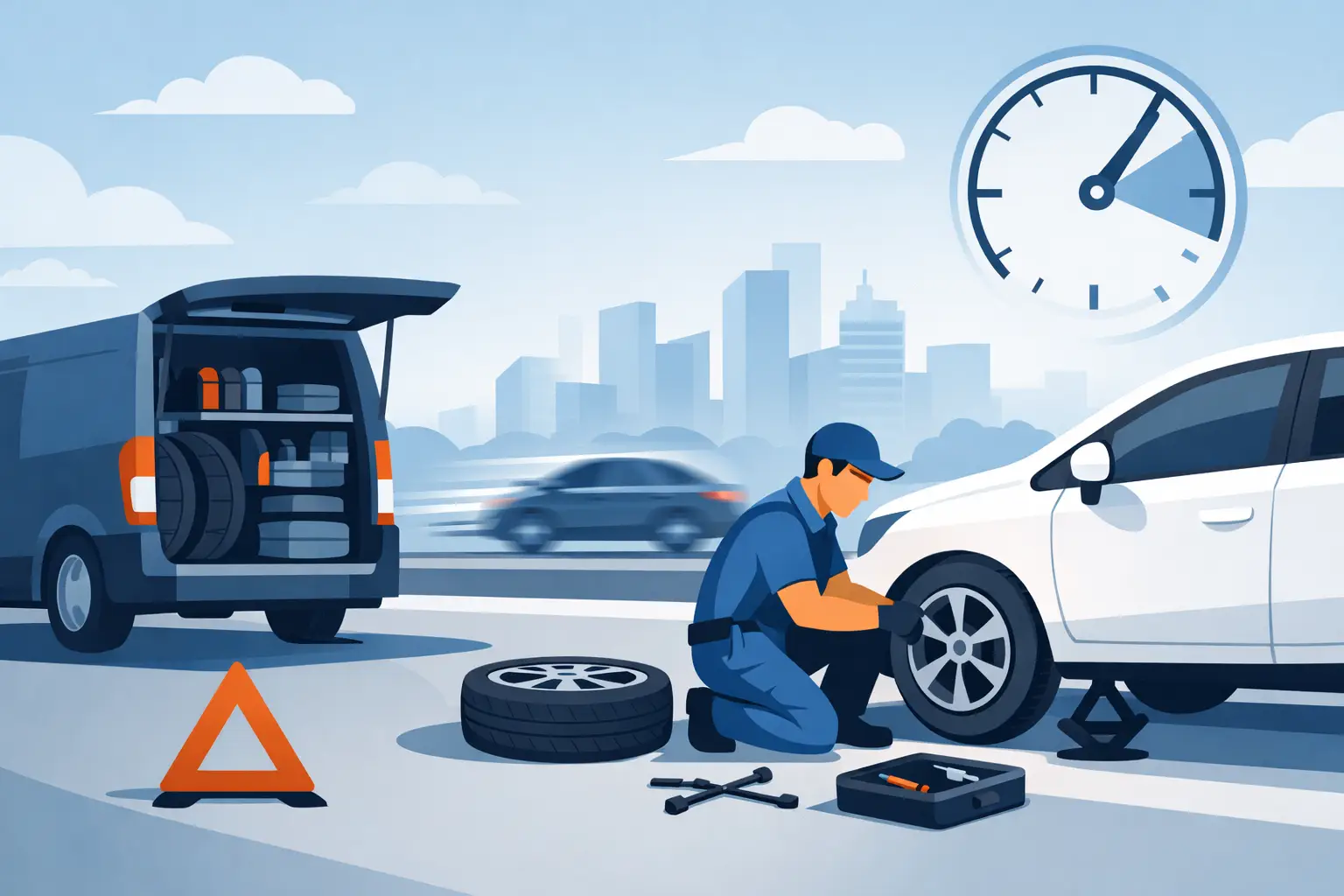
If you have a properly inflated spare tire, accessible lug nuts, and no other vehicle damage, a professional tire change can get you moving again without sending your vehicle to a shop. A roadside technician can safely remove the flat, install the spare, check that the wheel is secure, and help you get back on the road.
This is usually the right option when the flat happened because of a nail, screw, slow leak, or ordinary road hazard. South Florida roads and construction zones can leave debris where drivers least expect it. If the tire went flat but the rim is intact and the vehicle has not been driven far on the flat, changing to the spare is commonly all that is needed.
It is also a practical choice for drivers stranded at home, at work, in a garage, or in a reasonably safe parking area. You may know how to change a tire yourself, but many drivers do not have the right tools, cannot loosen overtightened lug nuts, or would rather not work beside traffic in the heat, rain, or dark. Calling for help means the job is handled without you taking unnecessary risks.
A spare is not a permanent replacement for your regular tire. After a roadside tire change, especially if a compact temporary spare is installed, drive carefully and arrange a tire repair or replacement as soon as possible. Temporary spares often have speed and distance limits. They are designed to get you to a safe repair location, not to support normal daily driving for weeks.
When Towing Is Safer Than a Tire Change
Towing becomes the safer choice when a tire change will not solve the entire problem. The most obvious example is a vehicle without a spare. Many newer cars come with inflator kits instead of spare tires, and those kits do not work on every type of damage. A sidewall tear, a tire that has come apart, or a puncture that is too large cannot be fixed with sealant at the roadside.
A tow is also the smart move if you drove on a flat tire and damaged the wheel. Driving even a short distance on a completely deflated tire can bend or crack a rim, destroy the tire sidewall, and affect suspension components. Installing a spare over a damaged wheel may be unsafe or impossible. In that case, the vehicle needs transport to a tire shop or repair facility.
Location matters just as much as vehicle condition. Stopping on a narrow shoulder, a highway ramp, a busy road, or an area with limited visibility can turn a simple flat into a dangerous situation. If traffic is moving quickly or there is no safe space to work, towing may be the best way to remove the vehicle and avoid exposing you or a technician to traffic.
Choose towing when the flat tire happened during a collision, too. Even if the tire is the most visible issue, an accident can cause hidden steering, axle, alignment, or suspension damage. Driving away on a spare could make the damage worse or put you at risk of losing control.
Warning Signs That Point to a Tow
A professional assessment is especially valuable if the vehicle pulls sharply to one side, makes grinding noises, sits unusually low, has a visibly bent wheel, or has more than one damaged tire. These signs suggest the issue goes beyond a standard flat.
The same applies if your vehicle is loaded heavily, towing a trailer, or used for commercial deliveries. A quick spare installation may not be enough to keep a work vehicle safe and compliant. For fleet operators, a tow can protect the driver, cargo, and vehicle from a more expensive roadside failure later.
Roadside Tire Change Versus Towing: Cost and Time
Most drivers understandably start with cost. A roadside tire change generally costs less than towing because the service is completed where the vehicle is parked. If the spare is in good condition and the vehicle is otherwise safe to drive, it can be the quickest path back to your day.
But choosing a tire change strictly because it is less expensive can backfire. If the rim is bent, there is no spare, or the vehicle has collision-related damage, attempting to drive it can lead to tire failure, body damage, or a second breakdown. The cheaper service is only the better value when it is the safe service.
Towing costs can vary based on distance, vehicle type, location, and the equipment required. Still, a local tow to a trusted tire shop may be less costly than replacing a damaged wheel or repairing additional components after driving an unsafe vehicle. For a driver stuck far from home in Weston, Miramar, Hollywood, or another Broward County community, the goal is not simply to move the car a few feet. The goal is to get you and the vehicle to a safe place without creating another emergency.
Time is also situational. A tire change may take only the time required to access the spare and remove the damaged tire. A tow may take longer if a destination needs to be selected, but it eliminates the need to drive on a temporary spare or worry about a vehicle that is not roadworthy. If you are headed to work, traveling with children, or managing delivery routes, that certainty can matter more than the fastest possible departure.
What to Do While You Wait for Help
Get your vehicle as far from moving traffic as possible without continuing to drive on a ruined tire. Turn on your hazard lights, set the parking brake once safely stopped, and stay aware of traffic around you. At night or during heavy rain, visibility is a major concern on South Florida roads.
If you are on a highway shoulder or in an unsafe area, remain inside the vehicle with the doors locked when it is safe to do so. Do not stand near the traffic side of the car, and do not attempt a tire change if vehicles are passing close by. If you are in a safe lot or driveway, gather your spare tire key or wheel lock key if your vehicle uses one, but do not worry if you cannot find every tool. A roadside professional can assess what is needed.
When requesting assistance, share your exact location, vehicle make and model, whether you have a spare, and what you can see on the damaged tire or wheel. Mention if the car was in an accident, if more than one tire is flat, or if you hear unusual noises. Clear details help dispatch the right roadside or towing service from the start.
Get the Right Help for the Situation
The best decision is not always roadside tire change versus towing in the abstract. It is the service that fits the condition of your vehicle and the danger level of where you are stopped. A usable spare and an undamaged vehicle usually call for a quick tire change. No spare, wheel damage, accident damage, or an unsafe roadside location usually call for a tow.
ITow&Recovery provides 24/7 roadside tire changes and towing for drivers across Miramar, Pembroke Pines, Fort Lauderdale, Weston, Hollywood, and surrounding South Florida communities. When you are stranded with a flat, a fast professional assessment can replace guesswork with a safe next step.
A flat tire does not have to ruin your day, but it should never pressure you into driving a vehicle that is not safe. Get the help that matches the problem, then get the tire and wheel properly inspected before returning to normal driving.