
A crash leaves you dealing with more than body damage. You may be blocking traffic, trying to stay safe on a busy South Florida road, and figuring out what happens to your vehicle next. This guide to accident towing is built for that moment – when you need clear steps, fast decisions, and a towing company that knows how to handle a damaged vehicle without adding more stress.
What accident towing actually means
Accident towing is different from a routine tow after a breakdown. A vehicle involved in a collision may have suspension damage, wheel damage, leaking fluids, body panels dragging on the ground, or safety systems that have already deployed. In some cases, the car can roll. In others, it needs special handling to avoid more damage during loading and transport.
That is why the right equipment matters. A damaged sedan, SUV, pickup, or commercial vehicle may need a flatbed instead of a standard wheel-lift tow. If the vehicle is off the road, stuck on a curb, or pushed into a ditch or median, recovery equipment may also be needed before towing even begins.
For drivers in Miramar, Pembroke Pines, Hollywood, Fort Lauderdale, and Weston, this usually comes down to one thing: getting help from a local towing company that can respond quickly, secure the scene safely, and move the vehicle where it needs to go.
First steps before accident towing starts
Your safety comes first. If the vehicle can be moved and law enforcement has not instructed you to leave it in place, get to a safer location when possible. If it cannot be moved, stay out of traffic and turn on your hazard lights. Call 911 if anyone is hurt, if the crash is blocking traffic, or if there is a dangerous situation at the scene.
Once immediate safety is handled, take a breath and gather the basics. You will want your location, the type of vehicle, and a quick description of the damage. If the wheels are locked, the airbags deployed, or the car is leaking fluid, say that right away when you call for towing. Those details help dispatch send the right truck.
If you can do so safely, take photos of the vehicle and surrounding area before it is loaded. That helps with insurance and gives you a record of the car’s condition at the scene.
A practical guide to accident towing decisions
The biggest question after a crash is usually simple: where should the car go?
It depends on the damage and your next step. If the vehicle is clearly not drivable, you may want it taken to a body shop, collision center, dealership, your home, or another secure location. If your insurance company has a preferred process, check that before the tow if time allows. If not, the fastest move is often to get the vehicle off the road and into a safe place first, then sort out repairs after.
There is a trade-off here. Towing directly to a repair facility can save time, but only if you are sure that is where you want the vehicle. Towing to your home or a temporary storage location gives you more time to decide, but it may mean arranging another tow later. In a stressful situation, the best choice is often the one that protects the car quickly and avoids rushed decisions.
What to ask the towing company
When you call for accident towing, clear communication matters. You do not need to know technical terms. Just explain what happened and ask practical questions.
Start with arrival time. After that, confirm whether the company can handle collision-damaged vehicles, whether a flatbed is needed, and where the vehicle can be transported. If the crash happened on a highway, in a parking garage, on private property, or in a tight residential street, mention that too. Access conditions can affect what type of truck is sent.
You should also ask about pricing before service begins. A dependable company will be straightforward about the tow rate, mileage if applicable, and any added recovery charges if the vehicle is stuck off-road or heavily damaged. The goal is not just a fast pickup. It is fast, professional service without confusion.
Why equipment and technique matter after a crash
A damaged vehicle is more vulnerable than a disabled one. If the bumper is hanging, a tire is blown out, or the steering is compromised, improper loading can make the damage worse. That is one reason accident towing should never feel rushed, even when the response is fast.
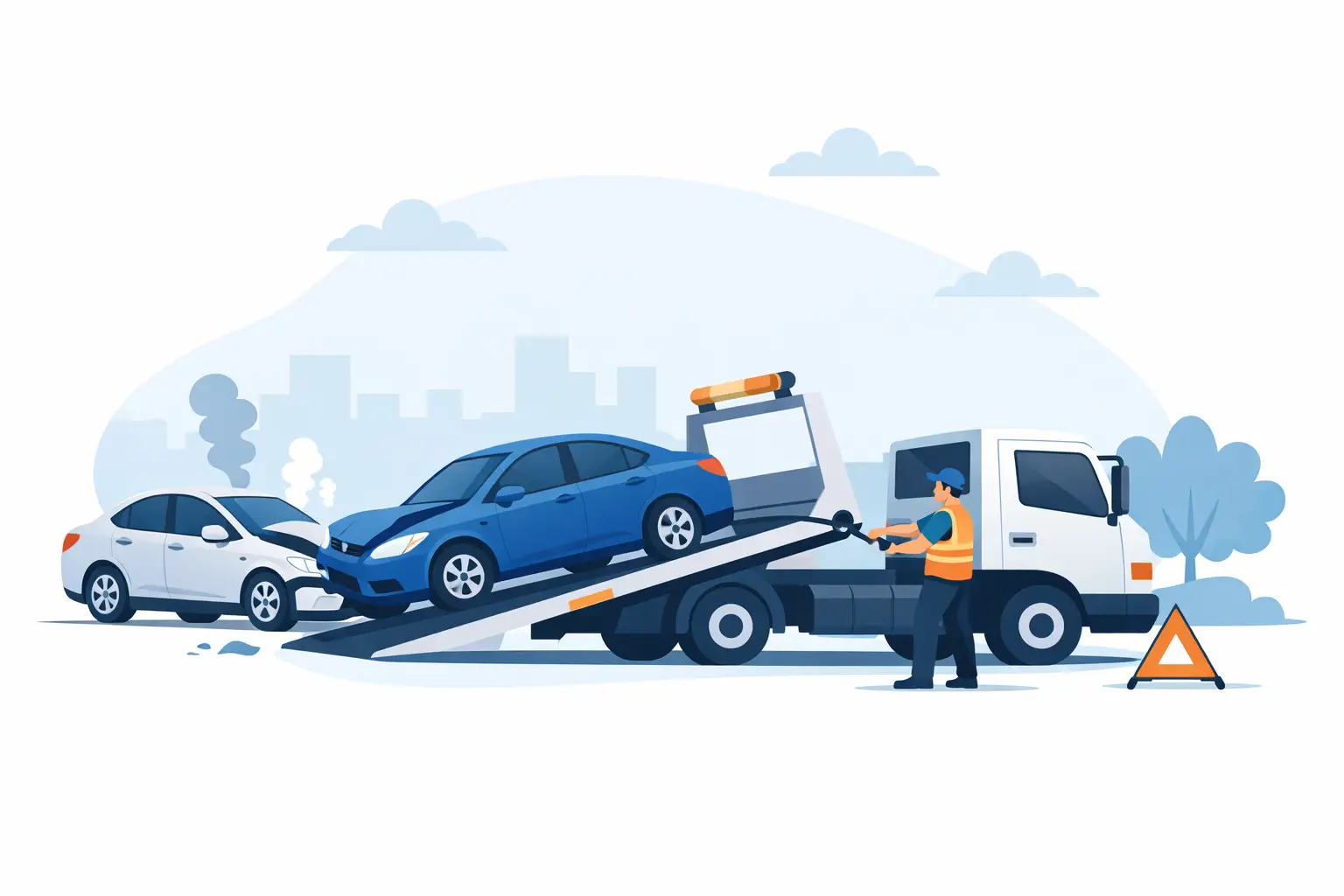
Flatbed towing is often the safest option because it keeps all four wheels off the ground and reduces strain on damaged components. For vehicles with severe front-end or rear-end damage, low clearance, or drivetrain concerns, that extra protection matters. Wheel-lift towing can still work in some situations, but not every collision vehicle is a good candidate.
Experienced operators also know how to secure damaged cars without putting pressure on broken parts. That includes careful winching, proper tie-down points, and taking extra care around crumpled panels, damaged axles, and compromised undercarriages.
Common accident towing situations in South Florida
In Broward County, crash scenes are not always simple. A fender bender in a shopping center may be easy to load. A collision on a busy road in Fort Lauderdale or a wet-weather accident in Weston can be much more complicated. Traffic volume, narrow shoulders, and sudden storms all add pressure.
That local factor matters. A towing company familiar with Miramar, Hollywood, Pembroke Pines, and surrounding South Florida roads can usually reach drivers faster and work more efficiently in traffic-heavy areas. Local knowledge also helps with route planning when a damaged vehicle needs to be moved carefully across town.
Commercial drivers and fleet managers face another issue: downtime. If a work truck or fleet vehicle is involved in a crash, accident towing is not just about clearing the scene. It is about protecting equipment, reducing delays, and getting that vehicle to the right destination with minimal disruption.
How to protect yourself during the tow process
One of the best things you can do is stay organized. Confirm where the vehicle is going before it leaves. Get the company name, driver information if available, and destination address. Remove valuables from the vehicle if it is safe to do so, especially if the car may end up at a shop or storage location.
If law enforcement is involved, follow their instructions first. In some crash situations, they may coordinate towing or direct traffic around the scene while the vehicle is recovered. If your insurance provider needs specific documentation, keep your photos, tow receipt, and any incident details together.
It is also smart to ask whether the car can be released directly to a repair shop or whether you will need to authorize the next step. That avoids delays later, especially if the accident happens late at night or over a weekend.
When accident towing turns into recovery service
Not every post-crash tow is a simple roadside pickup. Sometimes the vehicle ends up in a median, against a barrier, off the shoulder, or in mud or grass after heavy rain. In those cases, recovery service may be needed before the tow itself can happen.
Recovery involves safely extracting the vehicle without causing more harm. That can include winching, repositioning, or stabilizing a vehicle before loading. The risk is higher when the suspension is damaged or the vehicle is resting at an angle. It takes the right truck, the right tools, and an operator who knows how to work carefully under pressure.
For the driver, the key is to describe the scene accurately. Saying the vehicle is “off the road” or “up on a curb” gives dispatch a much better starting point than simply saying it was in an accident.
Choosing a towing company when you need help now
After a collision, most drivers are not comparing five companies and reading for an hour. They need someone to answer, show up, and handle the vehicle properly. That is exactly why response time, professionalism, and local coverage matter so much.
A good accident towing company should be available 24/7, explain the process clearly, and be prepared for everything from minor crashes to more complicated recoveries. In South Florida, fast dispatch is not just a convenience. It can reduce your time exposed on the roadside and help clear the vehicle before the situation gets worse.
If you are in Miramar, Pembroke Pines, Hollywood, Fort Lauderdale, Weston, or nearby, working with a local provider like ITow&Recovery can make that next step easier. When the call comes in, the priority is simple: get to you quickly, secure the vehicle correctly, and move the situation forward with as little stress as possible.
A crash can disrupt your whole day in a matter of seconds, but the towing part should not add more uncertainty. The right help shows up fast, handles the vehicle with care, and gives you one less problem to carry.