
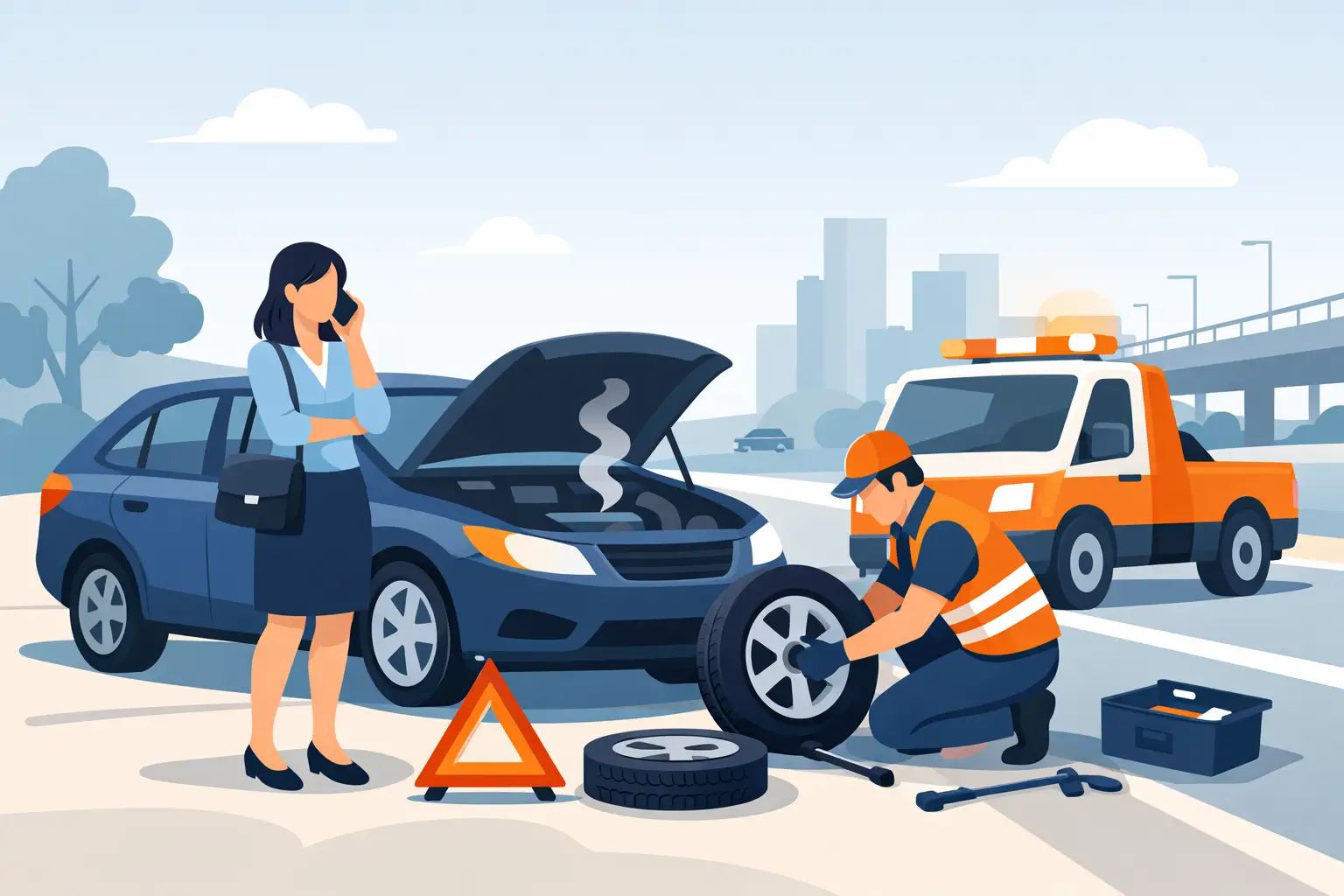
A dead battery in a Pembroke Pines parking garage. A tire that goes flat before the I-95 entrance. A lockout outside your office in Fort Lauderdale when you are already late. Roadside help for commuters is not a convenience in these moments – it is the fast, practical support that gets you out of danger, protects your schedule, and gives you a clear next step.
South Florida commuting can be hard on vehicles. Heat drains batteries, traffic turns a minor mechanical issue into a stressful delay, and busy roads leave little room to figure things out safely. When your vehicle stops cooperating, the goal is simple: get to a safe location, get the right help, and avoid making a costly problem worse.
Why Fast Roadside Help for Commuters Matters
A breakdown during a commute is different from a vehicle problem at home. You may be on a crowded roadway, responsible for picking up children, headed to work, or trying to complete a delivery route. Waiting too long on the shoulder or attempting a repair without the right equipment can create a bigger risk than the original issue.
Fast dispatch matters because the right service depends on what happened. A jump start may get a healthy vehicle moving again. A spare tire installation can save the day if the tire damage is limited. But a vehicle with overheating, steering problems, accident damage, repeated battery failure, or an unsafe tire may need towing instead. A professional roadside provider can assess the situation and help move the vehicle without guesswork.
For commuters in Miramar, Hollywood, Weston, Fort Lauderdale, and Pembroke Pines, local coverage also helps reduce the uncertainty. You need someone who understands that a stalled car near a major route, office complex, school, or shopping center needs prompt attention.
The Most Common Commute Emergencies
Dead batteries and no-start situations
South Florida heat is tough on car batteries. You may turn the key or press the start button and hear clicking, or nothing at all. Interior lights can still work while the battery lacks enough power to start the engine.
A jump start is often the right answer, but only when the battery is the actual issue. If the vehicle starts and immediately dies, displays warning lights, smells like burning, or has corroded or damaged battery connections, do not keep trying to start it. Repeated attempts can leave you stuck in a less safe location. A technician can provide a jump start and help determine whether towing is the safer choice.
Flat tires and tire damage
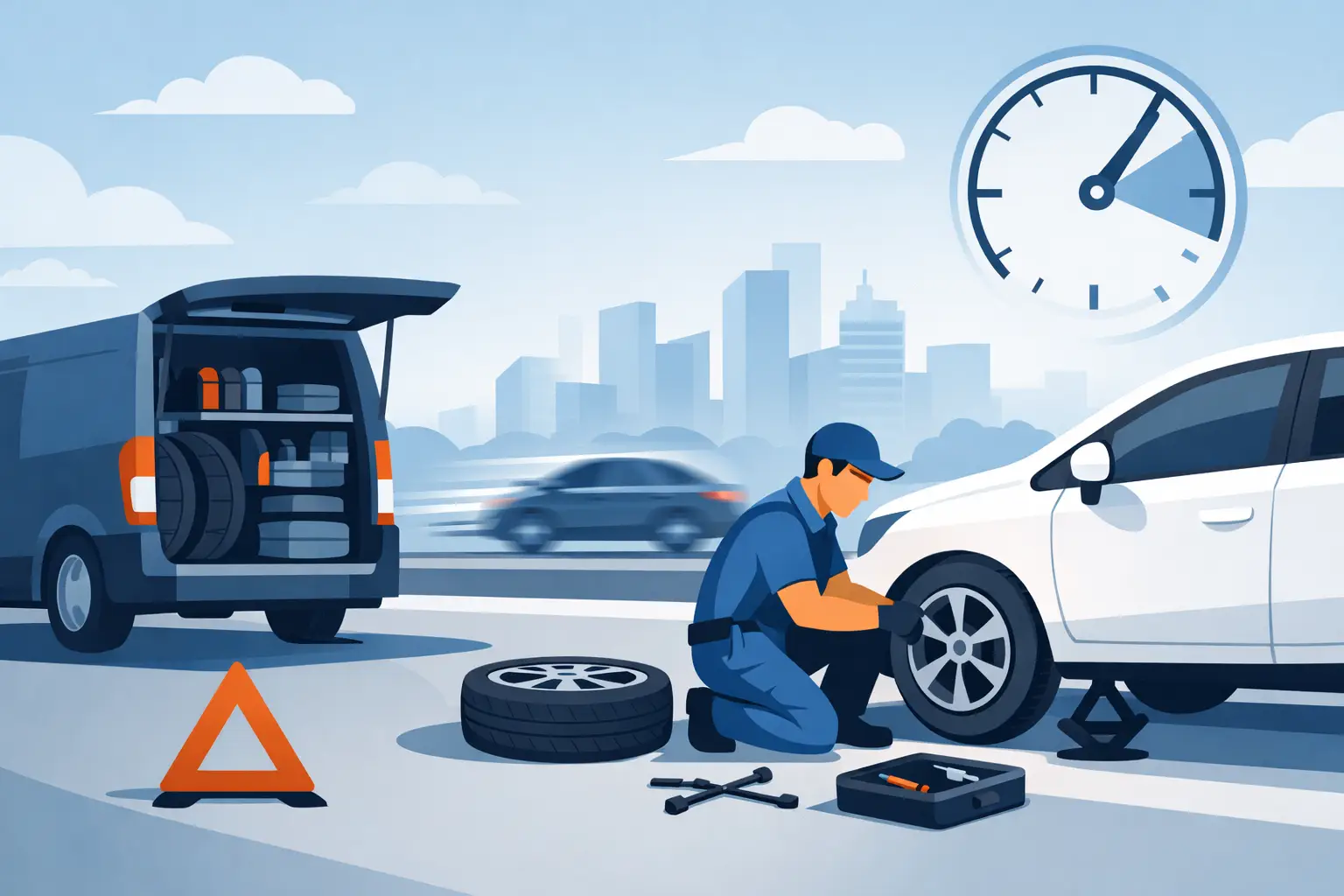
A slow leak may give you time to reach a tire shop. A blowout, torn sidewall, or completely flat tire during rush hour is different. Pull over as far from traffic as safely possible, turn on your hazard lights, and avoid driving on a flat tire. Even a short distance can damage the wheel and turn a tire replacement into a more expensive repair.
Roadside tire service can install your usable spare tire. If you do not have a spare, the spare is damaged, or your vehicle needs specialized towing, a tow truck can transport it to the repair location you choose.
Vehicle lockouts
Keys on the seat, locked doors, and an appointment you cannot miss is a familiar commuter problem. Trying to force open a door with improvised tools can damage weather stripping, locks, window mechanisms, and paint. Modern vehicles can also have sensitive electronic locking systems.
Professional lockout support is the safer route. It is designed to get you back into your vehicle while avoiding unnecessary damage and delay.
Empty fuel tanks
Traffic, detours, a faulty fuel gauge, and a rushed morning can all lead to an empty tank. If you run out of fuel, avoid walking along a busy road or accepting fuel from an unknown source. Fuel delivery brings the correct fuel type to your location so you can get to a nearby station safely.
Accidents and recovery needs
After a collision, your first priority is safety. Move out of traffic when possible, contact emergency services if anyone is injured or the road is blocked, and document the situation when it is safe to do so. Do not drive a vehicle that has leaking fluids, deployed airbags, broken lights, damaged wheels, or body damage that could affect safe operation.
Accident towing provides a controlled way to move the vehicle from the scene. If a car is stuck in mud, a ditch, a parking barrier, or another difficult position, winch-out and recovery service may be needed instead of a standard tow.
When a Tow Is the Better Call
Not every roadside issue requires towing, but commuters should not feel pressured to drive a questionable vehicle just to avoid it. A tow is usually the better decision when the engine overheats, the car will not stay running after a jump, a tire cannot be safely changed, or warning lights are paired with poor steering, braking, smoke, or unusual noises.
Towing is also the smart choice after an accident or when a vehicle is blocking traffic. Local towing can get your car to a trusted repair shop, dealership, home, or other approved destination. Long-distance towing may make sense when your preferred repair facility is farther away or when a breakdown happens away from home.
The trade-off is straightforward: towing may add cost compared with a simple jump start or tire change, but it can prevent further mechanical damage and keep you from driving an unsafe vehicle. In many cases, that is the more affordable decision in the long run.
What to Tell the Dispatcher
Clear details help roadside assistance arrive prepared. Start with your exact location. A street address is helpful, but landmarks, highway direction, exit numbers, parking-garage levels, and nearby businesses can make a major difference when you are in a busy area.
Then explain the vehicle make, model, color, and condition. Mention whether it is a flat tire, no-start, lockout, empty tank, collision, or a vehicle that needs recovery. If you are in a dangerous position, such as on a highway shoulder or partially blocking a lane, say that immediately.
Also share the vehicle’s destination if towing may be needed. Knowing whether you want a repair shop, dealership, residence, or storage location allows the provider to plan the right tow from the start. For fleet vehicles, delivery vans, and work trucks, tell the dispatcher about cargo, vehicle size, and access limitations at the pickup point.
Choosing Local Roadside Service in South Florida
When you are stuck, the lowest quoted price is not the only factor. You need a provider that answers, dispatches promptly, communicates clearly, and offers the service your situation actually requires. A company that can handle jump starts, lockouts, fuel delivery, tire changes, towing, accident towing, and recovery removes the need to make multiple calls while you are stranded.
Local experience matters, too. South Florida has heavy traffic corridors, sudden rainstorms, tight parking areas, and intense heat that can make a roadside delay more stressful. A dependable service team should treat your location and safety as urgent, not leave you wondering what happens next.
ITow&Recovery provides 24/7 roadside assistance and towing for drivers across Broward County and nearby South Florida communities. Whether your commute stops in Miramar, Weston, Hollywood, Pembroke Pines, or Fort Lauderdale, the focus is on quick response, professional care, and a practical solution for your vehicle.
A Few Habits That Make Breakdowns Easier
You cannot prevent every roadside emergency, but a little preparation limits the disruption. Keep your phone charged, carry your registration and insurance details, and make sure your spare tire, jack, and lug wrench are present and usable. Check your fuel level before long traffic-heavy drives, especially when storms or road closures are possible.
Pay attention to early warnings as well. Slow cranking, repeated low-tire alerts, overheating, vibration, and new dashboard warning lights are worth addressing before the next commute. A small repair scheduled on your terms is easier than an emergency stop in traffic.
If your vehicle leaves you stranded, do not gamble with your safety or try to force a solution that could cause more damage. Get to a safe spot if you can, turn on your hazards, and call for the help that gets you moving again.