
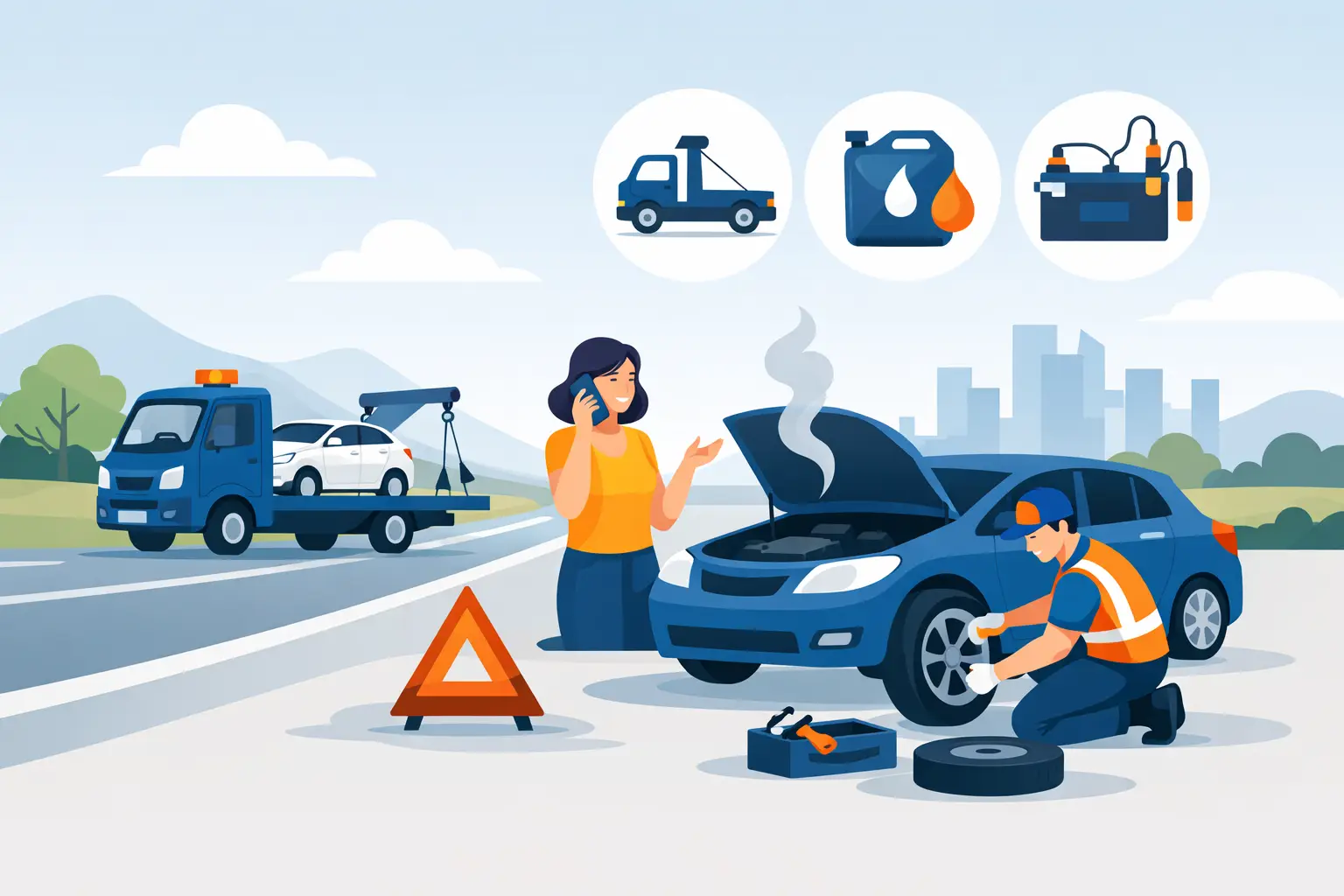
A dead battery outside work in Fort Lauderdale, a flat tire on I-75 near Miramar, or keys locked inside your car in Pembroke Pines can stop your day fast. What does roadside service cover? In most cases, it covers the immediate help needed to get your vehicle moving again or transport it safely when it cannot be repaired on the spot.
The exact coverage depends on your roadside plan, insurance policy, vehicle warranty, or the provider you call. Still, the most common services are built around the same urgent situations: dead batteries, flat tires, lockouts, empty fuel tanks, minor mechanical trouble, and towing. Knowing what to expect helps you make the right call when you are stuck on a South Florida road, in a parking lot, or at home.
What Does Roadside Service Cover?
Roadside service is emergency assistance for a disabled vehicle. It is not a replacement for a repair shop, body shop, or routine maintenance. The goal is simple: solve a minor issue where you are or get your vehicle to a safe repair location without adding more stress to an already difficult situation.
Many plans include a set number of service calls per year or specific mileage limits for towing. A direct roadside provider may instead charge by the service and the distance involved. Before help is dispatched, ask what is included in the quoted price, whether towing distance is limited, and whether your vehicle needs special equipment.
Jump Starts for Dead Batteries
A jump start is one of the most common roadside calls. Florida heat can wear down a battery quickly, and an interior light, phone charger, or aging battery can leave you with a vehicle that will not crank.
A roadside technician can use professional equipment to jump-start the battery safely. If the vehicle starts, you can drive to have the battery and charging system tested. If it will not start, or if it dies again immediately, a tow may be the safer next step. Roadside service can restart the car, but it cannot always fix a failed battery, alternator, starter, or electrical problem at the curb.
Flat Tire Changes
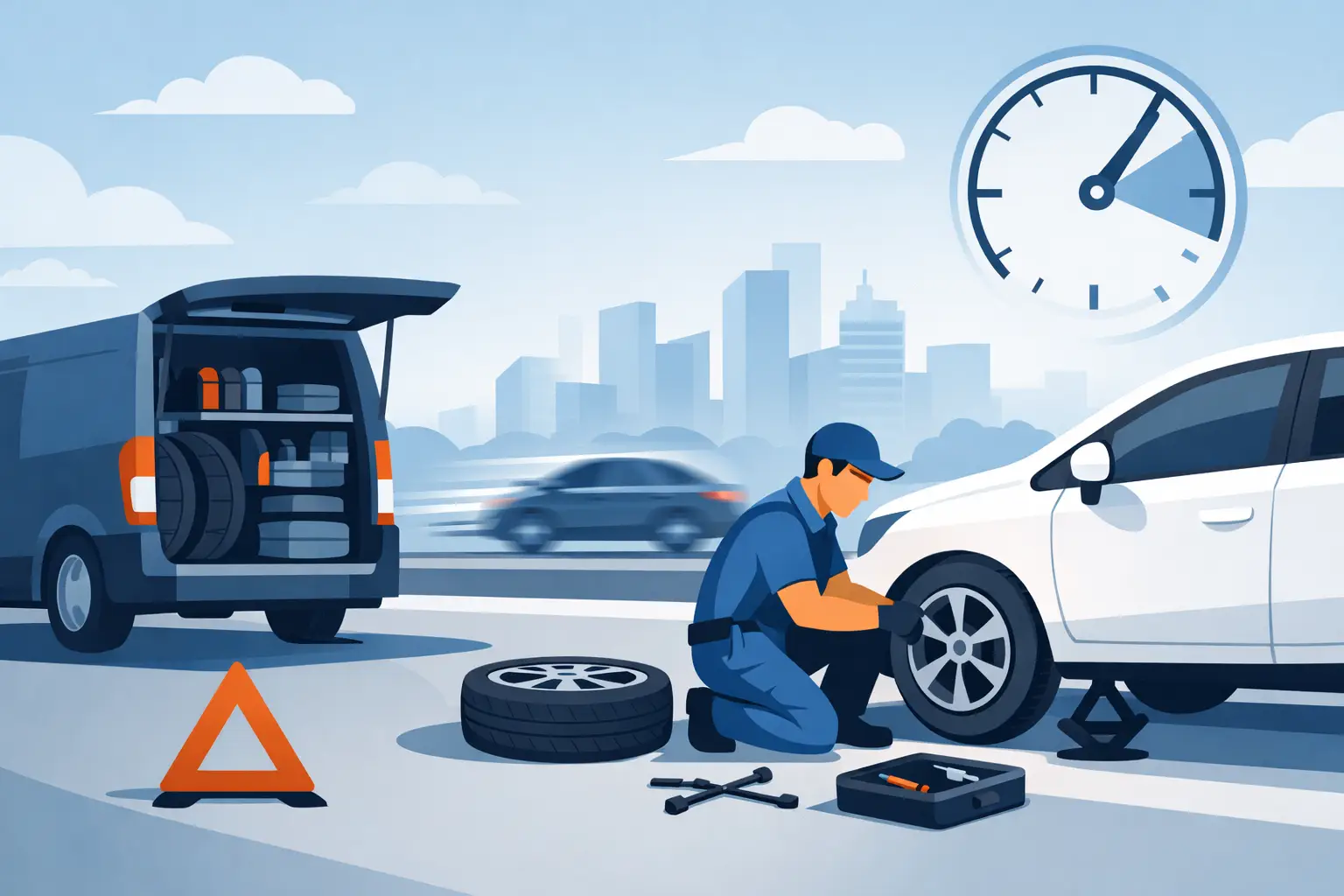
Roadside assistance generally covers installing your usable spare tire. The technician will remove the damaged tire and put on the spare so you can reach a tire shop. This is especially helpful on busy roads, in heavy rain, or when you do not have the tools, strength, or safe space to change it yourself.
There are limits. Roadside service does not usually provide a new tire, repair a damaged wheel, or install a spare that is flat, missing, or unsafe to use. Some newer vehicles do not come with spare tires at all. If you have no usable spare, towing to a tire shop is typically the practical solution.
Vehicle Lockout Service
Locking keys in the car happens to careful drivers every day. Roadside lockout service is designed to help you regain access without breaking a window or damaging the door.
Coverage usually includes an attempt to unlock the vehicle with professional tools. However, security systems, key fobs, damaged locks, and certain high-end or newer models can make entry more complicated. A roadside technician may be able to open the vehicle, but key replacement, programming, and ignition repairs are usually locksmith or dealership services.
Fuel Delivery
Running out of gas is frustrating, particularly when traffic, heat, or an unfamiliar route has changed your plans. Roadside fuel delivery brings enough fuel to help you reach the nearest gas station.
What varies is the cost of the fuel itself. Some plans include delivery but require you to pay for the gasoline or diesel. Others provide a small amount at no charge. If your vehicle uses diesel, premium fuel, or has a specialized fuel requirement, say so when requesting service to avoid a delay or the wrong delivery.
Towing When a Roadside Fix Is Not Enough
Towing is often the most valuable part of roadside coverage. If a jump start does not work, the tire damage is severe, the car overheats, or a mechanical issue makes driving unsafe, the vehicle can be transported to a repair shop, dealership, your home, or another approved destination.
Towing coverage is not always unlimited. Memberships and insurance plans may cap the towing distance, such as five, 15, or 100 miles, then charge per mile beyond that limit. The tow type also matters. A disabled sedan may need a standard tow, while an all-wheel-drive vehicle, low-clearance car, commercial van, or accident-damaged vehicle may require a flatbed or specialized recovery equipment.
If your vehicle has been in a collision, has slid into a ditch, is stuck in mud, or cannot be safely reached from the road, basic towing may not cover the full recovery. Ask whether winch-out or recovery service is needed and request pricing before dispatch when possible.
Services That May Not Be Included
Roadside service is meant for immediate mobility and safety, not complete vehicle repair. Common exclusions include replacement parts, labor-intensive mechanical repairs, tire purchases, battery purchases, diagnostics beyond a basic assessment, and damage caused by an accident.
It may also exclude vehicles that are illegally parked, overloaded, abandoned, or located in a place that is unsafe or inaccessible for a tow truck. Parking garage clearance, locked gates, flooded areas, soft ground, and heavily damaged vehicles can change the equipment and cost required.
For commercial vehicles and small fleets, standard personal roadside plans may not apply at all. Cargo weight, vehicle size, fleet authorization, and service location can affect what assistance is available. A delivery driver with a disabled van should explain the vehicle type and issue clearly so the right truck is sent the first time.
How to Get Faster Roadside Help
The fastest dispatch starts with accurate information. When calling for assistance, share your exact location, vehicle make and model, the problem you are experiencing, and whether the vehicle is in a safe place. A nearby cross street, mile marker, parking lot name, or business address is more useful than a general neighborhood.
Also mention anything that affects access. Tell the dispatcher if you are in a garage, on a highway shoulder, carrying a spare tire, driving an electric vehicle, towing a trailer, or dealing with accident damage. Those details help prevent a technician from arriving with equipment that is not suited to the job.
If you are stopped on a busy road, turn on your hazard lights, move as far from traffic as you safely can, and stay away from moving vehicles. Do not stand between your car and traffic. In severe weather, on high-speed roads, or after a collision, personal safety comes before trying to troubleshoot the vehicle.
Roadside Assistance or a Direct Service Call?
A roadside membership or insurance benefit can reduce your out-of-pocket cost, but it can also come with call limits, distance restrictions, authorization steps, and longer wait times during peak demand. A direct local provider can be the better option when you need immediate dispatch, have exceeded your plan limits, need a longer tow, or require help that your coverage does not include.
For drivers across Miramar, Weston, Hollywood, Pembroke Pines, and Fort Lauderdale, ITow&Recovery provides 24/7 roadside assistance and towing for the problems that cannot wait. Whether you need a jump start, tire change, fuel delivery, lockout service, winch-out, or a tow, the right response begins with a clear description of what happened and where you are.
The best roadside coverage is the kind that gets you out of danger and back to a safe plan quickly. Keep your roadside benefit information handy, but do not wait until a breakdown to understand its limits. When your vehicle will not move, clear details and fast professional help make all the difference.