
A flat tire on I-75 at night feels different than a dead battery in your driveway. So does running out of gas on US-27 in Weston, locking your keys in the car in Pembroke Pines, or ending up on the shoulder after a crash in Fort Lauderdale traffic. This guide to roadside emergencies is built for South Florida drivers who need clear steps fast, not guesswork.
When your vehicle stops cooperating, the first job is not fixing the car. The first job is protecting yourself, your passengers, and everyone around you. A lot of roadside situations get worse because drivers panic, step into traffic, or try to force a quick repair in an unsafe spot. The right move depends on where you are, what failed, and whether the vehicle can be moved safely.
Guide to roadside emergencies: what to do first
Start with your location. If the vehicle still rolls and you can steer safely, move it as far off the road as possible. A wide shoulder, parking lot, side street, or well-lit area is always better than stopping in a live lane or on a narrow shoulder. Turn on your hazard lights immediately.
If you are on a busy highway, stay calm and think visibility. South Florida roads move fast, especially around Fort Lauderdale and the major corridors through Miramar and Hollywood. If the car is in a dangerous position and you cannot move it, keep your seat belt on until it is safe to exit. If you do get out, use the passenger side when possible and move well away from traffic.
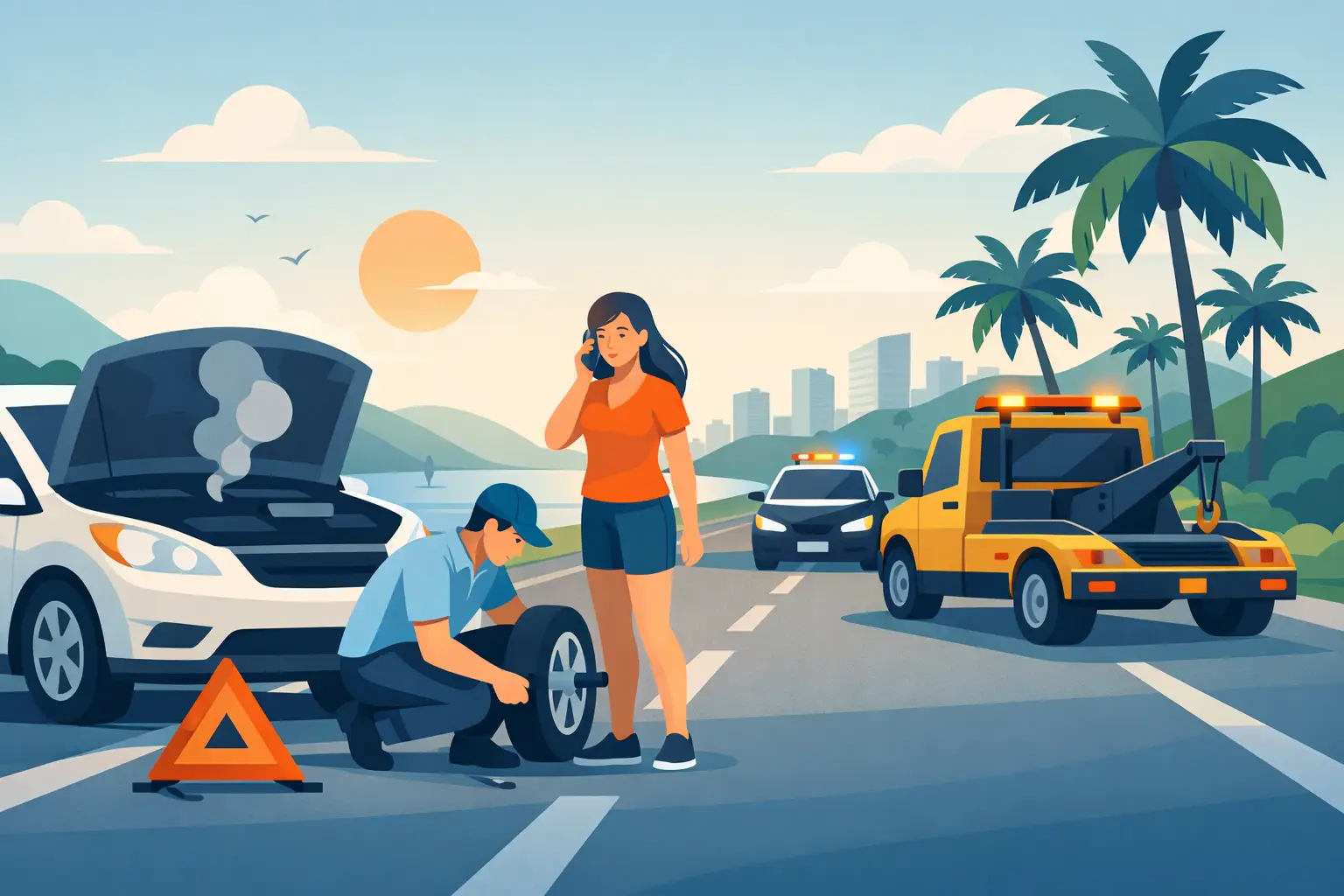
Call for help early if the problem is not simple or the location is risky. Waiting too long usually adds stress and can turn a manageable breakdown into a dangerous situation. If there is smoke, leaking fluid, airbag deployment, or any sign of injury, treat it as an emergency first and a vehicle problem second.
When a roadside problem is safe to handle yourself
Some situations are minor enough for a driver to handle, but only if the setting is safe and you know what you are doing. A dead battery in a driveway is one thing. A flat tire next to moving traffic in the rain is another.
If your vehicle is safely parked and the issue is straightforward, you may be able to handle a battery jump, add fuel, or change a tire. But there is a trade-off. Saving a few minutes is not worth it if visibility is poor, the ground is unstable, or you do not have the right tools. South Florida heat, sudden storms, and heavy traffic make roadside judgment more important than people realize.
If you are unsure, stop troubleshooting and call a professional. That is usually the smartest move for lockouts, winch-outs, damaged tires, collision towing, and any breakdown that leaves the vehicle partly disabled.
Dead battery
A dead battery often shows up with clicking sounds, dim lights, or no crank at all. If you have jumper cables and another vehicle, a jump start may solve the issue. But if the battery is old, corroded, or repeatedly dying, the jump may only buy you a short drive.
If the battery dies in a parking lot or at home, the situation is usually simple. If it dies in traffic or in an unsafe shoulder position, roadside assistance is the better choice. A fast jump start gets you moving, and if the car still will not start, towing may be the next step.
Flat tire or blowout
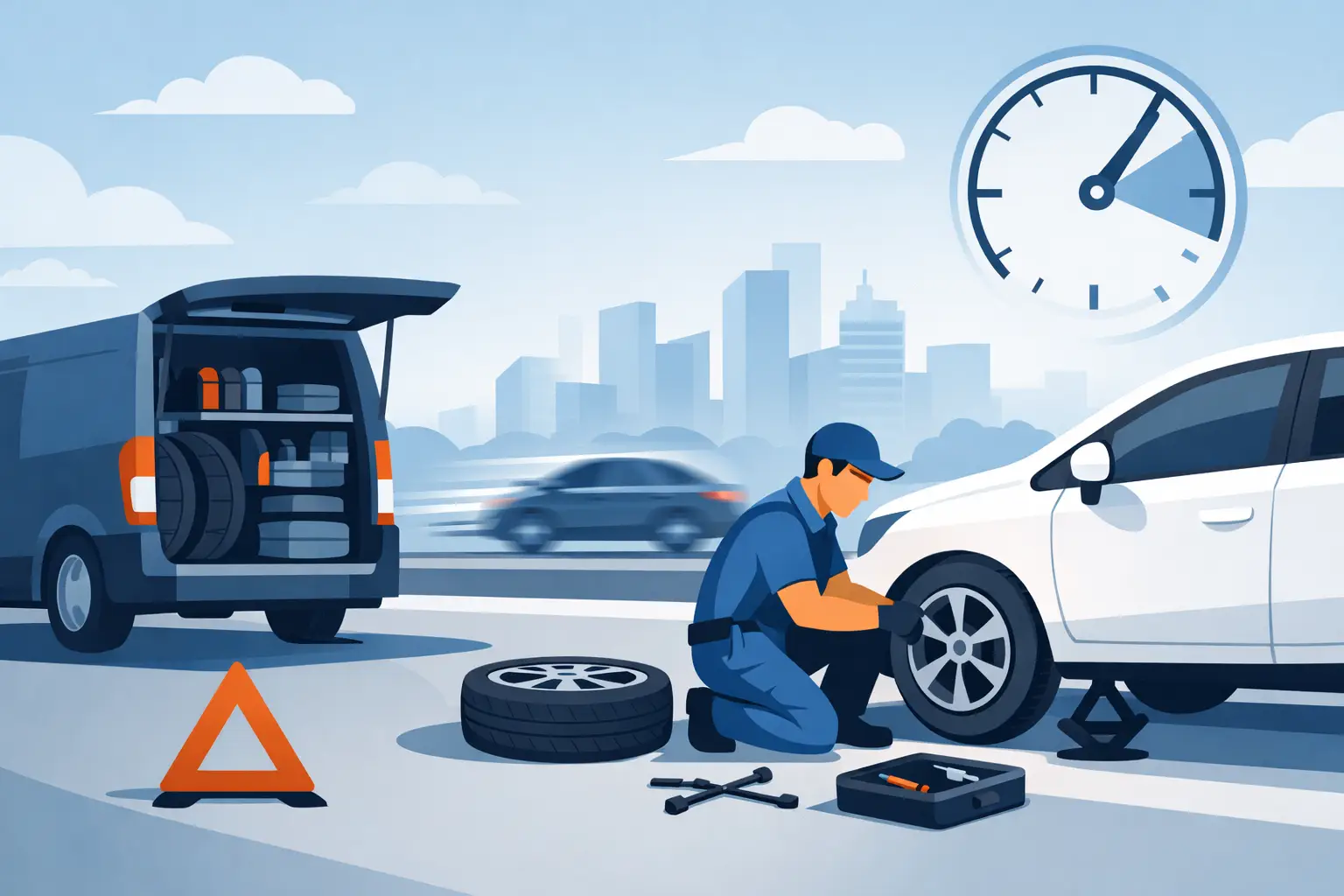
A slow leak in a parking lot gives you options. A blowout on the highway is different. Grip the wheel, avoid slamming the brakes, and guide the vehicle to a safer area. Once stopped, inspect from a safe distance.
Changing a tire sounds easy until the lug nuts are seized, the jack sinks, or the spare is underinflated. If you are on uneven ground, close to traffic, or driving a larger vehicle, professional tire service is often the safer answer. There is no prize for wrestling with a damaged wheel on the shoulder.
Out of gas
Running out of fuel happens more often than drivers like to admit, especially with long commutes and busy schedules. If the gauge is at empty and the engine quits, steer the vehicle out of traffic if you can. Turn on hazards and avoid repeated restart attempts.
Fuel delivery is usually faster and safer than walking to a gas station, especially at night or on high-speed roads. It also reduces the chance of standing near traffic with a gas can.
Vehicle lockout
Lockouts are frustrating because the car is fine, but you are stuck anyway. Modern vehicles make do-it-yourself entry riskier than it used to be. Forcing the door can damage the weather stripping, lock mechanism, or glass.
If a child, elderly passenger, or pet is locked inside, time matters and emergency services may be necessary depending on the heat and immediate risk. In a standard lockout, professional roadside support is the cleanest solution.
Guide to roadside emergencies after a collision
A crash changes the situation immediately. Even a low-speed accident can damage steering, suspension, tires, or fluid lines. If the vehicle feels drivable, that does not always mean it is safe to continue.
First, check for injuries and call emergency services if needed. If the vehicles can be moved safely and local conditions allow it, move out of active traffic. Turn on hazard lights and stay visible. Take photos, exchange information, and avoid roadside arguments that keep everyone exposed longer than necessary.
After that, think about the condition of the vehicle. If there is body damage rubbing a tire, fluid leaking under the car, deployed airbags, or any sign the vehicle may not track straight, towing is the right call. Driving a damaged vehicle a few more miles can create a larger repair bill or put you back in danger.
Situations that usually need towing, not roadside help
A lot of drivers hope every breakdown can be fixed where it sits. Sometimes it can. Sometimes the fastest path is towing the vehicle off the road and into a repair facility or safe location.
Transmission failure, major overheating, collision damage, broken suspension parts, electrical failure, and engine problems usually point toward towing. The same goes for vehicles stuck in mud, grass, a ditch, or a flooded shoulder. South Florida weather can turn a simple pull-off into a winch-out call fast.
Commercial drivers and fleet operators often know this already. Downtime costs money. If the vehicle is not going to be back on the road quickly, delaying the tow only delays the real fix.
What to keep in your car before trouble starts
Preparation helps, but it should stay practical. You do not need to turn your trunk into a repair shop. A few basics make a real difference: a charged phone, flashlight, jumper cables, tire pressure gauge, water, reflective triangles or flares, and your spare tire tools if your vehicle has them.
It also helps to keep your registration and insurance easy to reach, along with a roadside contact number. In an actual breakdown, drivers waste time searching through glove boxes, scrolling old texts, or trying to remember who to call. That delay feels longer when you are stranded in heat or rain.
If you drive long distances across Broward County or manage work vehicles, check battery health and tire condition before they become emergency calls. Prevention is cheaper, but when failure happens, speed matters.
Why local response matters in South Florida
Roadside service is not just about equipment. It is about dispatch speed, local route knowledge, and knowing how traffic moves in places like Miramar, Hollywood, Weston, Pembroke Pines, and Fort Lauderdale. A provider that already works these areas every day can usually get to you faster and handle the situation with less confusion.
That matters when you are stuck on the shoulder, late for work, stranded with your family, or trying to keep a business vehicle moving. It also matters after hours, because breakdowns do not wait for business hours.
A local company like ITow&Recovery understands the pressure drivers feel in these moments. The goal is simple: get to you fast, secure the vehicle properly, and help you move forward without adding more stress.
The right call in a roadside emergency
Most roadside emergencies feel bigger in the moment than they are, but that does not mean you should underestimate them. A flat tire, lockout, dead battery, or crash can go from inconvenient to dangerous quickly depending on traffic, weather, and vehicle condition.
If you can move to a safe spot, stay visible, and avoid unnecessary risks, you are already making the right first move. After that, trust the situation in front of you. Some problems need a quick roadside fix. Others need a tow right away. The safest decision is usually the one that gets you out of danger fastest.