
When your car is stuck on the shoulder in Miramar, sitting in a parking lot in Pembroke Pines, or disabled after a crash in Fort Lauderdale, the question is not just who can tow it. It is also flatbed towing vs dolly – which one is the right move for your vehicle, your budget, and the condition the car is already in.
Most drivers do not think about towing methods until they need one fast. That is normal. In an emergency, you want a truck that shows up quickly, handles the vehicle the right way, and gets it where it needs to go without adding more damage. The best towing choice depends on what you drive, what happened to it, and how far it needs to go.
Flatbed towing vs dolly: what is the difference?
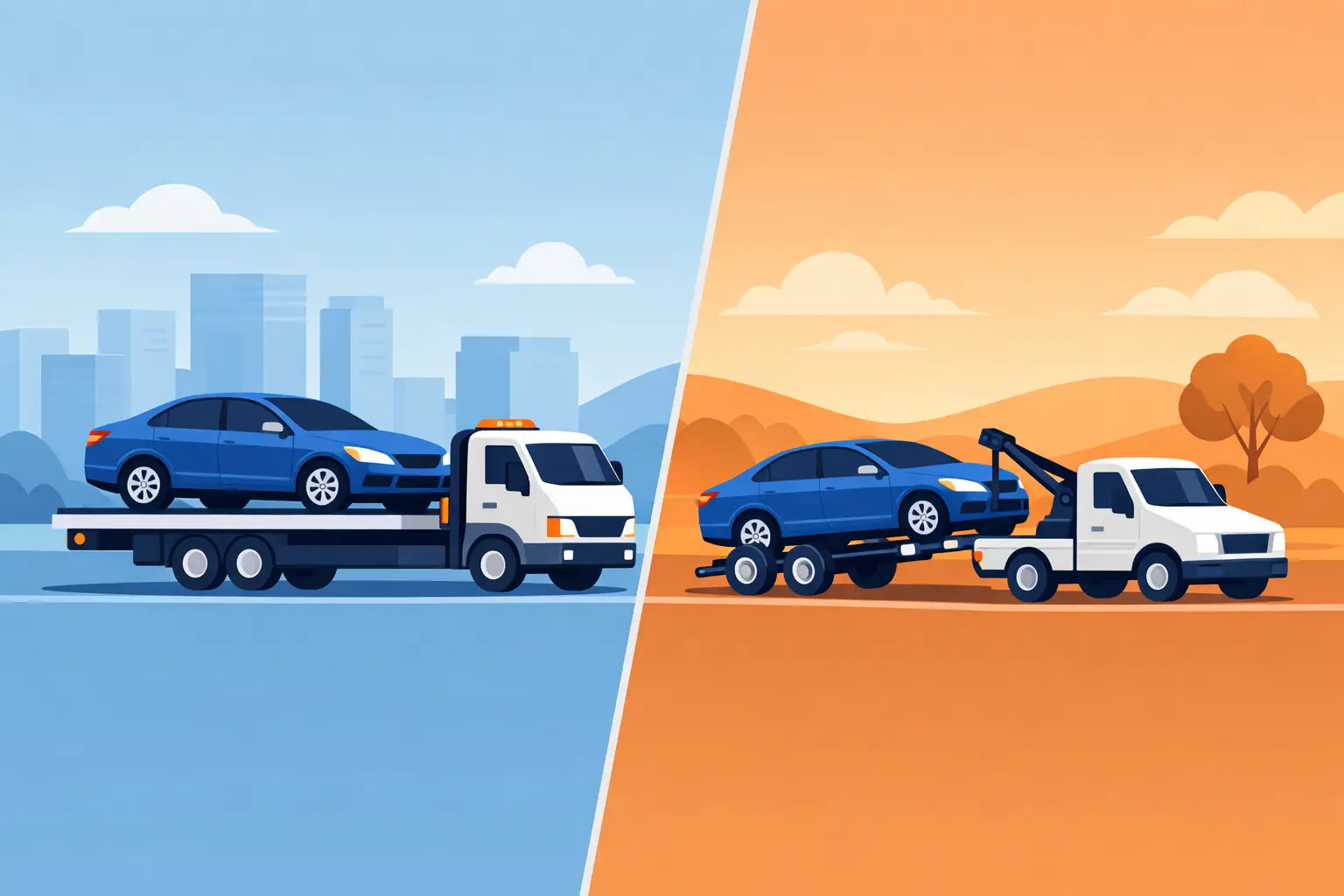
A flatbed tow truck carries the entire vehicle off the ground on a platform. Your car is loaded onto the bed and secured for transport. None of the tires stay in contact with the road during the tow.
A tow dolly lifts only two wheels off the ground, while the other two wheels remain on the road. In most cases, the front wheels are raised and the rear wheels roll behind. This method can work well for some vehicles, but not for every vehicle and not for every breakdown.
That difference matters more than many people realize. If a vehicle has drivetrain issues, wheel damage, low clearance, or all-wheel drive, the wrong towing setup can create expensive problems.
When flatbed towing is usually the safer choice
Flatbed towing is the better option when protection matters most. If your vehicle was in an accident, has heavy front-end or rear-end damage, has a broken axle, has steering issues, or will not roll properly, a flatbed is often the safest and cleanest solution.
It is also the preferred method for all-wheel-drive vehicles, many luxury cars, lowered cars, electric vehicles, and vehicles with transmission concerns. Since all four wheels are off the road, there is less risk of wear, drivetrain strain, or road-related damage during transport.
For longer distances, flatbed towing also gives drivers more peace of mind. A vehicle riding fully on the truck bed is generally more stable over miles of highway travel than a vehicle partly rolling behind a truck. If your car needs to go from Hollywood to Weston, or farther across South Florida, that added security can be worth it.
Another factor is vehicle condition after a breakdown. If the car cannot be shifted properly, the tires are damaged, or suspension parts are compromised, loading it onto a flatbed avoids putting stress on parts that may already be failing.
When a tow dolly can make sense
A tow dolly can be a practical option for the right vehicle in the right situation. If you have a front-wheel-drive car, the vehicle is otherwise intact, and the tow is straightforward, a dolly may be enough.
This method is often used for shorter transport needs or situations where full flatbed service may not be necessary. It can also be a more budget-friendly option in some cases, which matters when you are already dealing with an unexpected roadside expense.
That said, cheaper does not always mean better for your situation. A dolly works best when the vehicle is tow-compatible, the undriven wheels can safely stay on the road, and there is no accident damage or mechanical issue that makes rolling unsafe.
Flatbed towing vs dolly for different drivetrains
This is where the decision gets more specific.
Front-wheel-drive vehicles are often the easiest match for a tow dolly, because the drive wheels can be lifted while the rear wheels roll. Even then, tire condition, alignment issues, and accident damage still matter.
Rear-wheel-drive vehicles can sometimes be towed with a dolly, but the setup becomes more complicated. In some cases, the driveshaft may need extra attention, and a flatbed may still be the better route.
All-wheel-drive and four-wheel-drive vehicles are where flatbed towing becomes much more important. Towing these vehicles with two wheels on the ground can damage the drivetrain, transfer case, or transmission, depending on the make and model. If you are not completely sure what your vehicle allows, the safest move is to use a flatbed.
For electric vehicles and many hybrids, flatbed towing is also commonly recommended. These vehicles often have manufacturer-specific towing requirements, and guessing wrong can be expensive.
Damage risk is where the real difference shows up
For many drivers, the biggest issue is not how the vehicle gets moved. It is whether the tow creates a second repair bill.
Flatbed towing reduces the chance of extra wear because the vehicle is fully lifted and secured. There is less exposure to road debris, less strain on tires and suspension during transport, and less concern about what is happening inside the drivetrain while the vehicle is being moved.
With a dolly, part of the vehicle is still traveling on the road. That can be perfectly acceptable in the right circumstances, but it introduces more variables. If a tire is weak, a wheel is bent, the alignment is already off, or the rear suspension has been affected by a collision, towing with two wheels down may not be the best call.
This is especially true after accidents. A car may look towable at a glance, but hidden damage can make a partial lift risky. In those situations, a flatbed is often the professional choice.
Cost matters, but so does the type of problem
Drivers often ask which option costs less. In general, a tow dolly setup can be less expensive than flatbed towing. But price should be weighed against the condition of the vehicle and the potential for damage.
If your car is a standard front-wheel-drive sedan with no crash damage and it just needs a short tow after a mechanical issue, a dolly may be a reasonable way to save money. If your vehicle is newer, lower to the ground, all-wheel drive, damaged, or going a longer distance, the extra cost of a flatbed often makes sense.
Paying less for the wrong towing method can cost more later. That is why experienced dispatchers ask about the make, model, damage, and symptoms before sending equipment.
What South Florida drivers should keep in mind
Roadside situations in South Florida are not always simple. Heavy traffic, heat, afternoon rain, highway breakdowns, tight parking lots, and post-accident conditions all affect what towing method makes sense.
If your vehicle breaks down on I-75, along Pines Boulevard, near downtown Hollywood, or in a crowded Fort Lauderdale lot, speed matters. But the fastest response is only helpful if the truck that arrives is equipped for the job.
That is why local experience matters. A towing company serving Miramar, Weston, Pembroke Pines, and surrounding Broward County roads sees these scenarios every day. They know when a dolly is enough and when a flatbed is the safer call. ITow&Recovery handles both routine roadside tows and more complicated accident or damage situations, which makes that decision easier when you are under stress.
How to know which towing method you need
If you are stranded and unsure, do not guess. Tell the dispatcher what happened. Mention whether the car was in an accident, whether it starts, whether the wheels turn normally, whether a tire is flat or broken, and what type of vehicle you drive.
A good towing company will use that information to recommend the right setup. In some cases, a dolly is enough. In many others, especially with damaged vehicles or modern drivetrains, a flatbed is the right answer.
If your car is luxury, electric, all-wheel drive, low clearance, heavily loaded, or visibly damaged, expect flatbed towing to be the safer recommendation. If it is a basic front-wheel-drive vehicle with no major damage and the tow is short, a dolly may be an option.
The better question is not which is cheaper
Flatbed towing vs dolly is really a question of fit. One method is not automatically better in every case. The right choice depends on the vehicle, the damage, the distance, and the risk of making things worse.
When you are already dealing with a breakdown or accident, the goal is simple. Get the vehicle moved safely, quickly, and without adding more stress. If you are not sure which towing method your situation calls for, the best next step is to speak with a local towing team that can make the call based on what is actually happening at the scene.
The right tow should solve the problem, not create a new one.