
The sound of a crash changes everything in a second. If you’re standing on the shoulder in Miramar, stuck in traffic near Fort Lauderdale, or shaken up in a parking lot in Pembroke Pines, knowing who to call after collision can keep the situation from getting worse.
Panic makes people call the wrong person first. They call a friend before 911, or their insurance company before arranging safe towing, or they stay too long in an unsafe spot trying to figure it out. The right move is to follow the situation, not your stress. Start with safety, then the police if needed, then towing, then insurance, and then anyone else who needs to know.
Who to call after collision first
The first call depends on whether anyone is hurt and whether the vehicles are creating danger. If there are injuries, if a driver is unresponsive, if there is heavy traffic around the scene, or if the crash blocks the road, call 911 first. That is not just the safest option. In many cases, it is the only reasonable option.
If nobody is injured and the vehicles can be moved, get to a safer spot if possible. Turn on your hazard lights. If the car is not drivable, do not force it off the road if that could cause more damage. At that point, a towing and recovery company is often the next call because a disabled or badly damaged vehicle needs to be handled quickly and correctly.
There is a difference between a minor bump and a serious collision, and that difference matters. A fender bender in a shopping center lot may allow a little more time to document the scene and exchange information. A collision on I-75, the Turnpike, or a busy South Florida intersection needs fast action because traffic risk goes up by the minute.
Call 911 when safety is on the line
A lot of drivers hesitate to call emergency services because they think the crash is “not serious enough.” That can be a mistake. If there is any injury, possible head or neck pain, leaking fluid, smoke, fire risk, aggressive behavior from another driver, or uncertainty about whether the scene is safe, call 911.
Police response also helps create an official record. That can matter later when fault is disputed or when insurance asks for documentation. If law enforcement tells you to move the vehicle, follow those instructions. If they tell you to wait for a tow, have a local towing company ready to respond so the car is not left sitting in a dangerous position.
When to call a tow truck after a crash
After the immediate safety issue is handled, the next practical question is whether the vehicle can be driven. If steering feels off, a tire is damaged, fluid is leaking, the bumper is dragging, the wheel is bent, or warning lights come on after impact, do not assume you can limp it home. Driving a damaged vehicle can make the problem worse and put you back in danger a mile later.
This is when calling a local towing company makes sense. Fast dispatch matters after a collision because you want the vehicle removed safely, especially on busy roads in Hollywood, Weston, Fort Lauderdale, and surrounding areas. You also want a team that knows how to handle accident towing, not just basic hook-and-go service.
A proper tow after a collision protects your vehicle from additional damage. It also keeps you from being stranded while trying to decide what to do next. If the car needs to go to a body shop, your home, a mechanic, or another secure location, having that arranged early saves time and stress.
Who to call after collision if your car still runs
A car that starts is not always a car that should be driven. That is one of the biggest mistakes drivers make after an accident. The engine may run fine while the suspension, alignment, cooling system, or wheel assembly is compromised.
If the vehicle was hit hard enough to affect handling, if an airbag deployed, or if there is visible body damage near the wheels or undercarriage, call for a tow even if it technically moves. On the other hand, if the contact was extremely minor, the vehicle drives normally, and there is no visible damage affecting safety, you may be able to leave the scene without towing. It depends on the condition of the vehicle, not just the size of the impact.
That is where a practical, local operator can help. In South Florida, a fast-response towing company can remove the guesswork and get your vehicle where it needs to go without you risking more damage on the road.
Call your insurance company, but not always first
Insurance is important, but it is not always the first call after a collision. If the scene is unsafe, if the car cannot be driven, or if police are involved, handle those issues first. Insurance can wait a few minutes while you get yourself out of immediate danger.
Once you are safe, contact your insurer to report the accident and get direction on the claim process. They may ask for photos, the police report number, the other driver’s information, and the tow destination. If you already know where the vehicle is being taken, that can make the conversation smoother.
There is also a trade-off here. Some drivers wait too long to call insurance because they hope the damage is minor. Others call immediately before they have basic facts. The better approach is simple: document the scene, secure the vehicle, and then report the accident as soon as you reasonably can.
Don’t forget these calls after a crash
Once the urgent calls are handled, there may be a few others to make depending on your situation. If you were driving a company vehicle, call your employer or fleet manager. If a family member needs to pick you up, let them know where you are. If your car is at a tow yard, body shop, or repair facility, make sure you know exactly where it is going before the truck leaves.
If you are in a rideshare, delivery, or work vehicle, follow your company reporting rules. Commercial drivers and small fleet operators usually need fast towing even more than individual drivers because downtime costs money. A delayed response can turn one collision into a missed shift, missed route, or lost day of work.
What to do before you make the next call
Before you get pulled into phone calls, take a minute to gather the details you will need. Get the other driver’s name, contact information, insurance information, plate number, and vehicle description. Take photos of both vehicles, the road, traffic signs, and any visible damage. If there are witnesses, get their names and numbers.
Keep your answers calm and factual. Do not argue at the scene, and do not guess about injuries or fault. When you call for towing, be ready to give your exact location, vehicle type, condition of the car, and whether it is in a travel lane, shoulder, parking lot, or driveway. That helps get the right truck out fast.
Why local towing matters after a South Florida collision
South Florida traffic is not forgiving. A disabled vehicle on a busy road in Miramar, Hollywood, Pembroke Pines, Weston, or Fort Lauderdale can go from stressful to dangerous quickly. Local response matters because every minute counts when a damaged car is stuck in traffic, blocking access, or sitting in heat and rain with a shaken driver nearby.
A local company also understands the area, the common road conditions, and how to move quickly between service zones. That matters after a collision because you do not want long hold times, confusion about your location, or a provider that treats accident towing like a routine pickup.
ITow&Recovery handles urgent towing and roadside situations across South Florida with the kind of fast, practical response drivers need when they are stranded after a crash. For many drivers, that speed is the difference between getting the situation under control and watching it get more complicated.
The wrong call can cost you time
If you call the wrong person first, the whole process slows down. Calling a friend who cannot help move the car does not solve the road hazard. Calling insurance before arranging safe removal can leave you waiting in traffic. Trying to drive a damaged vehicle can turn collision damage into mechanical failure.
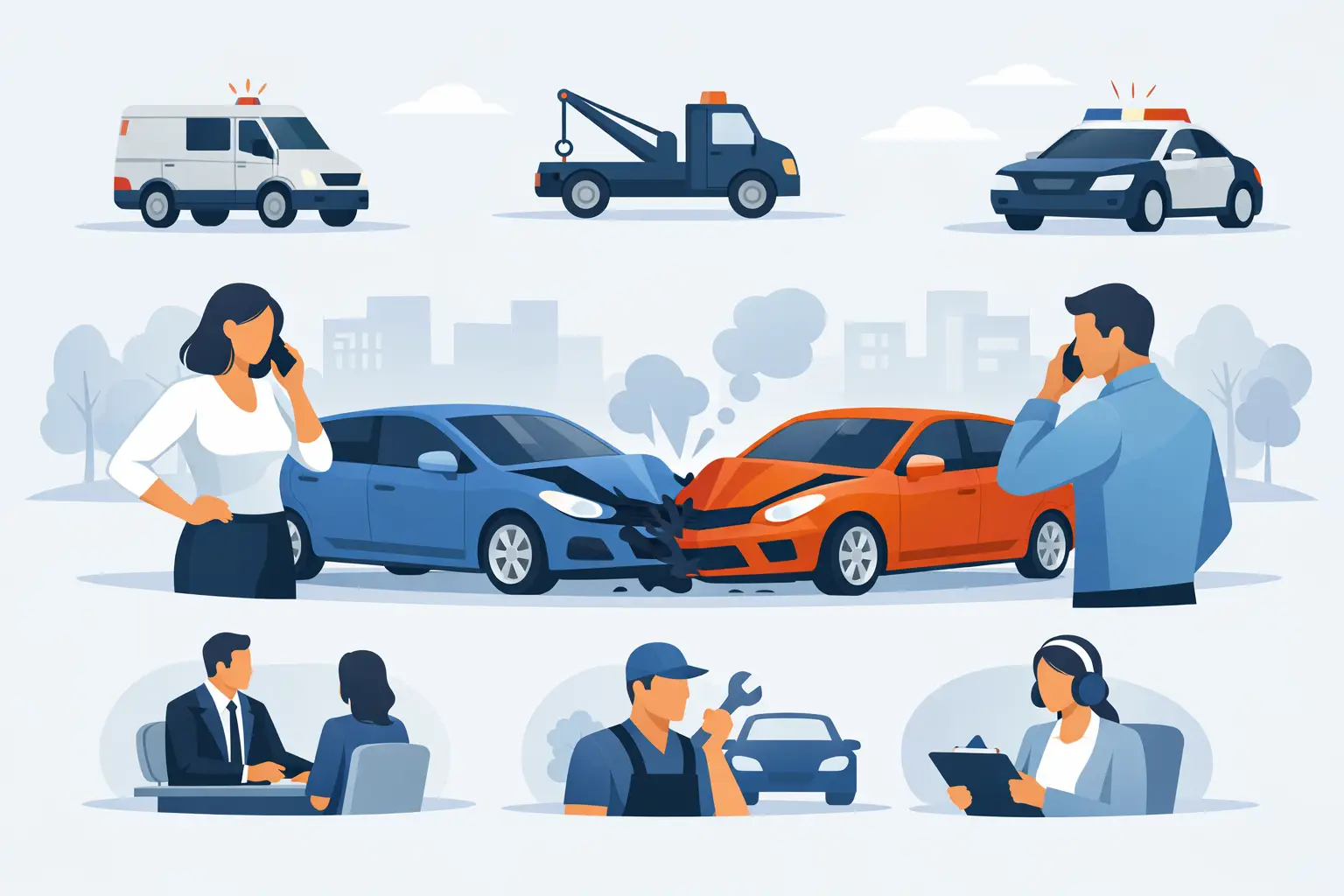
The better sequence is straightforward. If there is danger or injury, call 911. If the vehicle is not safe to drive, call for towing. Then call insurance. After that, handle personal, work, or repair-related calls.
A collision leaves you stressed, rushed, and second-guessing every move. The best next step is the one that gets you safe, gets your vehicle handled properly, and gets you off the road without more damage or delay.