
A flat tire on I-95, a side street in Miramar, or a parking lot in Fort Lauderdale can turn a normal drive into a stressful stop fast. Knowing how emergency tire service works helps you make the right call, protect yourself while you wait, and get back on the road without taking unnecessary risks.
Emergency tire service is designed for the moment when your vehicle cannot safely continue because of a flat, blowout, damaged wheel, or tire pressure problem. A roadside technician comes to your location, evaluates what happened, and determines whether a tire change can be completed there or whether towing is the safer option.
How Emergency Tire Service Works at the Roadside
The process usually starts with a call for help. The dispatcher will ask for your location, vehicle type, the condition of the tire, and whether you have a usable spare. Clear details help send the right equipment and give the technician a better idea of what to expect before arriving.
Location matters in South Florida. A vehicle stopped on a busy stretch near Hollywood or Pembroke Pines presents a different safety situation than one parked in a residential driveway in Weston. If you can safely identify a nearby cross street, landmark, parking-lot entrance, mile marker, or business name, response is faster and there is less guesswork when the service vehicle arrives.
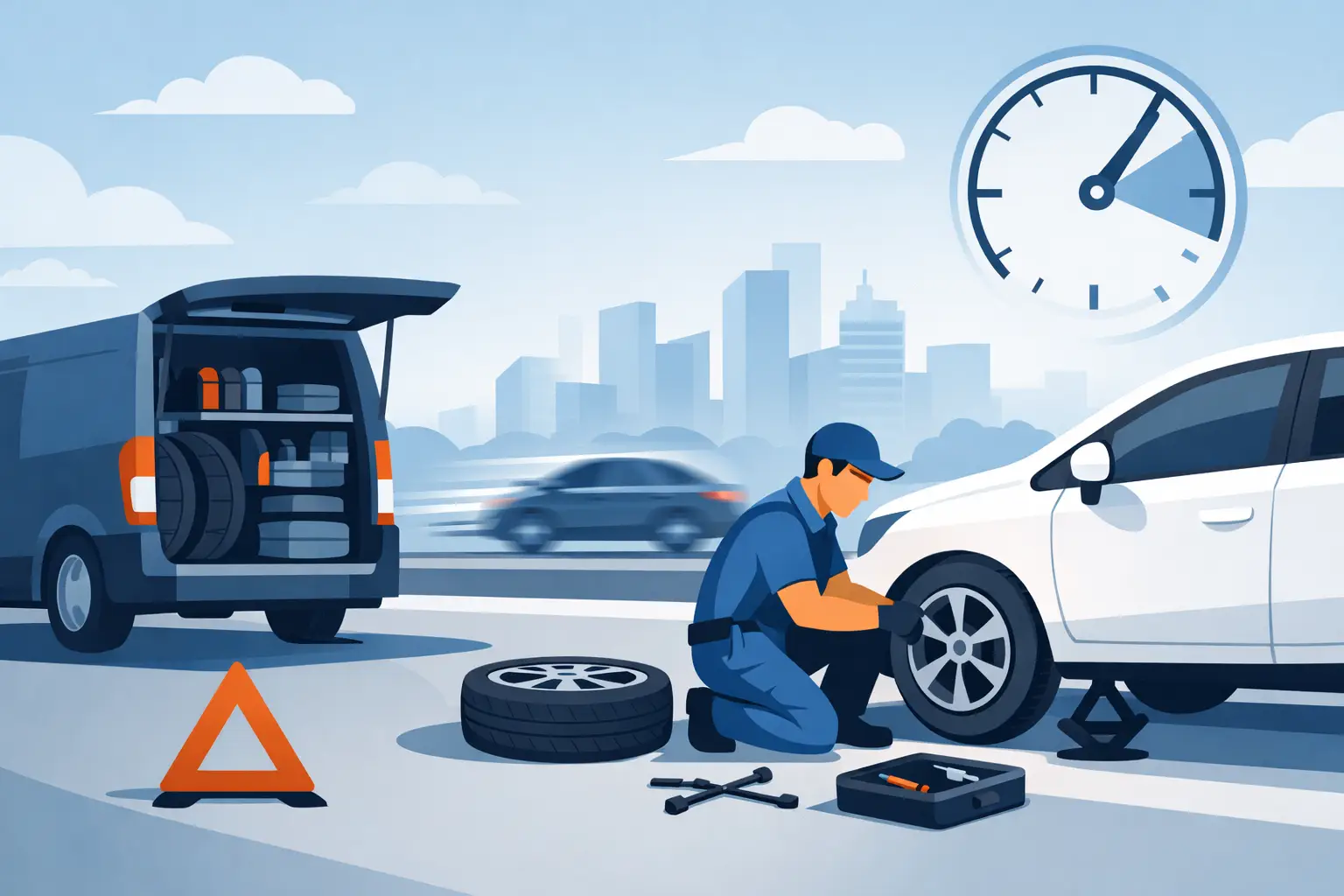
Once on scene, the technician first focuses on safety. They will assess traffic, the ground surface, the vehicle’s position, and whether it can be lifted safely. A tire change is not just a matter of removing lug nuts. The vehicle must be secured, supported at the correct lifting point, and kept stable while the damaged tire is removed.
If the situation is safe and you have a properly inflated spare that fits your vehicle, the technician can generally install it, tighten the lug nuts to the proper standard, lower the vehicle, and check the result before you leave. This is roadside assistance, not a permanent tire repair. Most compact temporary spares have lower speed limits and should only be used long enough to reach a tire shop.
What a Roadside Tire Technician Checks
Not every flat looks the same. A tire can lose air because of a nail, a screw, a puncture near the sidewall, a cracked valve stem, impact damage from a pothole, or a full blowout. The tire may be visibly shredded, or it may simply be too low to drive on safely.
A technician will look at the tire and wheel condition, confirm whether a spare is available, and inspect the basic components needed to complete the change. They may also check whether the wheel is damaged or whether the vehicle has a locking lug nut that requires a special key.
This assessment determines the next step. A straightforward flat with a good spare can often be handled at your location. But if the spare is missing, flat, unsafe, or the wrong size, installing it will not solve the problem. The same is true if the wheel is bent, the lug nuts are damaged, or the tire failure happened after a collision.
When a Tire Change Is the Right Solution
A roadside tire change is usually the fastest answer when the vehicle is parked in a reasonably safe place and the spare is usable. It is especially helpful for drivers who do not have the tools, physical ability, or roadside conditions needed to change a tire themselves.
The technician brings the equipment and experience to do the job efficiently. That saves you from kneeling beside traffic, trying to loosen overtightened lug nuts, or discovering that your factory jack is missing after you have already started.
Even after a successful tire change, drive carefully. A spare is not a signal that the problem is finished. Head directly to a tire shop for an inspection, repair, or replacement. If your regular tire was damaged by road debris or a pothole, the wheel and suspension may also need attention.
When Towing Is the Safer Call
Sometimes the right emergency tire service is not a tire change. It is towing your vehicle to a tire shop, dealership, or other safe destination. This is common when there is no spare, when two or more tires are damaged, or when the vehicle is sitting in a dangerous location.
Towing may also be necessary for vehicles with low-profile tires, specialty wheels, severe wheel damage, or a blowout that caused further mechanical problems. Some newer vehicles do not include a spare at all. They may come with a sealant kit, run-flat tires, or roadside coverage instructions, but those options do not help in every kind of tire failure.
Do not try to drive on a completely flat tire to reach a shop. Even a short distance can destroy the tire, damage the wheel, and make a repairable issue more expensive. If the tire is off the rim, the sidewall is torn, or the vehicle pulls badly after the failure, stop and arrange professional help.
What You Should Do While Waiting for Help
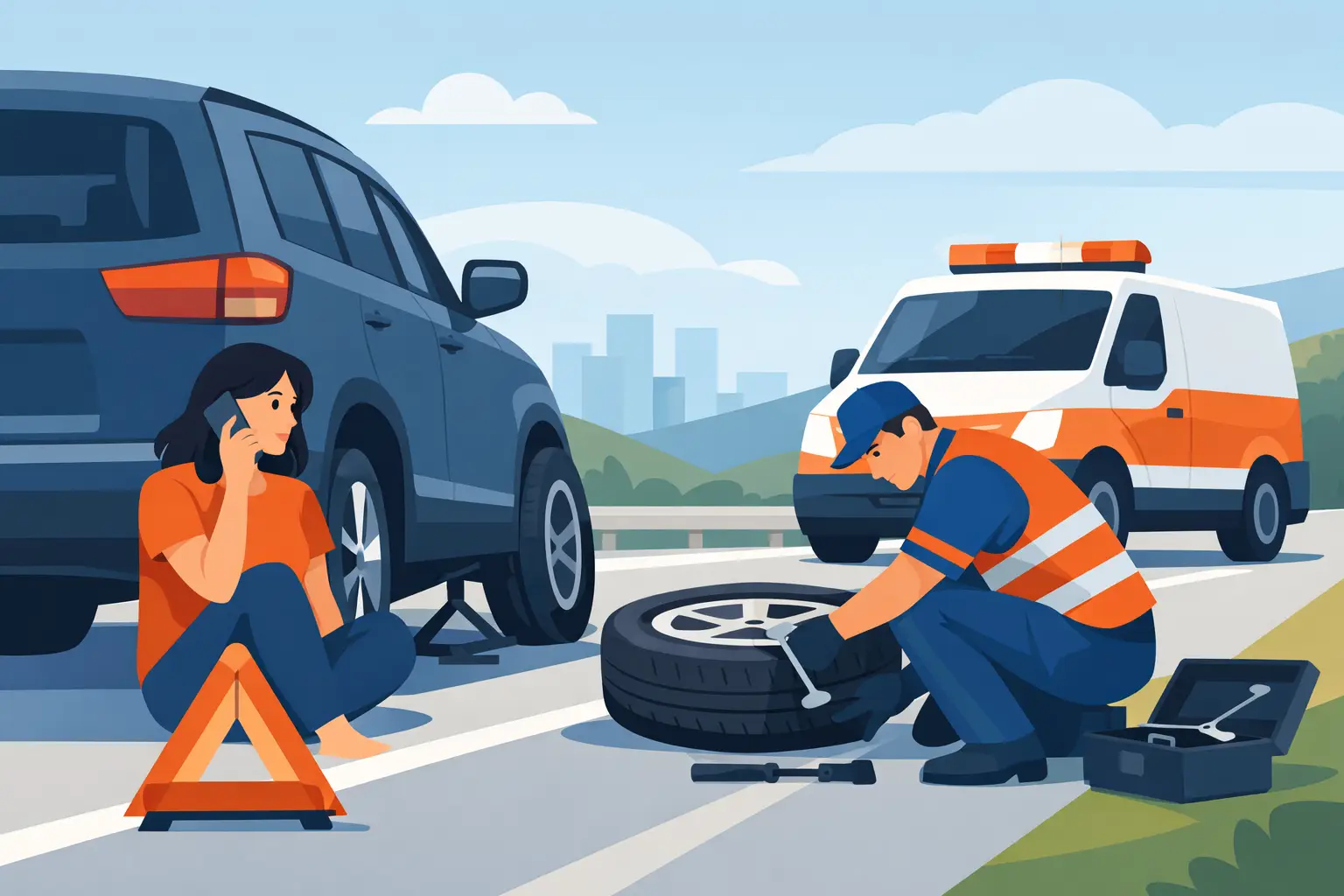
Your first job is to get yourself and your passengers away from danger. If the vehicle can still move safely, pull into a parking lot, shoulder, or other protected area. Turn on your hazard lights and avoid standing near moving traffic.
If you are stuck on a highway or narrow road, stay in the vehicle when it is safer to do so, with doors locked and seat belts fastened. Do not attempt to change the tire on the traffic side of the vehicle. Roadside emergencies can become dangerous quickly, especially at night, in heavy rain, or during fast-moving South Florida traffic.
Have these details ready for the dispatcher:
- Your exact location and the safest way to reach you
- Your vehicle’s year, make, model, and color
- Whether the tire is flat, blown out, or damaged after an impact
- Whether you have a spare tire and, if known, the locking lug nut key
You do not need to diagnose the entire problem. A clear description and accurate location are enough to get the process moving. If you are unsure whether the tire can be changed, describe what you see and let the technician assess it on arrival.
Common Tire Service Delays and How to Avoid Them
Most tire-service delays come from access and equipment issues, not from the actual tire change. A car blocked in a tight garage, parked in deep mud, or stopped where a service vehicle cannot safely pull over may require extra planning. Severe weather and heavy traffic can also affect arrival time.
The other frequent issue is a spare that has been forgotten for years. Temporary spares lose air just like regular tires. Check yours periodically, confirm that the jack and lug wrench are present, and make sure you know where any wheel-lock key is stored. These small checks can turn a tow situation into a quick roadside tire change.
For delivery drivers and small fleet operators, tire readiness matters even more. A disabled work vehicle means missed deliveries, delayed appointments, and lost time. Keeping spares inspected and roadside information available in every vehicle helps reduce downtime when a flat happens during a shift.
Emergency Tire Help Across South Florida
A roadside tire problem does not wait for a convenient hour. ITow&Recovery provides 24/7 tire-change assistance and towing support for drivers in Miramar, Pembroke Pines, Fort Lauderdale, Weston, Hollywood, and nearby South Florida communities. Whether you have a simple flat with a good spare or a blowout that requires a tow, the goal is the same: get you out of an unsafe situation and moving toward the right repair.
If your tire fails tonight, focus on getting to the safest available spot, turn on your hazards, and call for help before a small roadside problem becomes a bigger one.