
A crash on I-75, the Turnpike, or a busy Broward County intersection can turn a normal drive into a blocked lane, a damaged vehicle, and a lot of uncertainty fast. Knowing how accident recovery towing works helps you make safer decisions before a tow truck arrives and avoid letting a stressful situation become more complicated.
Accident recovery towing is more than hooking up a car and driving away. The recovery team must work around traffic, debris, leaking fluids, damaged wheels, police direction, and vehicles that may not be safe to roll. The priority is protecting people first, then removing the vehicle carefully and getting it to the right location.
What to Do Before the Tow Truck Arrives
If anyone is injured, call 911 immediately. Do not try to move a person who may have a serious injury unless there is an immediate danger, such as fire or oncoming traffic. If the vehicles can be moved safely and law enforcement has not told you otherwise, get out of active traffic and turn on your hazard lights.
On a busy road in Miramar, Pembroke Pines, Hollywood, Weston, or Fort Lauderdale, stay well away from traffic. Stand behind a guardrail when possible, not beside the disabled vehicle. Take photos of the damage, the surrounding scene, license plates, and any debris if it is safe to do so. Exchange information with the other driver and follow instructions from law enforcement.
When calling for accident towing, be ready to provide your location, the vehicle make and model, whether the car is blocking traffic, and whether it can roll. Tell the dispatcher about visible damage, flat tires, deployed airbags, leaking fluids, or a vehicle stuck in a ditch, median, or against another object. Clear details help send the right truck and equipment without delay.
How Accident Recovery Towing Works at the Scene
Once the recovery operator arrives, they assess the scene before touching the vehicle. That assessment matters because a car with front-end damage may not steer, a rear-end collision can affect the suspension, and a vehicle with a broken axle cannot simply be pulled onto a standard tow setup.
The operator will first look for immediate hazards. These can include traffic exposure, fuel or coolant leaks, broken glass, loose parts, damaged batteries, and unstable vehicles. If police or fire rescue are on scene, the tow operator works within their direction. On certain roads or after serious collisions, law enforcement may control when and how vehicles are moved.
The team then determines the safest recovery method. A vehicle that still rolls and has no major wheel damage may be loaded with a wheel-lift or flatbed. A vehicle with damaged wheels, locked steering, severe body damage, or a low clearance often needs a flatbed and additional equipment such as dollies, skates, straps, or a winch.
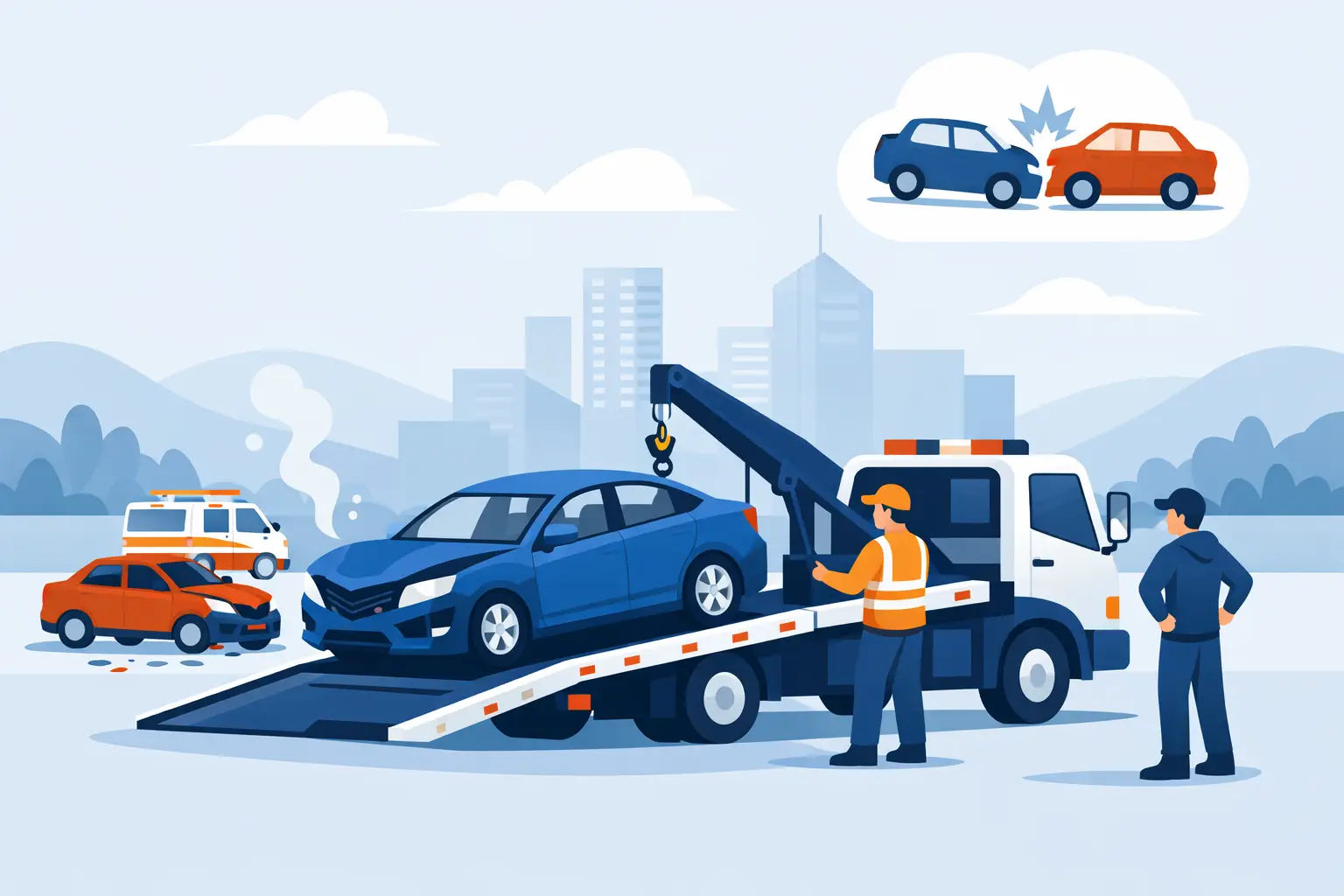
Flatbed towing is often the preferred option after a collision because all four wheels are carried off the ground. This reduces the chance of causing more damage to the drivetrain, tires, suspension, or undercarriage. It is especially useful for all-wheel-drive vehicles, luxury vehicles, EVs, and cars with collision damage that makes normal towing unsafe.
Recovery Is Different From a Basic Tow
A standard tow usually involves a vehicle that is disabled but stable, such as a car with a dead battery, mechanical failure, or flat tire. Accident recovery may require clearing debris, repositioning a vehicle, securing loose parts, winching a car from a median, or loading a vehicle that cannot roll.
For example, a car that slid into a drainage area after heavy South Florida rain may need a controlled winch-out before it can be loaded. A vehicle with a bent wheel or broken control arm may need dollies to keep it from dragging. These are not shortcuts. They are protective measures that help prevent additional damage during removal.
Securing and Loading the Vehicle
Before loading, the operator documents the vehicle condition and may take photos. This creates a clear record of pre-existing crash damage and helps protect everyone involved. Personal items should stay with the owner whenever possible, including wallets, phones, medication, keys, work equipment, and important documents.
The vehicle is then secured using approved tie-down points and equipment suited to its condition. A professional operator does not attach chains or straps carelessly to weak suspension parts, plastic bumpers, or areas that could worsen the damage. If the vehicle is badly damaged, it may be stabilized before the truck moves.
Once loaded, the operator checks that the vehicle is secure and that loose pieces will not become road hazards. Depending on the crash, the car may need to be transported with wheels off the pavement, extra clearance, or specific handling procedures. Electric and hybrid vehicles can also require added caution if the battery area has been damaged.
Where Does Your Vehicle Go After an Accident?
You usually have a choice of destination, unless law enforcement, roadway conditions, or a specific investigation requires otherwise. You may request transport to your home, a trusted repair shop, a dealership, an insurance-approved body shop, or a secure storage location.
Choosing a repair facility immediately can save time, but it depends on the situation. If you are unsure which shop your insurer will approve, storage may be the better short-term decision. Keep in mind that storage charges can add up, so contact your insurance company as soon as you can and confirm where the vehicle should be inspected and repaired.
If your vehicle is not drivable but the damage appears minor, do not assume it is safe to drive after a quick look. Hidden suspension damage, fluid leaks, damaged steering components, or a compromised bumper can make a car unsafe on the road. Let the recovery operator transport it rather than risk a second incident.
Towing Costs, Insurance, and Documentation
Accident recovery costs depend on the location, vehicle size, damage level, equipment needed, distance, and whether special recovery work is required. A straightforward flatbed tow costs differently than a vehicle that must be winched from a canal edge, separated from another vehicle, or moved from a high-traffic crash scene.
Ask for clear information about the tow, recovery work, mileage, and any storage charges. Keep the receipt, tow authorization, photos, police report number, and the contact information for the tow provider. These details can help when you open an insurance claim or request reimbursement through roadside coverage.
Your auto policy may cover towing and recovery, but coverage varies. Some policies include roadside assistance with set limits, while others reimburse only after you submit receipts. Collision coverage may also apply to crash-related towing, depending on your policy and claim. Do not delay the recovery while waiting for every insurance answer if your car is creating a safety hazard. Get it safely removed, then begin the claim process with complete documentation.
When Fast Local Accident Towing Matters
After a crash, waiting on the shoulder creates risks that grow with every passing minute. Fast dispatch is especially valuable at night, during storms, near construction zones, and on high-speed roads throughout South Florida. The right recovery team brings the equipment and experience needed to move the vehicle without adding unnecessary stress or damage.
ITow&Recovery provides 24/7 accident towing and vehicle recovery for drivers across Broward County and nearby South Florida communities. Whether your car is blocking a lane, sitting in a parking lot after a collision, or needs a careful flatbed transport to a repair facility, the goal is simple: secure the scene, handle the vehicle professionally, and get you moving toward the next step.
After the police report is started and everyone is safe, focus on one practical decision at a time. Get the vehicle out of danger with a qualified recovery tow, keep your paperwork together, and give yourself room to deal with repairs and insurance when the roadside emergency is over.