
A sudden South Florida downpour can turn a grassy shoulder, muddy job site, canal-side road, or flooded parking area into a trap for your vehicle. Knowing how winch out service works helps you make the right call when your tires spin, your vehicle sinks, or driving out could cause more damage.
A winch-out is not simply a tow. It is a controlled vehicle recovery service used to pull a stuck car, truck, SUV, van, or commercial vehicle back onto stable ground. The goal is to recover the vehicle safely, protect it from further damage, and get you moving again as quickly as conditions allow.
When a Winch-Out Is the Right Service
A standard tow is used when a vehicle can be loaded or hooked up from a safe, accessible position. A winch-out is needed when the vehicle cannot reach the roadway or when its position makes normal towing unsafe. This often happens after a driver slides off the road, backs into soft ground, gets stuck in sand, or loses traction on a wet shoulder.
In Broward County, recovery calls frequently follow heavy rain, flooding, construction detours, and parking lot mishaps. Low-clearance cars can become hung up on curbs or medians. SUVs and pickups can still sink into mud or sand when all four tires lose grip. Even a small drop off the pavement can leave a vehicle angled in a way that makes driving out risky.
Do not keep pressing the gas if the tires are spinning. That can dig the vehicle deeper, damage the transmission, overheat components, or throw mud and debris around the scene. If you are stuck near traffic, water, a ditch, or unstable ground, stop and request professional recovery help.
How Winch Out Service Works at the Scene
The recovery process starts before the truck arrives. When you call, the dispatcher will usually ask where the vehicle is located, what type of vehicle you have, whether it is in mud, water, sand, a ditch, or on an embankment, and whether there is immediate danger from traffic or flooding. Clear details help send the right equipment and avoid delays.
Once the operator arrives, the first job is assessing the scene. They look at the ground condition, the vehicle’s angle, the distance from solid pavement, nearby obstacles, and safe anchor points for the recovery. They also check whether the vehicle can roll freely or whether it has collision damage, locked wheels, or an undercarriage issue that changes the plan.
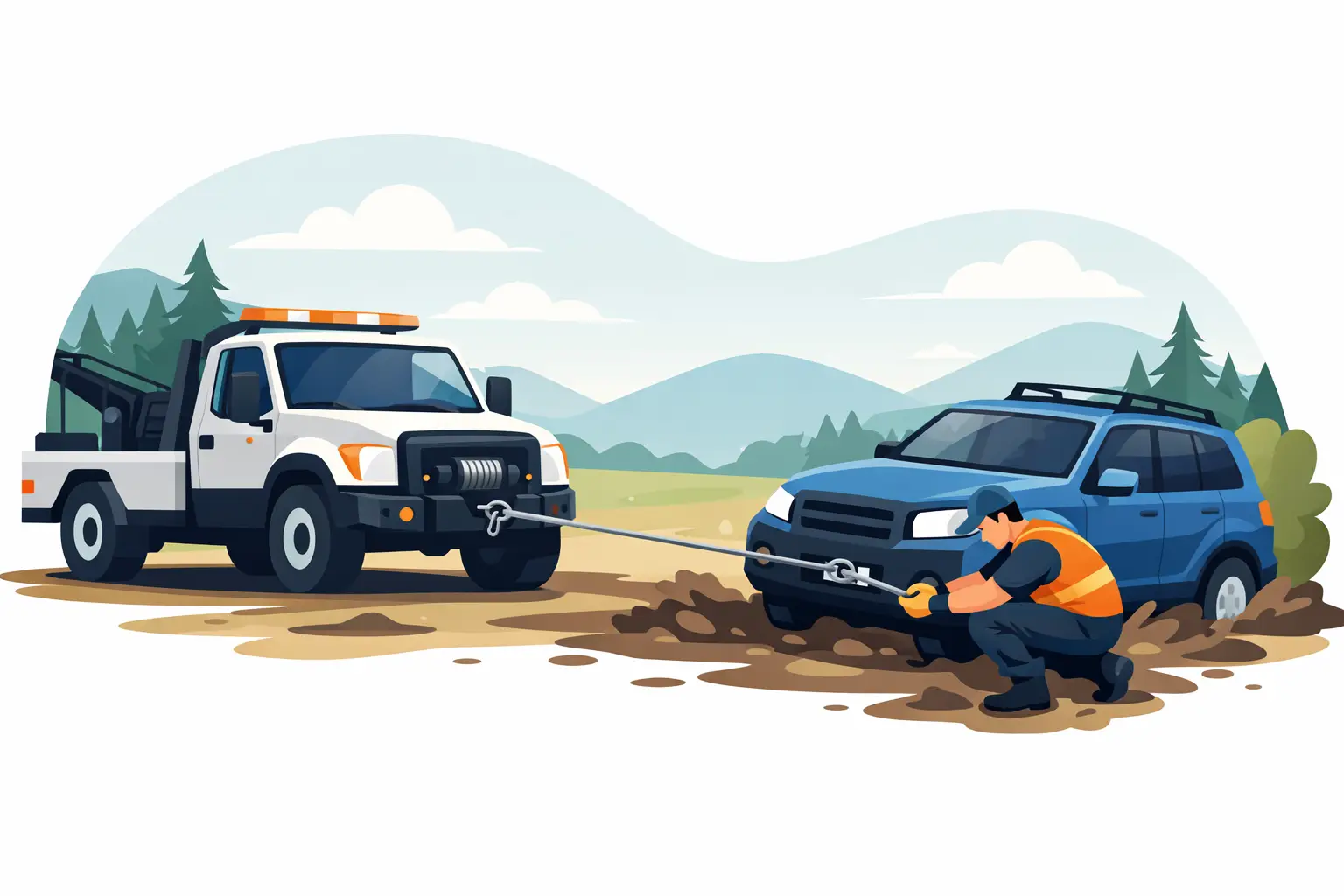
The operator then positions the recovery truck on stable ground and uses its winch cable or synthetic recovery line to create a controlled pull. The line is connected to an approved recovery point on the vehicle whenever possible. Proper attachment matters. Pulling from the wrong area can bend suspension parts, damage bumpers, or create a dangerous failure under tension.
With the area cleared and the line secured, the operator slowly winches the vehicle toward firm ground. This is a steady, measured process, not a hard jerk. Depending on the angle and terrain, the driver may be asked to steer lightly, place the vehicle in neutral, or use gentle power only when instructed. Once the vehicle is back on a safe surface, the operator checks its position and determines whether it is safe to drive or needs towing.
Why Professional Recovery Is Safer Than a DIY Pull
A tow strap, a friend’s pickup, and a few minutes of frustration can turn a simple stuck vehicle into an expensive repair. Recovery forces are significant, especially when a vehicle is buried in mud, resting at an angle, or stuck below the roadway. A strap can snap, a loose connection can fail, and an inexperienced pull can drag a vehicle into worse terrain.
Professional winch-out service uses purpose-built equipment and an operator who understands load direction, vehicle weight, traction, and safe recovery angles. That experience is especially valuable when the vehicle is near standing water, a ditch, a fence, another parked vehicle, or moving traffic.
There are trade-offs. A quick pull from dry, level grass may be straightforward. A vehicle in deep mud, on a steep embankment, or partly submerged may require more time, specialized positioning, or a second truck. The safest recovery method depends on the scene, not just the type of vehicle.
What Affects Winch-Out Time and Cost
Every recovery is different, so pricing depends on the conditions at the scene. A vehicle sitting a few feet off a paved road is usually simpler than one deep in soft ground or down an embankment. Distance from the roadway, the number of winch pulls required, weather, vehicle size, access limitations, and potential hazards can all affect the service time.
For example, a sedan stuck in wet grass outside Pembroke Pines may need a basic pull to reach pavement. A loaded work van that slides into a muddy shoulder near Fort Lauderdale may need more careful recovery because of its weight and the risk of sinking further. A vehicle stuck after dark in a flooded area may also require extra precautions.
The best approach is to give an accurate description when requesting service. If it is safe, share whether the tires are buried, whether the vehicle is tilted, how far it is from the road, and whether another vehicle is blocking access. Honest details help the recovery team arrive prepared and provide a clearer quote.
What to Do While Waiting for a Winch-Out
Your first priority is personal safety. If the vehicle is in a dangerous traffic area and you can exit safely, move away from the road and stay clear of the recovery zone. Do not stand behind, in front of, or directly beside a tensioned winch line. The operator will tell you where to wait once they arrive.
If the vehicle is stable and away from traffic, keep passengers calm and avoid unnecessary movement inside the car. Do not place boards, rocks, floor mats, or loose objects under the tires while a recovery is being planned. Those attempts can create obstacles, damage the vehicle, or make the operator’s work harder.
If flooding is involved, treat it as a more serious situation. Rising water can shift the vehicle, hide holes, and weaken the ground beneath the tires. Avoid walking through deep or moving water, and never attempt to drive out if the water level is rising around the vehicle.
After the Vehicle Is Recovered
Getting back onto pavement does not always mean the vehicle is ready for the road. Check for obvious tire damage, loose panels, leaking fluids, warning lights, or steering problems. Mud packed around wheels and brakes can affect handling, while a hard impact with a curb, ditch, or median may cause damage you cannot see immediately.
If the vehicle was pulled from water, deep mud, or a collision scene, towing it to a repair shop may be the smarter choice. Continuing to drive can turn a manageable issue into a larger repair. A professional operator can help you decide whether your vehicle appears safe to move or should be transported.
For drivers in Miramar, Hollywood, Weston, Fort Lauderdale, and Pembroke Pines, ITow&Recovery provides 24/7 winch-out and towing support when a vehicle is stuck and time matters. A fast, properly planned recovery can protect your vehicle, reduce stress, and keep a bad roadside moment from becoming a much bigger problem.
If you are stuck, stop spinning the tires, move to a safe location if possible, and describe the scene clearly when you request help. The right recovery starts with a calm decision before the situation gets worse.