
A car can get stuck in seconds on a rain-soaked shoulder, loose sand, a flooded parking area, or soft grass near a South Florida canal. The mistake many drivers make is treating it like a traction problem they can solve by pressing harder on the gas. Recovering a stuck car safely starts by stopping that instinct before a minor situation becomes a damaged vehicle, a deeper rut, or an injury.
Whether you are in Miramar, Pembroke Pines, Weston, Hollywood, or Fort Lauderdale, the safest recovery is the one that protects people first and avoids unnecessary damage to the vehicle. Sometimes that means a careful self-recovery. Often, especially near traffic, water, mud, or steep ground, it means calling for professional winch-out service.
First, Stop Spinning the Tires
The moment your wheels lose traction, take your foot off the accelerator. Spinning tires can dig into sand or mud, polish a slippery surface, overheat components, and throw debris toward people standing nearby. On soft ground, even a few seconds of hard acceleration can turn a recoverable situation into one where the vehicle is sitting on its frame.
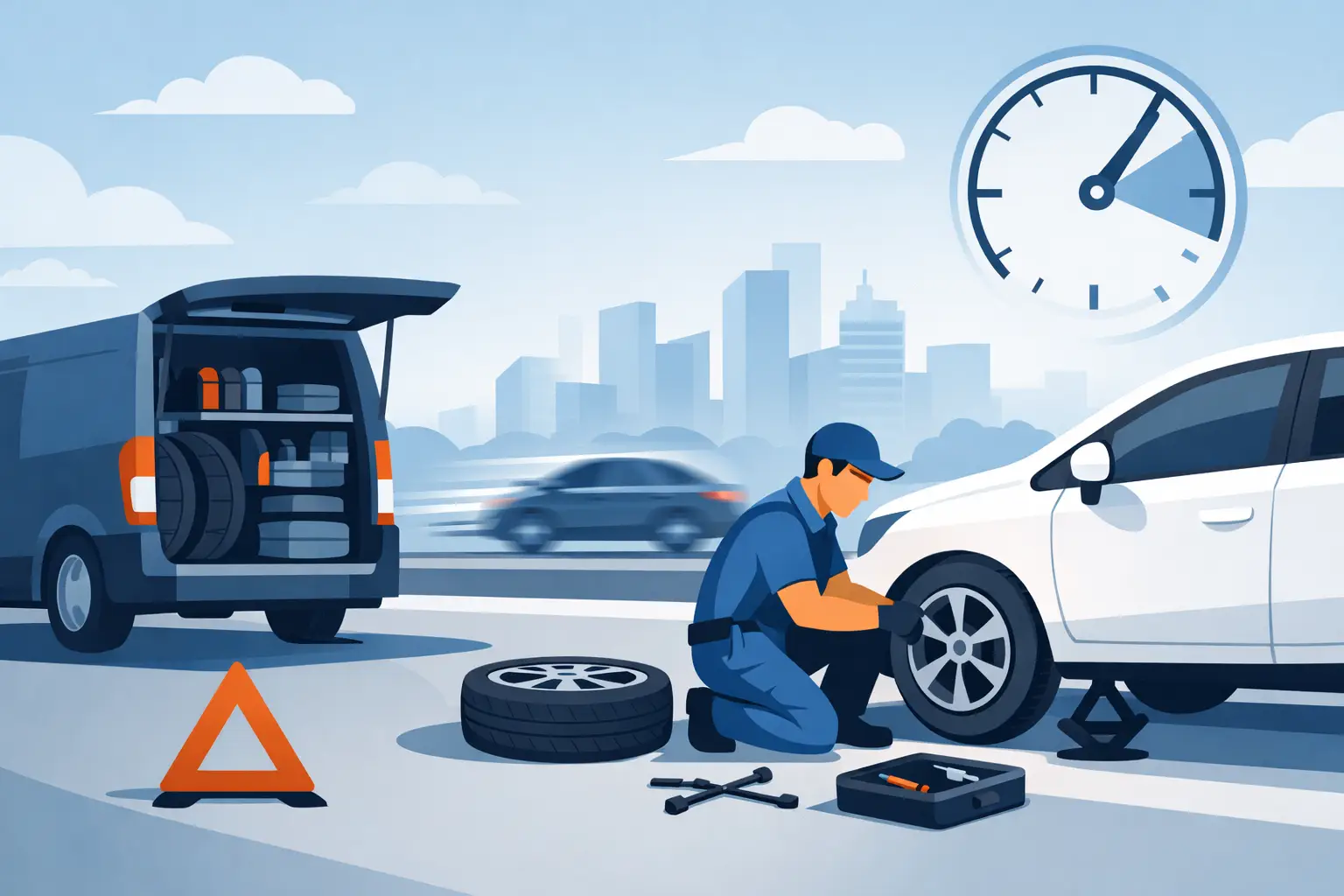
Put the vehicle in park, set the parking brake if the ground is stable, and turn on your hazard lights. If your car is stuck close to moving traffic, do not stand on the traffic side or attempt a recovery from the roadway. Move passengers to a safer location when possible, away from traffic and well clear of the vehicle’s path.
If the vehicle is partly in water, near a canal, or on ground that is visibly sinking, do not try to drive it out. Leave the vehicle if it is safe to do so and request help right away. South Florida’s saturated soil can look solid until a vehicle’s weight breaks through it.
Assess the Ground Before Recovering a Stuck Car Safely
Take a calm look around the vehicle. You need to know what is actually holding it in place before selecting a recovery method. Is it buried in soft sand? Is one wheel in a ditch? Is the underside resting on a curb, rock, median, or packed dirt? Is there a safe, open direction for the vehicle to move?
Check the tires and the space beneath the vehicle. If the chassis, bumper, suspension, or exhaust is resting on the ground, driving harder will not solve the problem. You can damage the bumper, tear an underbody panel, bend suspension parts, or strain the transmission.
Also look for hazards that change the decision completely. Power lines, standing water, nearby pedestrians, deep drainage areas, steep inclines, and busy lanes are all reasons to stop and call a towing and recovery professional. A quick winch-out is far less expensive than accident repairs or a medical emergency.
Try Simple Traction Only When Conditions Are Safe
A light traction issue on level, open ground may be resolved without a tow truck, but only if there is no risk to people or the vehicle. Clear loose material from in front of the drive wheels, then place a purpose-built traction board, floor mats, cardboard, or dry branches under the tires to create grip. Do not use objects that can shatter, slide out suddenly, or damage the tires.
Use the gentlest possible throttle. If the vehicle begins moving, keep the wheels straight and continue slowly until you reach firm ground. Avoid sharp steering inputs because turning the wheels can increase resistance and make the tires dig in again.
Rocking the vehicle between drive and reverse may help in shallow sand or mud, but it should be done carefully and briefly. Come to a complete stop before changing gears. Repeatedly shifting while the wheels are spinning can damage the transmission, and aggressive rocking can make the vehicle lurch unexpectedly.
If two or three controlled attempts do not work, stop. More force is not a better plan. At that point, the ground or vehicle position likely requires a winch and proper recovery equipment.
Never Use a Random Rope or Improvised Tow Point
Improvised recoveries are one of the fastest ways to turn a stuck car into a serious accident. Do not attach a rope, chain, or strap to a bumper, axle, suspension component, hitch ball, or any part that was not designed as a rated recovery point. These parts can bend, break, or become dangerous projectiles under load.
A trailer hitch ball is especially risky. It may look strong, but it can fail under the sudden force of a pull. A broken hitch ball or metal hook can travel with enough force to severely injure someone or damage both vehicles.
Never stand near a tensioned strap, rope, cable, or chain. Keep bystanders far away, and do not allow anyone to step over recovery equipment. Even an approved recovery strap must be matched to the vehicle weight, attached to proper points, and used by someone who understands the pull angle and load involved.
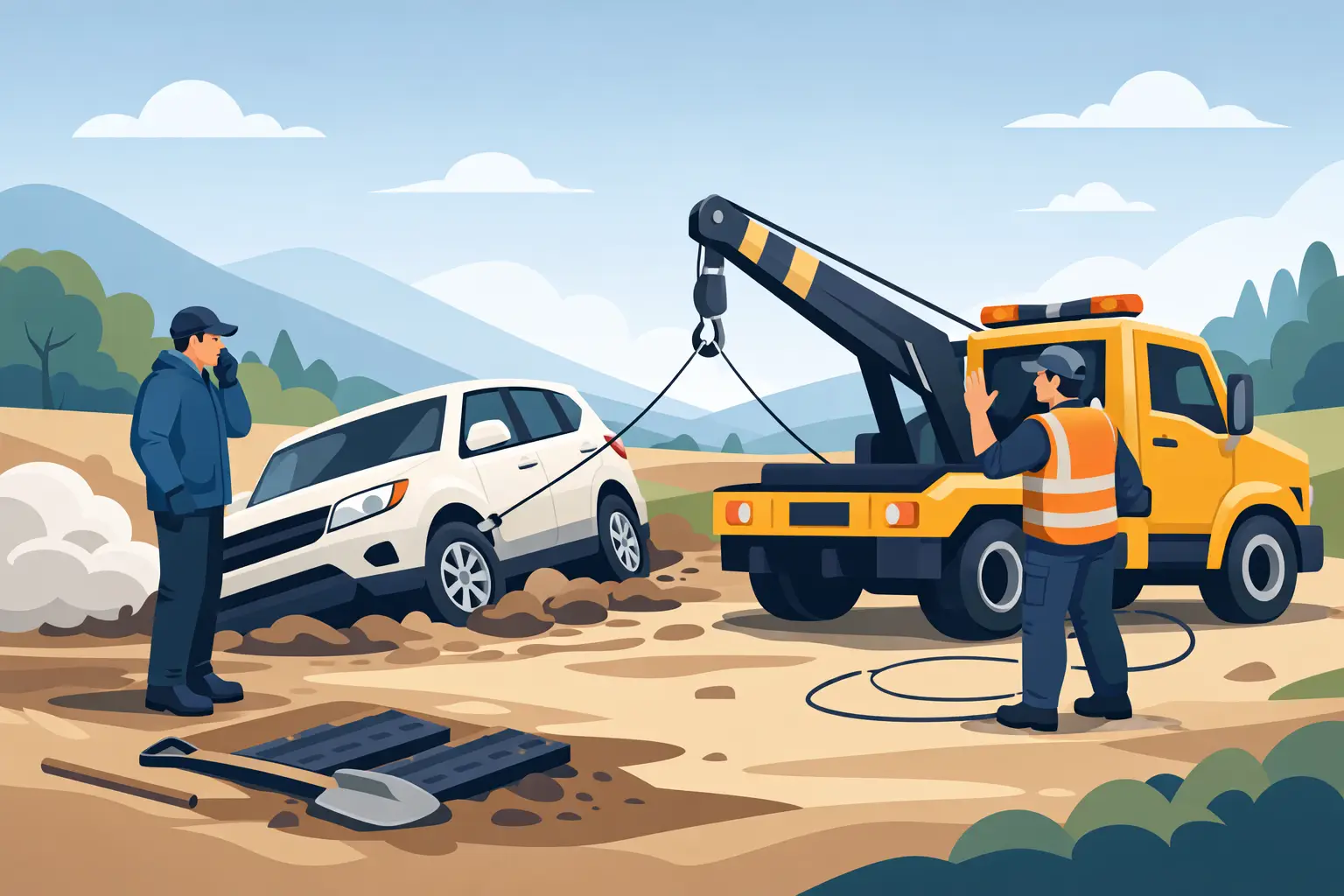
Professional recovery operators use the right rigging, rated equipment, controlled winching, and a recovery plan based on the vehicle’s location. That matters when a vehicle is stuck at an angle, buried to the axles, loaded with passengers or cargo, or close to a ditch.
Know When a Winch-Out Is the Right Call
A winch-out is not only for dramatic off-road situations. It is often the safest solution for everyday drivers whose cars have slipped off pavement, sunk in wet grass, become trapped in deep sand, or slid into a parking-lot edge after heavy rain.
Call for professional recovery if your vehicle is high-centered, unable to move after limited traction attempts, stuck near traffic, leaning, close to water, or blocked by a curb or barrier. The same applies if you drive an all-wheel-drive, electric, luxury, commercial, or low-clearance vehicle. These vehicles can have specific towing and lifting requirements that make a DIY pull a costly gamble.
For fleet operators and delivery drivers, fast professional recovery also protects the schedule. A driver spending an hour trying to free a work vehicle can lose far more time than a properly dispatched winch-out service.
ITow&Recovery provides 24/7 towing and winch-out support across Broward County, helping drivers get out of mud, sand, ditches, soft shoulders, and other difficult positions with professional care. The goal is not just to move the vehicle. It is to recover it without adding damage or putting anyone at risk.
What to Tell the Recovery Dispatcher
Clear details help the right truck and equipment arrive prepared. Explain your exact location, including nearby intersections, landmarks, or parking-lot entrances. Let the dispatcher know whether the vehicle is in sand, mud, water, a ditch, grass, or against an obstacle.
Share the vehicle’s make, model, and approximate condition. Mention whether it is all-wheel drive, electric, carrying a heavy load, or blocking traffic. If the car is leaning, high-centered, or close to water, say so immediately. Photos can be useful when it is safe to take them, but do not step into traffic or unstable ground for a better picture.
While waiting, keep hazards on, remain in a safe place, and avoid further attempts to move the vehicle. If the vehicle is on a highway shoulder or creates a traffic hazard, contact emergency services when appropriate.
After the Vehicle Is Free
Once the car is back on firm ground, do not assume it is ready for a long drive. Check for low tires, loose panels, fluid leaks, warning lights, steering changes, or unusual noises. Mud and debris can pack around wheels and brakes, while a hard impact with a curb or hidden object can affect alignment or suspension.
If anything feels wrong, arrange a tow rather than driving away and hoping for the best. A careful decision at the roadside can prevent a breakdown miles later.
The best move when your car is stuck is often the simplest one: stop early, keep people clear, and get the right help before a small recovery turns into a bigger emergency.