
A disabled vehicle on I-75, a crowded Fort Lauderdale parking lot, or a rain-soaked Broward County road is not the time to guess whether you need a tow truck or flatbed. The right choice depends on your vehicle, the damage, where it needs to go, and whether it can safely roll. Getting the wrong type of tow can create more damage, delay your trip, and add stress to an already difficult situation.
For South Florida drivers, the simple answer is this: a standard tow may work for certain vehicles and short-distance situations, but a flatbed is often the safer option when there is accident damage, drivetrain concerns, low clearance, or a vehicle that cannot move. A professional towing dispatcher can ask the right questions, send the appropriate equipment, and get you off the roadside quickly.
Tow Truck or Flatbed: The Main Difference
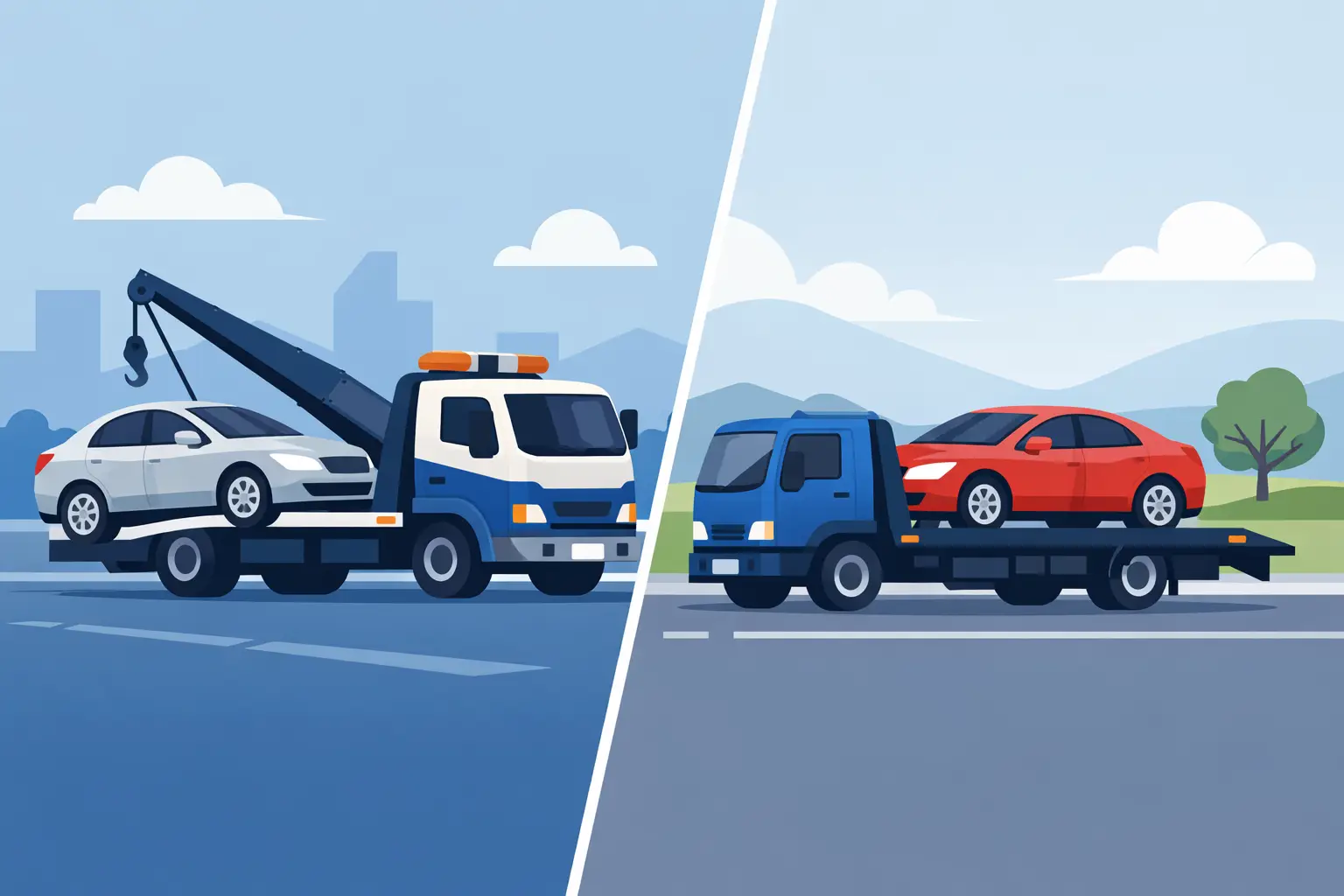
A standard tow truck, often called a wheel-lift tow truck, lifts two wheels off the ground while the other two wheels remain on the road. Modern wheel-lift equipment is far safer than old hook-and-chain towing, which could damage bumpers, frames, and suspension components. For many local towing jobs, it is a practical and efficient way to move a vehicle.
A flatbed truck, also called a rollback, carries your entire vehicle on a level platform. All four wheels are off the pavement during transport. The vehicle is loaded using ramps and a winch, then secured for the trip. This approach minimizes wear from rolling and is especially useful when the car is damaged, stuck, inoperable, or not safe to tow with two wheels down.
The best choice is not always about price or distance. It is about protecting your vehicle and moving it safely from where it stopped to where it needs to be.
When a Standard Tow Truck Makes Sense
A wheel-lift tow is often a solid option for a vehicle with no serious collision damage that can still roll freely. It is commonly used for local towing, parking-related removals, certain roadside breakdowns, and transport to a nearby repair shop.
For example, if you are in Pembroke Pines with a dead battery and decide to have your front-wheel-drive sedan towed to a local mechanic, a standard tow may be appropriate. If the vehicle has intact wheels, functional steering, no major suspension damage, and the correct wheels can be lifted, the job can often be completed quickly and safely.
Standard towing can also be useful for fleet and commercial vehicles when the vehicle’s condition and manufacturer guidance allow it. Delivery drivers and small fleet operators need downtime kept to a minimum, so the right equipment and a fast dispatch matter.
That said, a wheel-lift tow is not the automatic answer for every everyday car. The vehicle’s drivetrain must be considered first. Towing the wrong wheels on the ground can damage a transmission, transfer case, differential, or other expensive components.
Front-Wheel Drive, Rear-Wheel Drive, and All-Wheel Drive
Front-wheel-drive vehicles are commonly towed with the front wheels lifted. Rear-wheel-drive vehicles may require the rear wheels to be lifted or need dollies, depending on the situation. The goal is to avoid forcing the driven wheels to rotate in a way that could harm the drivetrain.
All-wheel-drive and four-wheel-drive vehicles need extra care. Many should be carried on a flatbed because all four wheels are connected through the drivetrain. Even a short tow with wheels on the pavement can create major mechanical problems for some AWD vehicles. If you are unsure, tell the dispatcher your vehicle’s make, model, year, and drivetrain if you know it. A professional towing service will make the safe call.
When a Flatbed Is the Better Choice
A flatbed is usually the safest option when your vehicle is not in normal driving condition. After a collision, a car may have a bent wheel, damaged axle, leaking fluids, broken steering parts, or body panels rubbing against a tire. Trying to tow it with two wheels down may be unsafe or may worsen the damage.
Flatbed towing is also the preferred choice for luxury vehicles, classic cars, exotic cars, low-clearance vehicles, and vehicles with modified suspensions. These vehicles can sit too low for traditional towing angles or have bodywork that needs extra protection during loading. A rollback gives the operator more control and keeps the vehicle fully off the road.
Long-distance towing is another situation where flatbeds are often worth considering. If your vehicle needs to travel from Weston to another city, or farther outside South Florida, a fully loaded vehicle avoids added mileage and road exposure. It also offers more peace of mind when the car already has a mechanical issue.
A flatbed may be needed when a vehicle cannot roll, has locked wheels, has a flat tire combined with suspension damage, or is stuck in a ditch, median, parking barrier, or soft ground. In these cases, recovery equipment and a controlled winch-out may be required before the vehicle can be loaded safely.
Accident Towing Requires the Right Equipment
After an accident in Miramar, Hollywood, Fort Lauderdale, or anywhere in Broward County, do not assume the car is safe to drive or tow normally just because it starts. Damage is not always visible. A vehicle can have a cracked control arm, damaged tire, bent steering linkage, or fluid leak that becomes worse when it moves.
If your car has collision damage, tell the towing company whether the wheels turn, whether the steering works, whether there are leaking fluids, and whether the vehicle is blocking traffic. Photos can help when it is safe to take them, but do not stand near active traffic to inspect the vehicle.
A flatbed is frequently the right answer for accident towing because it keeps the damaged vehicle stable during transport. However, a trained operator will assess the position of the car, access to the scene, and the damage before choosing the safest recovery method. The priority is clearing the roadside safely while preventing further harm to your vehicle.
What to Tell the Dispatcher
You do not need to diagnose your car to request towing. Clear details help the dispatcher send the correct truck the first time. Share your exact location, including nearby cross streets, highway direction, exit number, parking garage level, or business name. Explain what happened and whether the vehicle can roll, steer, and shift into neutral.
Also mention if your vehicle is AWD, electric, lowered, oversized, loaded with cargo, or involved in an accident. If you are in a dangerous location, tell the dispatcher immediately. Fast response starts with accurate information.
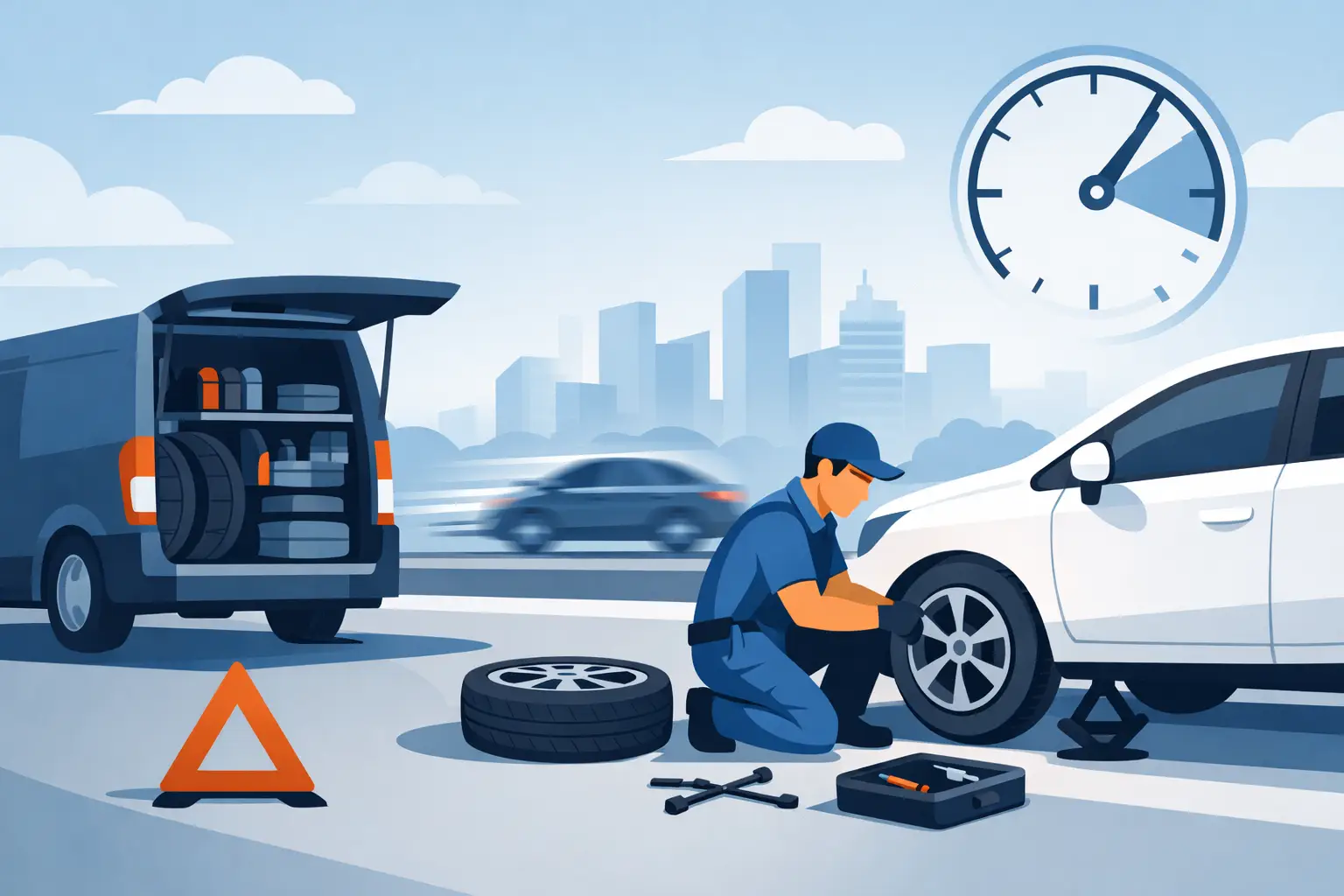
For roadside problems that do not require a tow, such as a dead battery, empty fuel tank, lockout, or simple flat tire, roadside assistance may get you moving without transport. But if the vehicle will not start after a jump, has warning lights, overheats, makes grinding noises, or has visible damage, towing it to a repair shop is usually the smarter move.
Protect Your Vehicle While You Wait
Turn on your hazard lights, move to a safe location if the vehicle can be moved without risk, and stay away from traffic whenever possible. On highways and busy roads, stand behind a guardrail or well away from moving vehicles. Do not accept help from an unmarked vehicle or let someone pressure you into using a service you did not request.
Remove personal valuables if it is safe to do so, but do not empty the car on the shoulder or delay a necessary recovery. Keep your phone charged, have your destination ready, and make sure the tow operator has the correct vehicle information.
ITow&Recovery provides 24/7 towing, flatbed transport, roadside assistance, accident towing, and recovery support throughout South Florida. Whether you are stranded near home, stuck after a collision, or need a vehicle moved to a shop, the right truck and a prompt response can make a difficult stop much easier.
When your vehicle cannot safely continue, choose the towing method based on condition, not convenience. A quick conversation with an experienced local dispatcher can determine whether a wheel-lift tow or flatbed will get your car where it needs to go without adding to the problem.