
A low-fuel warning can turn into a real roadside emergency fast, especially on a busy South Florida highway, a dark back road, or in stop-and-go traffic. Fuel delivery for stranded drivers provides the immediate help you need when your vehicle runs out of gas and the nearest station is not safely within reach. Instead of walking through traffic, leaving your car unattended, or waiting hours for a tow, you can get enough fuel brought directly to your location.
When Running Out of Fuel Becomes a Safety Issue
Most drivers do not plan to run out of gas. A longer-than-expected commute, a detour after an accident, a broken fuel gauge, or simply assuming there is one more station ahead can leave a vehicle stopped where it should not be. In Broward County, that can mean sitting on I-95, Florida’s Turnpike, I-75, US-441, or a crowded local road during peak traffic.
The problem is not only that the car will not start. A disabled vehicle can put you, your passengers, and other motorists at risk. Pulling over safely is often difficult, and South Florida heat can make waiting in a stopped vehicle especially uncomfortable for children, older passengers, and pets. If your vehicle is in a travel lane, on a narrow shoulder, or in an area with limited lighting, the situation calls for fast professional assistance.
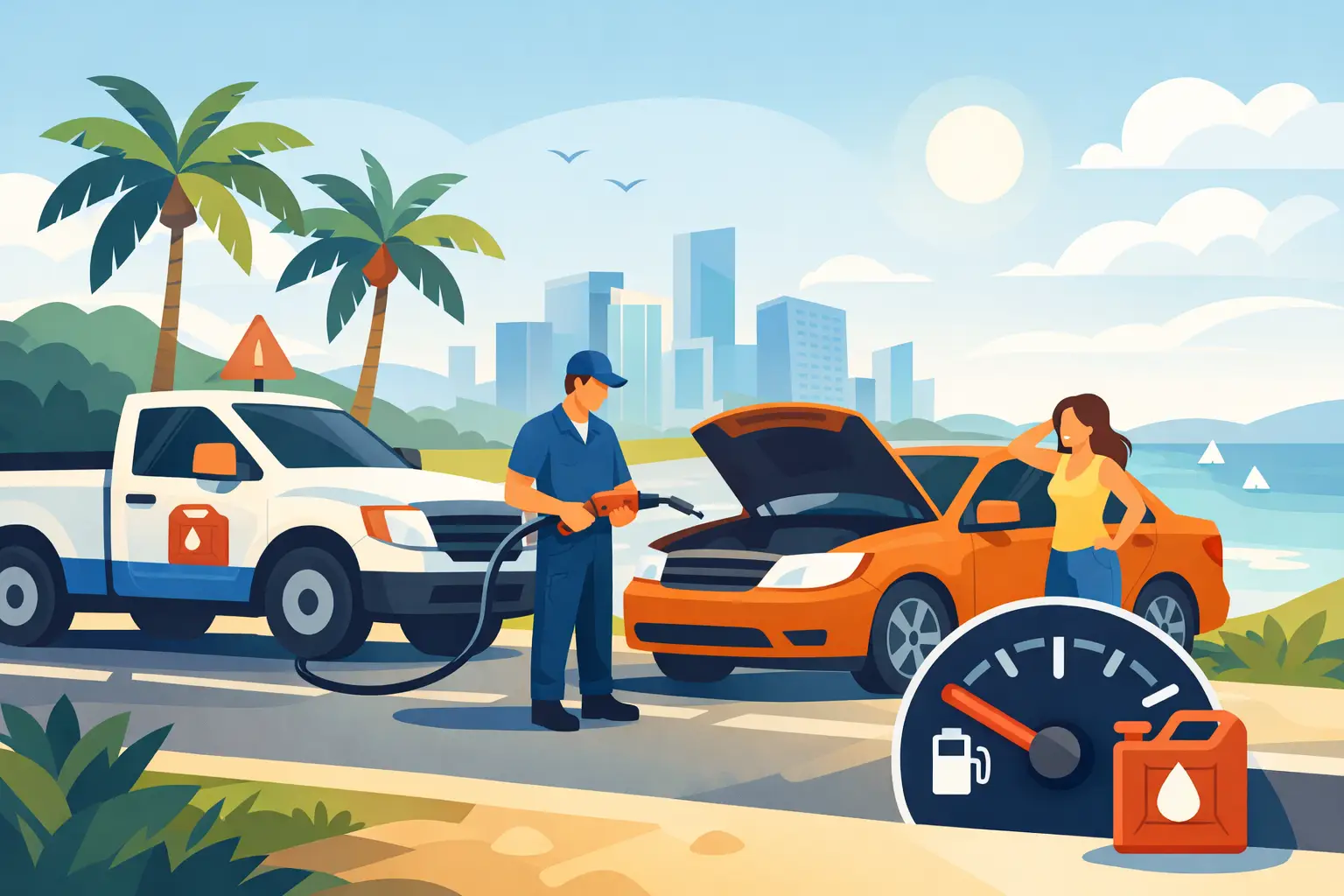
Roadside fuel delivery is a practical solution when the vehicle is otherwise operating normally. A technician brings a safe amount of the correct fuel to your location, helping you restart the vehicle and continue to a nearby gas station. It is usually quicker and more affordable than arranging a tow for a problem that only requires fuel.
What to Do When Your Car Runs Out of Gas
Your first priority is getting out of danger. If the vehicle is still moving, signal early and guide it to the safest available location, ideally a parking lot, wide shoulder, or side street away from active traffic. Do not try to coast across several lanes to reach a gas station. A controlled stop in a safer spot is the better choice.
Turn on your hazard lights as soon as you recognize the vehicle is losing power or has stopped. If it is dark, rainy, or visibility is poor, keep lights on as conditions allow. Stay aware of traffic around you, particularly if you are stopped near highway lanes or an entrance ramp.
Once you are parked as safely as possible, confirm your location. Look for cross streets, mile markers, nearby businesses, exit numbers, or recognizable landmarks. Your phone’s map can help, but give dispatch details that make it easier to find you quickly. Tell the roadside team the make and model of your vehicle and, if you know it, whether it uses regular gasoline, premium gasoline, diesel, or another fuel type.
Do not accept fuel from an unknown person or attempt to walk to a station along a highway. Carrying fuel in an improper container creates a fire risk, and walking beside high-speed traffic can be far more dangerous than waiting for roadside assistance. If you are in an unsafe position or feel threatened, call emergency services first.
Stay with the Vehicle When It Is Safe
In many situations, the safest place is inside your locked vehicle with the doors secured and your hazards flashing. Avoid standing behind or in front of the car, where another driver may not see you in time. If you must exit because the vehicle is in an immediate danger zone, move well away from traffic and follow instructions from emergency personnel.
A roadside technician can usually get you moving quickly, but your location affects the response process. A vehicle in a gated community, airport area, parking garage, construction zone, or highway shoulder may require more precise directions and extra caution. Clear communication helps the right help reach you without delay.
How Fuel Delivery for Stranded Drivers Works
The process should be simple when you are already dealing with the stress of a stalled vehicle. You contact a roadside assistance provider, explain that you are out of fuel, and provide your location, vehicle information, and fuel type. Dispatch sends a trained professional with fuel and the equipment needed to assist you safely.
When the technician arrives, they will verify the fuel type before adding it to the vehicle. This step matters. Putting diesel into a gasoline vehicle, or gasoline into a diesel vehicle, can cause expensive damage and may require towing and repairs. If you are not certain what fuel your vehicle needs, check the fuel door label, owner’s manual, rental agreement, or manufacturer information rather than guessing.
After the fuel is added, the technician may allow the vehicle a moment to prime before attempting a restart. Some vehicles start immediately, while others need a few attempts. Once your engine is running, drive directly to a gas station and fill the tank. The delivered amount is meant to get you safely on your way, not replace a full fill-up.
Fuel delivery is ideal when an empty tank is the only issue. If the engine still will not start after fuel is added, there may be a separate problem, such as a dead battery, failed fuel pump, ignition issue, or mechanical fault. A dependable roadside company can assess the next step, whether that means a jump start, diagnostic support, or towing to a repair facility.
Why Local Roadside Help Matters in South Florida
South Florida roads move fast, and weather can change quickly. Heavy rain, intense heat, construction traffic, special events, and rush-hour congestion all make a fuel emergency more difficult. A provider familiar with Miramar, Pembroke Pines, Fort Lauderdale, Weston, Hollywood, and nearby communities understands the routes, traffic patterns, and common pickup points that can affect arrival time.
Local service also makes a difference when your vehicle is not on a major highway. You may be in a shopping center lot after closing, outside an office park, near a school, at a hotel, or stranded in a residential neighborhood. A nearby roadside team can locate you more efficiently than a distant dispatch network that is unfamiliar with the area.
ITow&Recovery provides 24/7 roadside assistance for drivers facing fuel shortages and other unexpected vehicle problems across South Florida. The goal is straightforward: get to you quickly, handle the immediate issue professionally, and help you avoid the added cost and disruption of a tow when fuel delivery is the right solution.
Fuel Delivery for Personal and Commercial Vehicles
Fuel emergencies are not limited to daily commuters. A family on the way to an appointment, a visitor driving a rental car, a rideshare driver, or a delivery professional can all lose valuable time when the tank runs dry. For commercial drivers and small fleets, one stopped vehicle can also delay deliveries, frustrate customers, and affect the rest of the day’s schedule.
The right response depends on the vehicle and its location. A standard passenger vehicle in a safe parking lot may need only a quick fuel delivery. A work truck on a busy roadway may require traffic-aware roadside procedures. If a fleet vehicle has run out of fuel repeatedly, it may be worth reviewing driver checklists, fuel-card practices, route planning, or gauge maintenance after the immediate emergency is resolved.
Avoiding Another Empty-Tank Emergency
Fuel delivery gets you through the immediate problem, but a few small habits can reduce the chance of another roadside stop. Treat one-quarter of a tank as your reminder to fuel up, not the empty warning light. This is especially useful during long commutes, hurricane-season disruptions, overnight travel, and trips through unfamiliar areas.
Do not rely completely on estimated miles remaining. That figure changes with traffic, air conditioning use, driving speed, cargo weight, and idling time. If your fuel gauge appears inaccurate or your vehicle runs out with more fuel indicated than expected, have the system inspected. A faulty gauge can create repeated emergencies even for careful drivers.
Keep your phone charged when traveling, and know the fuel type your vehicle requires. For rental vehicles, check the fuel instructions before leaving the lot. These simple details make a stressful call much faster when you need help.
If your tank is empty, focus on safety first and let a qualified roadside professional bring the fuel to you. A fast response can turn an unexpected stop into a short delay and get you back on the road with confidence.