
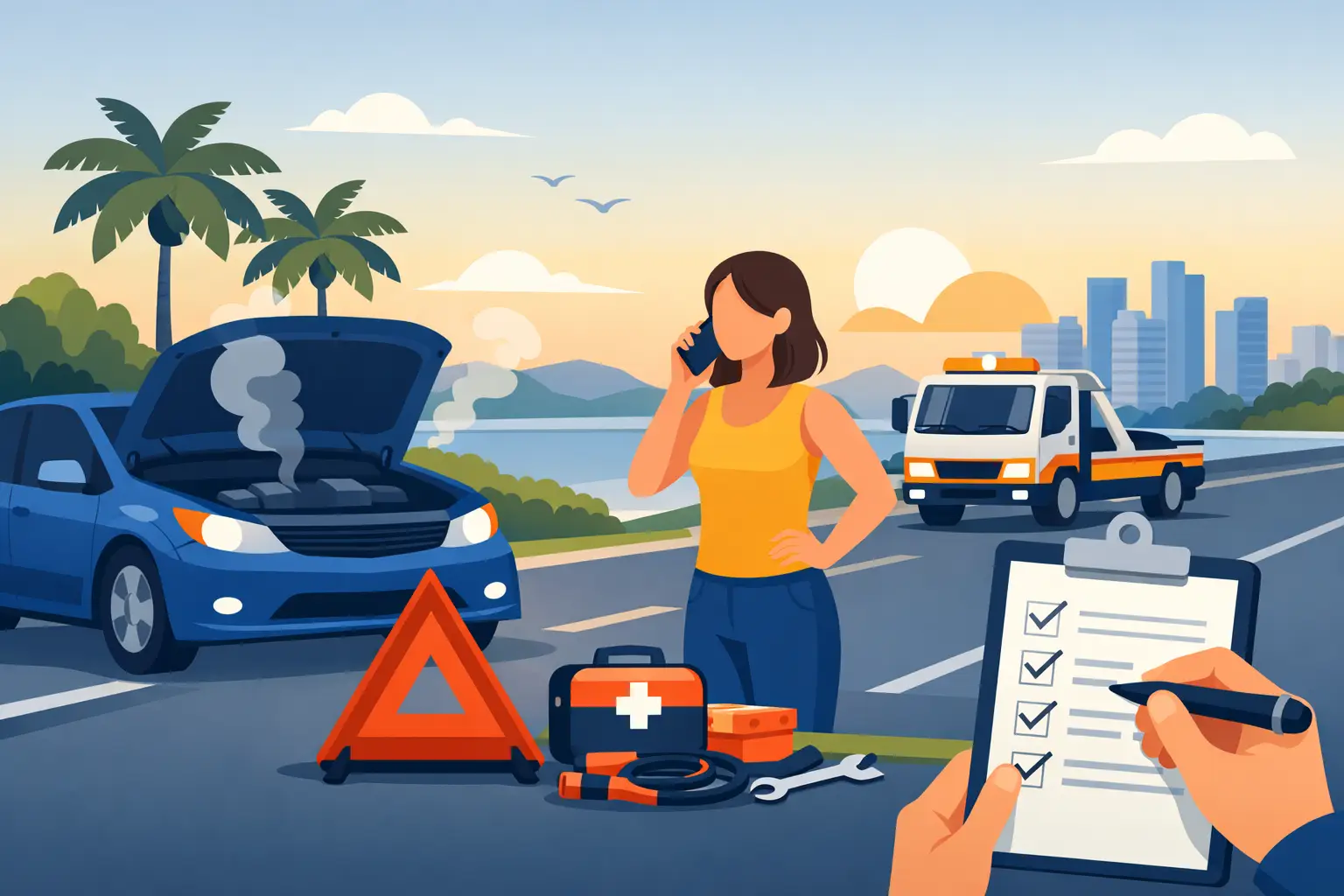
A breakdown on I-95, the Florida Turnpike, or a busy Broward County street can turn dangerous quickly. This breakdown safety checklist drivers can use is built for the moments when your car will not start, a tire blows out, steam comes from under the hood, or you lose power in traffic. Your first job is not diagnosing the vehicle. It is getting yourself and your passengers out of harm’s way.
South Florida traffic moves fast, road shoulders can be narrow, and heat makes any roadside wait harder. A calm, practical response helps protect you until roadside assistance or a tow truck arrives.
Breakdown Safety Checklist for Drivers: First Minutes
The safest choice depends on where the vehicle fails. If your car is still moving, do not brake hard or make a sudden turn. Turn on your hazard lights, ease off the accelerator, and look for the closest safe place to stop. A parking lot, wide shoulder, service road, or exit is usually better than stopping in an active travel lane.
If the vehicle is losing power on a highway, keep steering steady and use the remaining momentum to reach the shoulder. Avoid stopping at the bottom of a hill, just beyond a curve, or in an area where approaching drivers will have little time to see you. If you can safely reach an exit, that is often the better call.
Once stopped, shift into park, set the parking brake, and keep your hazard lights on. At night, during rain, or in heavy traffic, visibility matters even more. If your hazards do not work, turn on your parking lights if possible and call for help immediately.
Do not stand next to the vehicle to inspect it while traffic passes nearby. A flat tire or dead battery can wait a few minutes. Getting hit by a passing vehicle cannot.
Decide Whether to Stay Inside or Exit Safely
There is no single rule that fits every breakdown. On a high-speed road with little or no safe shoulder, staying buckled inside the vehicle may be safer than walking close to traffic. Keep doors locked, remain aware of your surroundings, and call for assistance.
If your vehicle is in a travel lane, smoke is coming from the engine, you smell fuel, or there is another immediate hazard, get out only if you can do so safely. Exit from the side away from traffic whenever possible. Move well away from the road, ideally behind a guardrail or to a protected area. Never stand directly in front of or behind a disabled vehicle.
Families should make this decision with extra care. Keep children close, away from traffic, and out of the roadway. Do not let anyone wait on a narrow shoulder while you look under the hood or search for tools. If conditions feel unsafe, call 911 first, then arrange towing or roadside service.
Make Your Vehicle Easy to Find
A roadside provider can reach you faster when you give a precise location. Before calling, check your phone’s map for the nearest cross street, highway direction, mile marker, exit number, or nearby landmark. On I-95, saying you are northbound near a specific exit is far more useful than saying you are “somewhere near Fort Lauderdale.”
Share the vehicle’s make, model, color, and the problem you are facing. Let the dispatcher know if you need a jump start, tire change, fuel delivery, lockout service, winch-out, or a tow. If the car is damaged after an accident, mention whether it can roll, whether airbags deployed, and whether it is blocking traffic.
Keep your phone charged whenever you travel, especially during hurricane season or long trips. A car charger, portable battery pack, and emergency contact list take up very little space and can save valuable time when a breakdown occurs.
What Not to Do at the Roadside
A breakdown creates pressure, and pressure leads people to take unnecessary risks. Do not accept help from someone who wants you to get into their vehicle. Do not leave your car unattended on a highway unless law enforcement directs you to do so or staying in the vehicle presents an immediate danger.
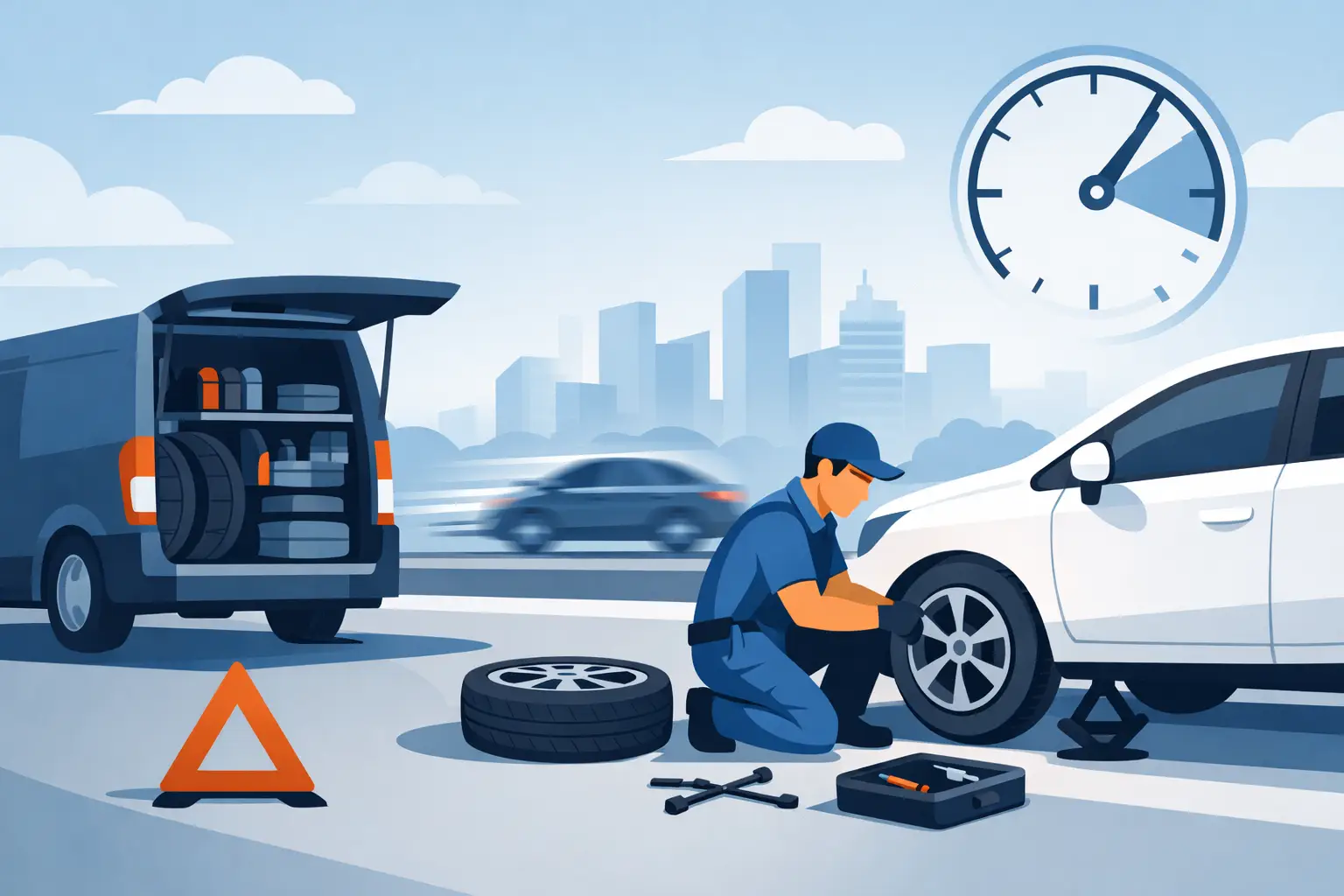
Avoid trying to repair a vehicle in an unsafe location. Changing a tire on a quiet residential street may be manageable if you have the tools and experience. Changing one beside speeding traffic, during a storm, or on soft ground is a different situation. Calling a professional is often the safer and faster option.
You should also avoid opening the radiator cap if the engine is hot. Steam and hot coolant can cause serious burns. If the temperature gauge rises or you see steam, pull over safely, shut off the engine, and wait for qualified help. A tow may cost less than the engine damage caused by driving an overheated vehicle.
Keep a Simple Emergency Kit in Your Car
Prepared drivers do not need a trunk full of equipment. A few reliable items cover most roadside situations and make you easier to assist. Keep these essentials accessible, not buried under luggage or work supplies:
- A charged phone, charging cable, and portable battery pack
- Reflective triangles or road flares, plus a reflective vest
- Flashlight with spare batteries
- Basic first-aid kit, bottled water, and nonperishable snacks
- Tire pressure gauge, jumper cables, and a properly inflated spare tire
- Rain poncho, small towel, and emergency contact information
In South Florida, add sunscreen and extra water. Heat can become a real problem when you are waiting beside a disabled vehicle, particularly for children, older adults, and pets. For commercial drivers, keep fleet contact information and vehicle details available so dispatch can authorize service without delay.
After an Accident or Severe Vehicle Failure
After a collision, call 911 if anyone is injured, traffic is blocked, or the scene is unsafe. Turn on hazards, move the vehicle only if it can be done safely and local authorities direct you to clear the roadway. Take photos when conditions allow, exchange information, and do not argue fault at the scene.
For severe mechanical failure, listen to what the vehicle is telling you. Loud grinding, a burning smell, repeated overheating, steering problems, brake trouble, or a transmission that will not engage are reasons to stop driving. Trying to “make it home” can turn a manageable tow into a larger repair and create a hazard for everyone around you.
A professional tow also protects vehicles that require special handling. All-wheel-drive vehicles, low-clearance cars, accident-damaged vehicles, and many fleet trucks may need the correct equipment to prevent further damage during transport.
When You Call for Roadside Help
Once you are safe, give the dispatcher clear information and follow any instructions. Ask for an estimated arrival window, keep your phone nearby, and watch for the service vehicle from a protected location. If your location changes because police move your vehicle, update the provider right away.
ITow&Recovery provides 24/7 towing and roadside assistance for drivers across Miramar, Pembroke Pines, Hollywood, Weston, Fort Lauderdale, and surrounding South Florida communities. Whether the problem is a flat tire, empty tank, lockout, dead battery, accident, or a vehicle that simply will not move, the goal is straightforward: get you out of the roadside danger zone and back to a safe location.
A breakdown is stressful, but it does not have to become a crisis. Protect the people first, make your vehicle visible, share an accurate location, and let trained help handle the roadside work.