
A breakdown on I-75, a crash near Hollywood Boulevard, or a car that will not start in a Pembroke Pines parking lot leaves little room for guesswork. When you call for help, one of the first decisions is flatbed towing vs wheel lift. Both methods can move a vehicle safely when used correctly, but the right choice depends on your vehicle, its condition, and where it needs to go.
For many South Florida drivers, a flatbed is the safest all-around option. But wheel lift towing still has an important place, especially when fast access, tight spaces, or a short local tow are involved. Knowing the difference can help you request the right service and avoid extra damage when your vehicle is already having a bad day.
What Is Flatbed Towing?
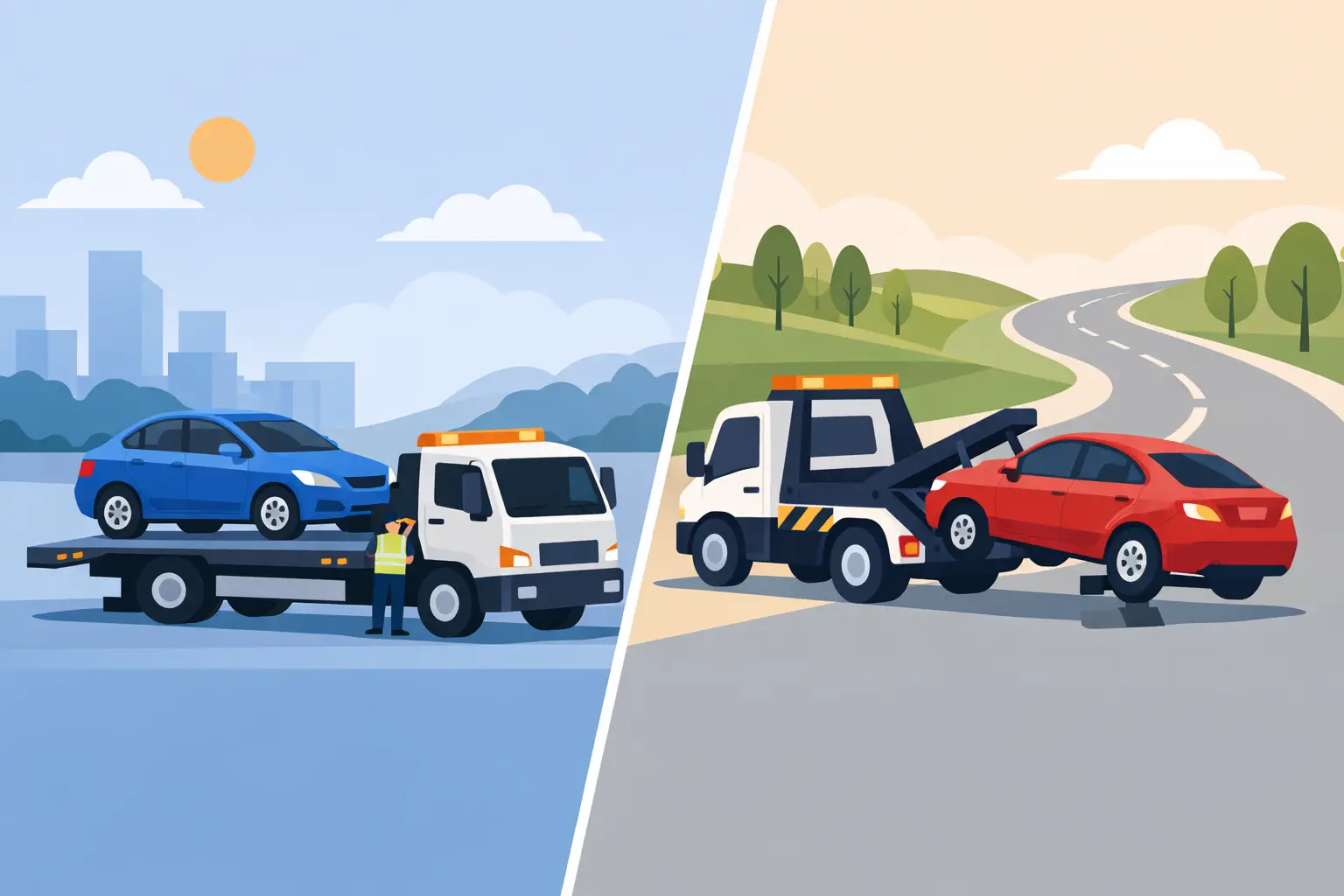
A flatbed tow truck carries your entire vehicle on a level platform. The operator lowers the bed, loads the vehicle using a winch or ramps, secures it at multiple points, and raises the platform for transport. All four tires are off the road.
This method keeps the vehicle from rolling during the trip. That matters for cars with all-wheel drive, four-wheel drive, low ground clearance, or serious mechanical damage. It also reduces wear on tires, suspension components, and the drivetrain because nothing is turning while the truck is moving.
Flatbed towing is commonly the better choice after an accident. A collision can leave wheels bent, steering damaged, tires flat, or body panels hanging loose. Pulling that vehicle with two wheels on the ground can create more problems. A flatbed lets the operator load it carefully and transport it without depending on the vehicle’s rolling condition.
When a Flatbed Is Usually the Best Call
Flatbed service is often recommended for newer vehicles, luxury cars, EVs, classic cars, motorcycles, and vehicles with modified suspensions. It is also a smart choice for long-distance towing from Broward County to another part of Florida.
If your car cannot be shifted into neutral, has locked wheels, has major front-end or rear-end damage, or has a transmission issue, a flatbed is generally the safer route. The truck can winch the vehicle onto the deck rather than forcing it to roll.
Electric vehicles deserve special attention. EVs can have specific towing requirements because their motors and drivetrains may be damaged if the drive wheels rotate while the vehicle is off. A flatbed avoids that risk and follows the cautious approach most manufacturers prefer.
What Is Wheel Lift Towing?
A wheel lift tow truck uses a metal yoke that slides under the front or rear tires and lifts one end of the vehicle. The opposite two tires remain on the road while the tow truck pulls the vehicle to its destination.
Wheel lift towing replaced the older hook-and-chain method for most modern jobs. It gives the operator more control and avoids placing chains directly around the frame or axle. For many standard front-wheel-drive or rear-wheel-drive vehicles, it is a safe, efficient way to handle a short tow when the correct end is lifted.
For example, a front-wheel-drive sedan is typically towed with its front wheels raised. A rear-wheel-drive vehicle is generally towed with the rear wheels raised. If the wrong wheels must stay on the road, dollies may be needed to protect the drivetrain.
Why Wheel Lift Towing Still Makes Sense
Wheel lift trucks are often quicker to position in crowded areas. That can be useful in apartment complexes, narrow driveways, busy parking lots, and congested streets around Fort Lauderdale or Miramar. They are also practical when a vehicle is parked nose-in, blocked by other cars, or difficult to reach with a flatbed.
For a short local tow of a properly functioning two-wheel-drive vehicle, wheel lift service can be an affordable and effective option. It may also be the faster choice when a driver needs a disabled car moved out of traffic right away.
The trade-off is simple: two tires remain on the pavement. That means wheel lift towing is not ideal for every vehicle and every damage situation. The operator needs to confirm the drivetrain, vehicle condition, wheel position, and destination before loading.
Flatbed Towing vs Wheel Lift: The Key Differences
The biggest difference is how much of your vehicle is carried versus rolled. A flatbed carries the full vehicle, while a wheel lift carries one end and rolls the other.
Flatbeds offer greater protection for vehicles that are damaged, low to the ground, all-wheel drive, four-wheel drive, electric, or headed on a longer trip. They are often easier on the vehicle, but they require enough space for the truck to load and operate safely. They can also take a little longer to set up in a tight location.
Wheel lifts are efficient, maneuverable, and often well suited for standard vehicles that need a short tow. They can access spaces where a larger flatbed may struggle. However, they require careful drivetrain handling and may not be appropriate if the vehicle has accident damage, locked wheels, flat tires, or suspension problems.
Neither option is automatically better in every situation. The safest choice comes from matching the truck to the vehicle instead of choosing based on price alone.
How Your Vehicle Type Changes the Answer
Your drivetrain is one of the most important details to share when requesting a tow. Front-wheel-drive and rear-wheel-drive vehicles can often be moved by wheel lift when the correct drive wheels are raised. All-wheel-drive and four-wheel-drive vehicles usually need a flatbed because all wheels are connected to the drivetrain in some way.
Low-clearance vehicles need extra care as well. Sports cars, lowered cars, and vehicles with custom body kits can scrape during loading if ramps are too steep or the equipment is not set up correctly. A flatbed with the proper loading angle and experienced handling is usually the safer choice.
If your car is in park and will not shift, tell the dispatcher. If the wheels are turned sharply, a tire is destroyed, or the vehicle has rolled into a curb or ditch, say that too. Those details help determine whether a flatbed, wheel lift, dollies, or recovery equipment is needed before the truck arrives.
Accident Tows Need More Than a Quick Hookup
After a collision, drivers often focus on getting the car off the road as fast as possible. That is understandable, especially on high-speed roads or during South Florida rain. Still, the loading method matters.
An accident can damage parts you cannot easily see. A bent tie rod, broken control arm, leaking fluid, damaged wheel bearing, or compromised tire may make it unsafe to tow with any wheels rolling on the ground. Flatbed towing is frequently the more cautious solution because it minimizes movement and gives the operator better control while loading.
If the vehicle is blocking traffic or sitting in a dangerous spot, safety comes first. Move yourself and passengers away from traffic when possible, turn on hazard lights, and wait in a safe location. Let the tow operator know about airbags, fluid leaks, wheel damage, and whether the car can roll.
What to Tell a Towing Dispatcher
A faster, more accurate dispatch starts with a clear description. You do not need to diagnose the vehicle, but a few facts make a major difference. Share your exact location, vehicle year, make and model, whether it is two-wheel drive or all-wheel drive if you know, and what happened.
Also mention whether the vehicle is in a garage, parking space, ditch, median, or busy roadway. Let the dispatcher know if it has a flat tire, collision damage, locked wheels, a dead battery, or keys locked inside. If you are headed to a repair shop, give the destination before the truck is dispatched so the right equipment can be assigned.
ITow&Recovery provides 24/7 towing and roadside help throughout Miramar, Pembroke Pines, Weston, Hollywood, Fort Lauderdale, and surrounding South Florida communities. When conditions are stressful, the goal is not to send just any truck. It is to send equipment that can move your vehicle safely and get you out of the situation without added hassle.
Do Not Choose Based Only on the Lowest Quote
An affordable tow matters, but the cheapest option is not always the least expensive outcome. Using a wheel lift on a vehicle that should have been flatbedded can lead to drivetrain damage, tire damage, or added repair costs. On the other hand, paying for a flatbed when a short wheel lift tow is fully appropriate may not be necessary.
Ask what towing method is recommended and why. A professional operator should be able to explain whether your vehicle can safely roll, which wheels need to be lifted, and whether a flatbed is the better fit. That short conversation can protect a vehicle that is already vulnerable.
If your car is disabled in South Florida, focus on getting safely out of harm’s way, then provide the details that matter. The right tow truck, sent promptly and operated with care, is the difference between a straightforward recovery and a more expensive repair bill.