
That moment when you turn the key or press the start button and nothing happens usually tells you all you need to know. One of the top signs battery is dead is a car that suddenly refuses to start, especially when it was running fine the day before. For drivers across Miramar, Hollywood, Pembroke Pines, Weston, and Fort Lauderdale, this is one of the most common roadside problems we see – and it rarely happens at a convenient time.
A dead battery can show warning signs before it quits completely, but those signs are easy to ignore when you are rushing to work, picking up kids, or making deliveries. The key is knowing what counts as a battery problem, what could be something else, and when waiting it out is a bad idea.
Top signs battery is dead or about to fail
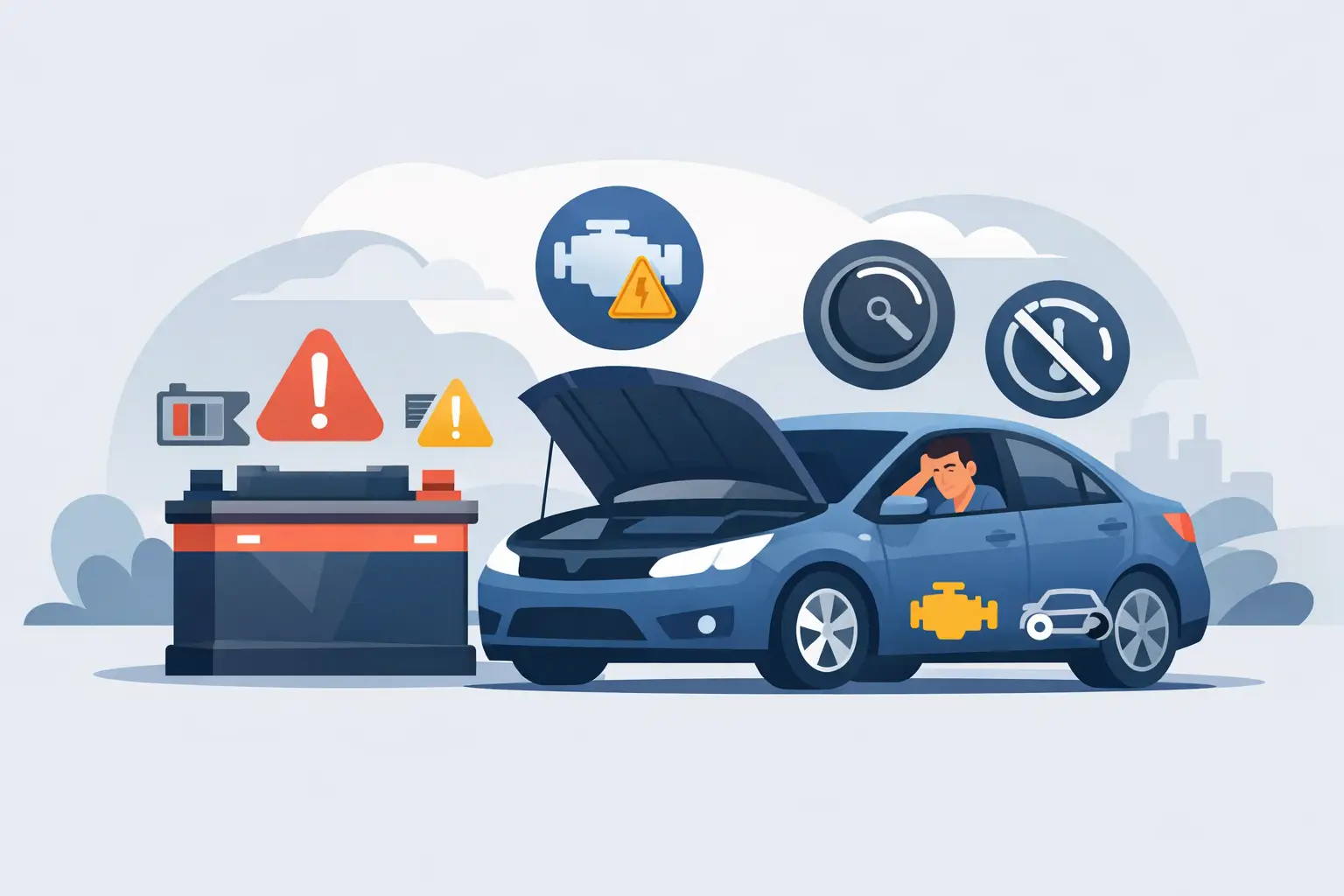
The most obvious sign is a no-start condition. You get in, turn the key, and the engine does not crank normally. Sometimes you hear a rapid clicking noise. Sometimes there is one weak crank and then silence. Sometimes the dashboard lights come on, but the engine still will not turn over. In many cases, that points to a battery that no longer has enough charge to start the vehicle.
Dim headlights are another common warning. If your headlights look weak before the engine starts, or your interior lights fade noticeably when you try to crank the car, the battery may be struggling. This matters even more early in the morning or late at night when drivers are more likely to notice the change.
A slow engine crank is often the sign people miss. The car still starts, but it sounds tired doing it. Instead of a quick, confident turnover, the engine drags for a second or two before catching. That can happen more often in older batteries, especially during temperature swings or after the car has been sitting.
You may also see battery-related warning lights on the dashboard. The battery light does not always mean the battery itself is dead. It can also point to charging system issues, including the alternator. Still, if that light comes on and your vehicle begins having trouble starting, do not ignore it.
Electrical problems can also show up before a full failure. Power windows may move slower than usual. The radio may cut out. The dash display may flicker. Door locks may respond weakly. These problems do not always mean the battery is finished, but when several happen together, battery trouble is high on the list.
When it is the battery and when it might be something else
Not every no-start is a dead battery. That is where roadside experience matters.
If the lights turn on but the engine will not crank, it could still be the battery, but it could also be the starter. If the battery is new and the car keeps dying after a jump start, the alternator may not be charging it properly. If you hear nothing at all and there is no power anywhere, battery terminal corrosion or a loose connection may be the issue rather than a fully dead battery.
There are also situations where the battery is not bad, just drained. Leaving headlights on overnight, keeping a dome light on, charging devices with the engine off, or not driving the vehicle for extended periods can all leave you with a battery that cannot start the car. That difference matters because sometimes a jump start gets you moving again, while a failing battery may die again the same day.
Cold starts are not the only problem in South Florida
A lot of drivers associate dead batteries with winter, but South Florida heat is hard on batteries too. High temperatures can speed up internal battery wear and fluid loss. In our area, batteries often fail because of heat exposure, heavy stop-and-go driving, and short trips that do not give the charging system much time to recover.
That is why a battery can seem fine one week and then fail in a parking lot the next. Heat damage builds over time. The final failure feels sudden, but the battery has usually been weakening for a while.
Signs under the hood you should not ignore
If you can safely check under the hood, look at the battery terminals. A white, blue, or greenish buildup around the terminals can interfere with the connection. Corrosion can mimic battery failure by preventing power from flowing correctly.
You should also pay attention to battery age. Most car batteries do not last forever, and once a battery gets into the three-to-five-year range, failure becomes more likely. That does not mean every battery dies on schedule. Some last longer, and some fail sooner because of driving habits, climate, or charging problems. But if your battery is older and your car is showing weak starts, there is a good chance the battery is near the end.
A swollen battery case is another serious warning sign. Excessive heat can cause the case to expand. If you notice that, do not keep trying to start the car. A damaged battery should be handled carefully.
What to do when your battery dies
First, stay calm and make sure you are parked somewhere safe. If you are stuck at home, in a parking lot, at work, or on the shoulder, your next step depends on the situation.
If you have jumper cables and another vehicle available, a jump start may get you moving. But it only helps if the battery is the main issue and there is not a deeper charging or starting problem. If the vehicle starts and then dies again shortly after, or if it needs multiple jump starts in a short period, that is a sign the problem is not resolved.
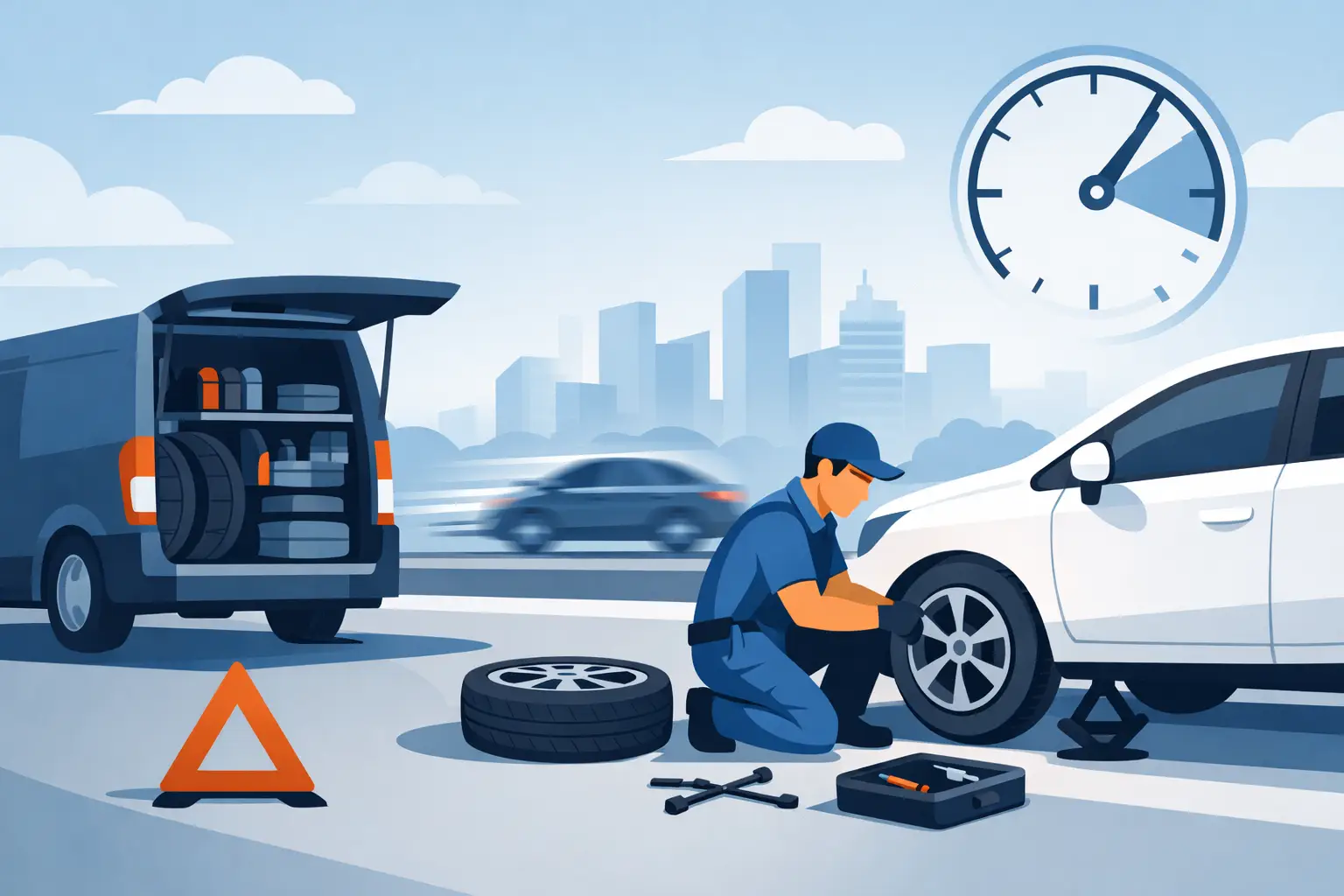
If you are in traffic, stranded in a busy lot, or unsure what is wrong, roadside assistance is the safer move. A fast-response team can test the situation, provide a jump start if appropriate, and tow the vehicle if the battery is not the only issue. That saves you from guessing while your car sits disabled.
How to tell if you need a jump start or a tow
If your car was working normally and suddenly will not start after sitting, a jump start is often worth trying first. This is especially true if you accidentally left lights on or have a battery that was simply drained.
If the car starts with a jump and keeps running normally, you may be able to drive to get the battery checked. If it starts with a jump but struggles again after you turn it off, battery replacement is likely needed.
If the vehicle will not start even with a jump, or if it stalls while running, towing is often the better answer. The problem may involve the alternator, starter, cables, or another electrical fault. For fleet vehicles, work trucks, and delivery drivers, trying multiple jump starts can waste valuable time. Getting the vehicle moved quickly is often the most practical decision.
Why fast response matters with a dead battery
A dead battery is more than an inconvenience when you are late, far from home, or stuck somewhere unsafe. Families may be stranded with kids in the car. Commuters may be trapped in office parking lots after dark. Travelers may not know the area. Commercial drivers can lose income every hour a vehicle is down.
That is why quick roadside help matters. In South Florida, traffic, heat, and distance all make breakdowns more stressful. A provider that knows Miramar, Pembroke Pines, Hollywood, Weston, and Fort Lauderdale can usually respond faster and with fewer delays than a call center dispatching from outside the area.
ITow&Recovery helps drivers deal with dead batteries, no-start issues, and the next step after a failed jump start. Sometimes the fix is simple. Sometimes the safer choice is towing. Either way, the goal is the same – get you out of a stressful situation fast and handle the vehicle professionally.
The signs are usually there before total failure
The biggest mistake drivers make is waiting for complete failure. A weak crank, dim lights, electrical glitches, and an older battery are all warnings. You might still get one more start today and none tomorrow.
If your car is showing these symptoms, do not assume it will be fine because it started once. Battery trouble tends to show up at the worst time – before work, after a long shift, in the rain, or late at night in a parking lot. Paying attention early can save you from being stranded later.
When your car gives you the top signs battery is dead, trust what it is telling you and act before a small problem turns into a roadside emergency.