
A disabled vehicle on I-75, a crash on a busy Fort Lauderdale street, or a car sunk into soft ground after heavy rain can turn stressful fast. This guide to vehicle recovery helps South Florida drivers understand the difference between a simple tow and a recovery, what to do first, and when professional help is the safest move.
Vehicle recovery is not just about getting a car from Point A to Point B. It is about safely removing a vehicle from a position where it cannot be driven or loaded normally. That may mean a car stuck in mud, a vehicle off the shoulder, a truck in a ditch, or a damaged car after an accident. The right equipment, trained operator, and recovery plan matter because one rushed pull can create more damage or put people at risk.
What Vehicle Recovery Means
A standard tow usually applies when your vehicle is parked safely and simply will not run. A dead battery, engine problem, flat tire, or mechanical failure may require roadside service or a tow to a repair shop.
Recovery is different. It is needed when the vehicle is inaccessible, unstable, stuck, wrecked, or positioned in a way that makes ordinary loading unsafe. Common recovery calls include vehicles that have slid into a ditch, become stuck in sand or mud, left the roadway after a collision, or become trapped in a parking lot, embankment, or flooded area.
In South Florida, recovery calls can happen after sudden rainstorms, on soft shoulders, near construction zones, or in crowded commercial areas where there is little room to work. The goal is not to pull as hard as possible. The goal is to stabilize the vehicle, avoid further damage, protect everyone nearby, and move the vehicle safely.
First Steps When Your Vehicle Is Stuck or Disabled
Your first job is to protect yourself and your passengers. If the vehicle is in traffic, on an active highway shoulder, or near a blind curve, move to a safer location only if the car is still drivable and it is safe to do so. If you cannot move it, turn on your hazard lights, keep a safe distance from traffic, and call for help.
After a collision, check for injuries and contact emergency services when needed. Do not stand between your vehicle and traffic. Do not try to direct highway traffic yourself. South Florida roads can stay busy well into the night, and drivers may have limited visibility during heavy rain.
If your car is stuck in mud, sand, water, or a ditch, resist the urge to keep spinning the tires. Wheel spin can dig the vehicle deeper, damage the tires, overheat the transmission, and make recovery more difficult. Trying to rock a vehicle back and forth can also be dangerous if the ground is unstable or the vehicle is close to a drop-off.
Take a quick look from a safe position. Note whether the vehicle is leaning, whether any fluid is leaking, whether a wheel is damaged, and whether there are power lines, fences, trees, water, or other obstacles nearby. These details help a dispatch team send the proper truck and equipment.
When You Need a Recovery Instead of a Tow
A tow truck may still be part of the solution, but a recovery call often requires winching, rigging, additional safety steps, or a specific type of truck. If any of the following applies, tell the dispatcher clearly before a truck is sent:
- Your vehicle is off the road, in a ditch, on a median, or down an embankment.
- The car is stuck in mud, sand, standing water, loose gravel, or soft grass.
- There has been an accident and the vehicle has damage that affects the wheels, steering, or suspension.
- The vehicle is blocked in, wedged, leaning, or unable to roll freely.
- You drive a van, work truck, SUV, commercial vehicle, or loaded fleet vehicle that may need heavier equipment.
The more accurate your description, the better prepared the recovery operator can be. A photo may also be useful when it can be taken safely, but never walk into traffic or unstable terrain to get one.
Why DIY Recovery Can Go Wrong
It is understandable to want a quick fix, especially when you are late for work, trying to finish a delivery route, or stranded near home in Miramar, Pembroke Pines, Weston, Hollywood, or Fort Lauderdale. But DIY recovery has real risks.
A tow strap attached to the wrong point can tear off a bumper, bend suspension components, or become a dangerous projectile if it snaps. Many modern vehicles have designated recovery points, but they are not always easy to access or suitable for every pulling angle. A vehicle that appears lightly stuck may have its undercarriage resting on the ground, which changes the force needed to move it.
Using another vehicle to pull a stuck car can also create a second problem. The pulling vehicle may lose traction, slide backward, or suffer transmission damage. On wet grass, soft sand, and uneven shoulders, even a small recovery can become unpredictable.
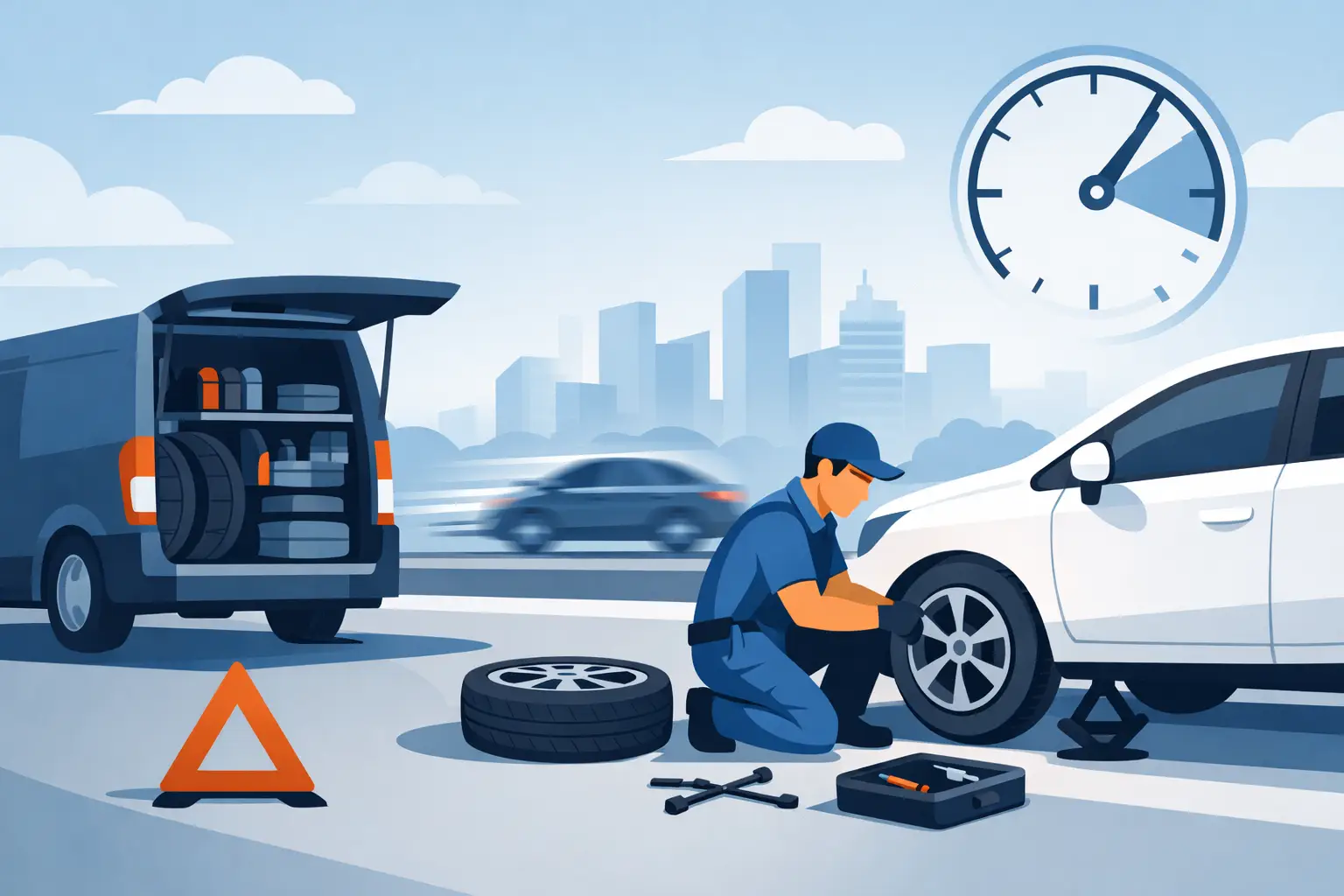
There are limited situations where a driver can safely handle the issue, such as changing a tire on stable ground or using a jump pack for a dead battery. Once a vehicle is off-road, damaged, deeply stuck, or near traffic, trained recovery is the better call.
How Professional Vehicle Recovery Works
A professional operator begins by assessing the vehicle and the scene. They look at the vehicle’s position, weight, driveline, visible damage, ground conditions, nearby hazards, and available access for the recovery truck. This determines whether a winch-out, wheel-lift, flatbed, or another method is appropriate.
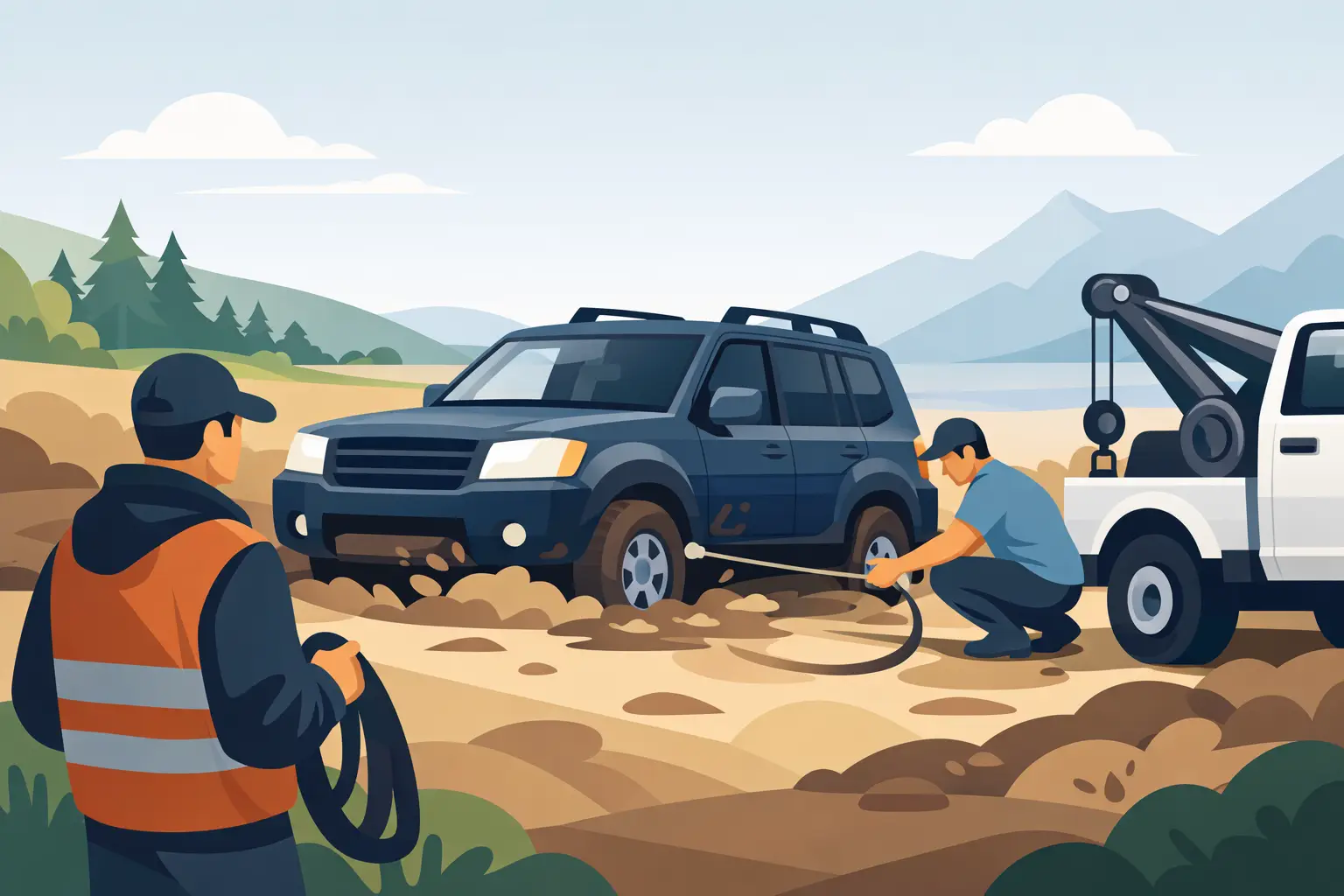
For a vehicle stuck in mud or a ditch, the operator may use a winch and controlled rigging to pull it out gradually. The attachment point and angle are selected to reduce stress on the vehicle. For accident recovery, the vehicle may need to be stabilized first, especially if tires are damaged, airbags have deployed, or the car cannot roll normally.
Once the vehicle is safely accessible, it can be loaded for transport. A flatbed is often a good choice for damaged vehicles, all-wheel-drive vehicles, luxury cars, or vehicles with wheel and suspension damage. The right method depends on the situation, not just the vehicle model.
Recovery pricing also depends on the difficulty of the job. A straightforward roadside winch-out may cost less than a recovery involving deep mud, accident damage, blocked access, multiple vehicles, or extended labor. A reliable provider should explain the service needed and give clear information before work begins whenever conditions allow.
What to Tell the Dispatcher
When you call for help, lead with your exact location. If you are on a highway, share the direction of travel, nearest exit, mile marker, or visible landmark. In a shopping center, apartment complex, or industrial area, provide the address and describe where the vehicle sits within the property.
Then explain what happened. Say whether the vehicle was in an accident, is stuck off-road, will not start, has a flat tire, has run out of fuel, or is locked. Include the year, make, model, and condition of the vehicle if you know it. Tell the dispatcher if it is a commercial vehicle, has a trailer, is carrying equipment, or has low ground clearance.
Also mention anything that changes the safety plan: leaking fluids, floodwater, a vehicle partially in traffic, broken wheels, or a location behind a locked gate. These details help prevent delays and make sure the responding team arrives prepared.
Recovery Help for South Florida Drivers
Roadside emergencies do not wait for convenient hours. A breakdown before sunrise in Weston, a lockout in Hollywood, a flat tire in Pembroke Pines, or an accident near Fort Lauderdale needs prompt, practical support. ITow&Recovery provides 24/7 towing, winch-out and recovery, accident towing, jump starts, tire changes, fuel delivery, and lockout help for drivers across South Florida.
For fleet operators, fast recovery also protects the business. A disabled work truck, delivery van, or company vehicle can delay routes, affect customers, and leave drivers exposed on the roadside. Clear dispatch information and the right towing equipment help get the vehicle handled with less downtime.
Keep your phone charged when possible, store your roadside provider’s number before you need it, and avoid taking recovery risks just to save a few minutes. When your vehicle is stuck, damaged, or unsafe to drive, getting the right help early can protect your car, your schedule, and everyone at the scene.