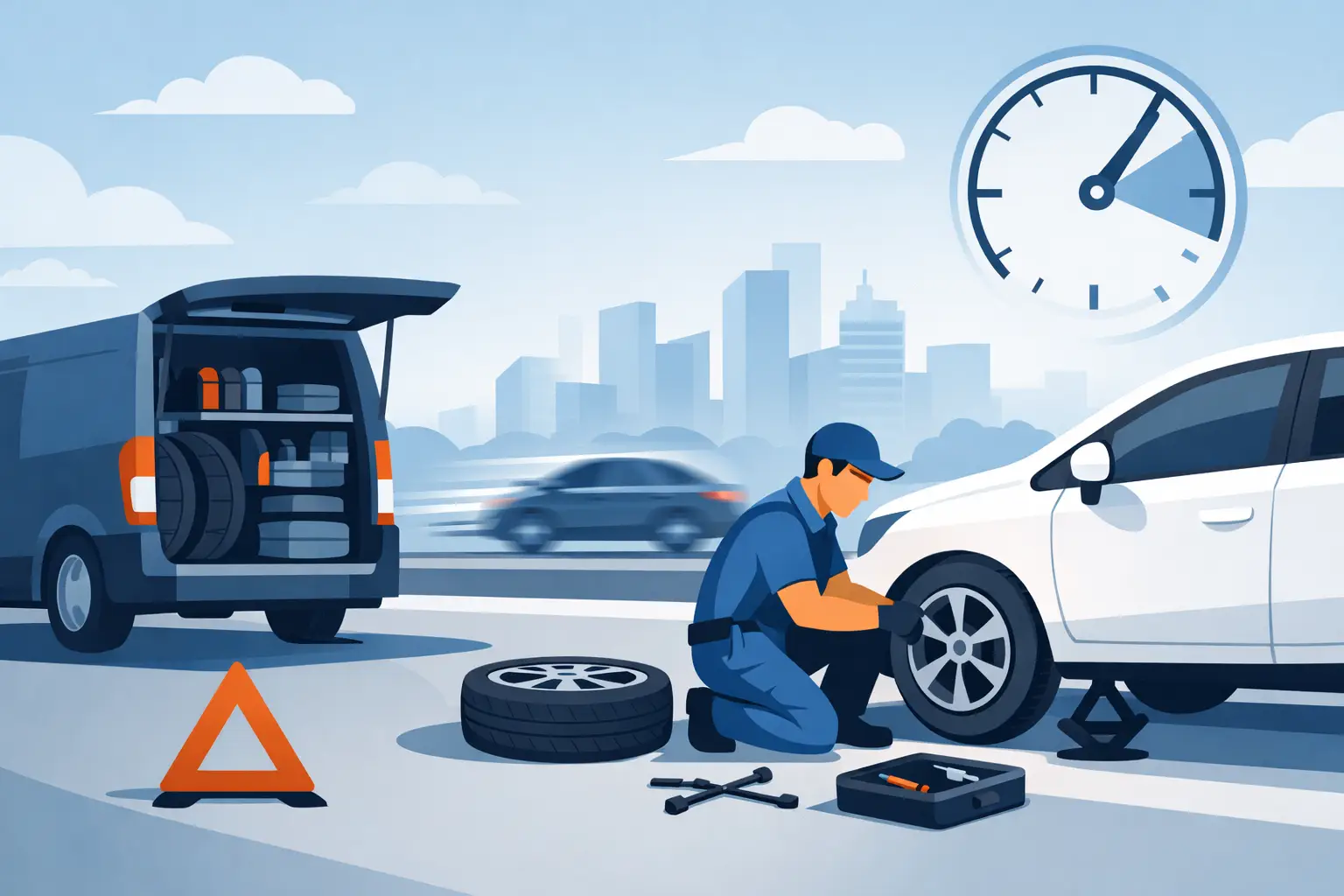

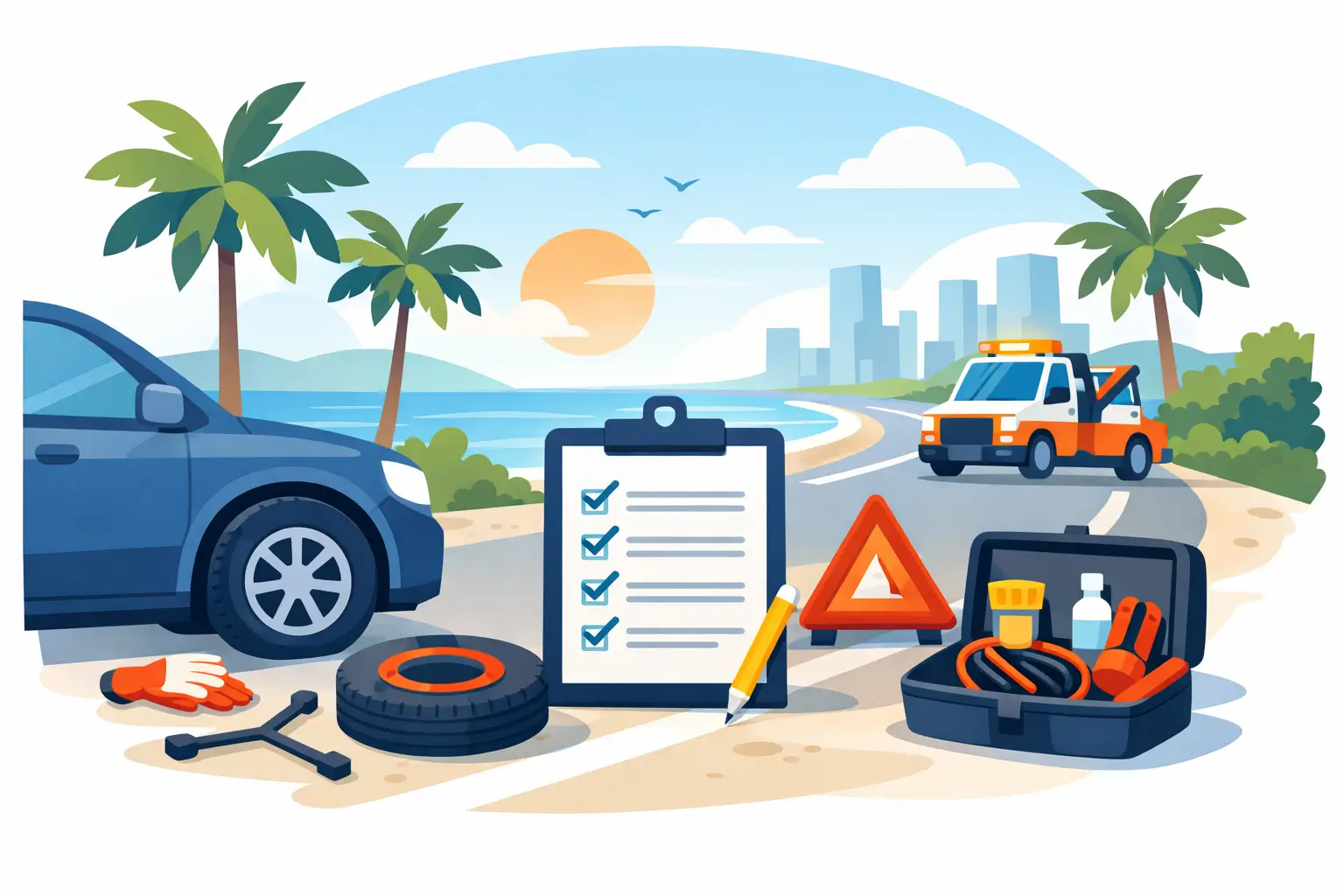
A flat tire can turn a normal drive through Miramar, Pembroke Pines, Fort Lauderdale, Weston, or Hollywood into a stressful roadside stop in seconds. This flat tire roadside checklist helps you focus on the first priority: getting yourself, your passengers, and your vehicle out of danger before deciding whether a tire change is safe.
South Florida traffic moves fast, shoulders can be narrow, and afternoon rain can reduce visibility without warning. If you are unsure about the location, the damage, or your ability to change the tire safely, roadside assistance is the right call.
Flat Tire Roadside Checklist: Start With Safety
The moment you feel a tire go flat, keep a firm grip on the steering wheel and avoid slamming on the brakes. A flat tire can make the vehicle pull to one side, especially at highway speed. Ease off the accelerator, turn on your hazard lights, and slow down gradually.
Move to the safest available location. A parking lot, gas station, side street, or wide paved shoulder is far better than stopping in an active traffic lane. Do not continue driving farther than necessary on a completely flat tire. Even a short distance can damage the wheel, suspension components, and the tire beyond repair.
Once stopped, put the vehicle in park, set the parking brake, and keep your hazard lights on. If it is dark, raining hard, or visibility is poor, use interior lights only as needed and stay alert to approaching traffic. Passengers should remain inside the vehicle with seat belts fastened unless the car is in an unsafe location, such as directly in traffic or at risk from another hazard.
Before opening your door, check mirrors and look over your shoulder for cyclists, motorcycles, and passing vehicles. On a busy road, standing close to the traffic side of your vehicle is one of the biggest risks of a flat tire situation.
Check the Tire and Your Surroundings
After you are safely parked, inspect the tire from a safe position. Look for obvious signs of damage such as a nail or screw in the tread, a split sidewall, a bulge, a deep cut, or a tire that has come off the wheel bead. Do not pull out a nail or screw if the tire is still holding some air. It may be slowing the leak, and removing it can cause the tire to deflate immediately.
Also inspect where you are parked. A jack needs level, firm ground to support the vehicle properly. Soft grass, loose gravel, sloped pavement, sand, or an uneven shoulder can make a tire change dangerous. South Florida’s sandy ground and wet roadside areas are especially poor places to use a jack.
Ask yourself three practical questions: Do I have a usable spare tire and the right tools? Can I work without being exposed to moving traffic? Do I know where the vehicle’s jack points are? If any answer is no, skip the DIY attempt and request professional help.
What to Keep in Your Vehicle
A prepared vehicle makes a roadside flat less complicated. Check your spare tire and tools before an emergency happens, not after. Many drivers discover too late that their spare is low on air, their wheel lock key is missing, or their jack was removed during a previous repair.
Keep these items in your trunk or cargo area:
- A properly inflated spare tire, or an approved tire repair kit if your vehicle does not carry a spare
- A jack, lug wrench, and wheel lock key if your wheels use locking lug nuts
- Reflective triangles, road flares, or a high-visibility safety vest
- A flashlight with fresh batteries, work gloves, and a rain poncho
- A tire pressure gauge and portable inflator
- Your roadside assistance contact information and vehicle owner’s manual
Your owner’s manual matters because lift points, spare tire instructions, and tire pressure requirements differ by vehicle. A compact temporary spare, often called a donut, is not designed for normal driving. It usually has a lower speed limit and should be replaced with a full-size tire as soon as possible.
When It Is Safe to Change the Tire Yourself
Changing a tire can be reasonable when you are in a safe, level location, traffic is well away from the vehicle, and you have the correct equipment. If you decide to proceed, place reflective warning devices behind your vehicle when conditions allow. Keep passengers clear of the work area.
Start by removing the hubcap if needed and loosening the lug nuts while the tire is still on the ground. Turn them counterclockwise, but do not remove them completely yet. Position the jack only at the manufacturer-approved lift point. Lifting in the wrong spot can damage the vehicle or cause it to slip.
Raise the vehicle only high enough for the flat tire to clear the pavement. Remove the lug nuts, take off the damaged tire, and place the spare on the wheel studs. Hand-tighten the lug nuts first. Lower the car until the tire touches the ground, then tighten the lug nuts in a star pattern to help the wheel seat evenly.
Do not crawl under a vehicle supported only by a jack. Do not use blocks, loose objects, or improvised supports to make a jack reach higher. If a lug nut will not move, the jack seems unstable, or the spare does not fit correctly, stop. Forcing the job can create a much more expensive and dangerous problem.
When to Call for Flat Tire Roadside Help
There are situations where changing the tire yourself is not worth the risk. Call for assistance if you are on I-75, Florida’s Turnpike, I-95, a narrow bridge, a busy intersection, or any road where traffic is close to your vehicle. The same applies if it is dark, raining, flooding, or you do not feel safe where you stopped.
Professional help is also the better choice if the tire has sidewall damage, the wheel is bent, multiple tires are damaged, or you do not have a working spare. A puncture in the tread may sometimes be repairable, but a torn sidewall generally requires tire replacement. Driving on a damaged wheel can turn a straightforward tire service call into a tow and wheel repair.
For drivers in Broward County, ITow&Recovery provides fast roadside tire change assistance day or night. A trained technician can install your spare when it is safe to do so and help determine whether towing is necessary when the tire, wheel, or vehicle has more serious damage.
After the Spare Is Installed
Do not assume the problem is finished when the spare is on. Check that the tire looks properly seated and verify the pressure if you have a gauge. Then drive cautiously to a tire shop or safe repair location. Avoid high speeds, sharp turns, and long distances on a temporary spare.
Pay attention to warning signs while driving. Vibration, pulling, a tire pressure warning light, grinding sounds, or a steering wheel that is off-center can indicate damage beyond the tire itself. If you hit a pothole, curb, or road debris before the flat, the wheel or suspension may need inspection.
Have the damaged tire examined promptly. A shop can tell you whether a puncture is repairable, whether the tire needs replacement, and whether your remaining tires have enough tread and matching condition for safe driving. If the tires are old, worn unevenly, or repeatedly losing air, replacing only one may not always be the best option. It depends on the vehicle, drivetrain, tire condition, and manufacturer recommendations.
A Quick Decision That Protects Your Day
A flat tire is frustrating, but rushing through it on the side of the road can make the situation worse. Get to a safe location, assess the tire and traffic conditions honestly, and choose the option that protects you first. When the shoulder is unsafe or the job feels uncertain, waiting for qualified roadside help is not an inconvenience – it is the smart move.