
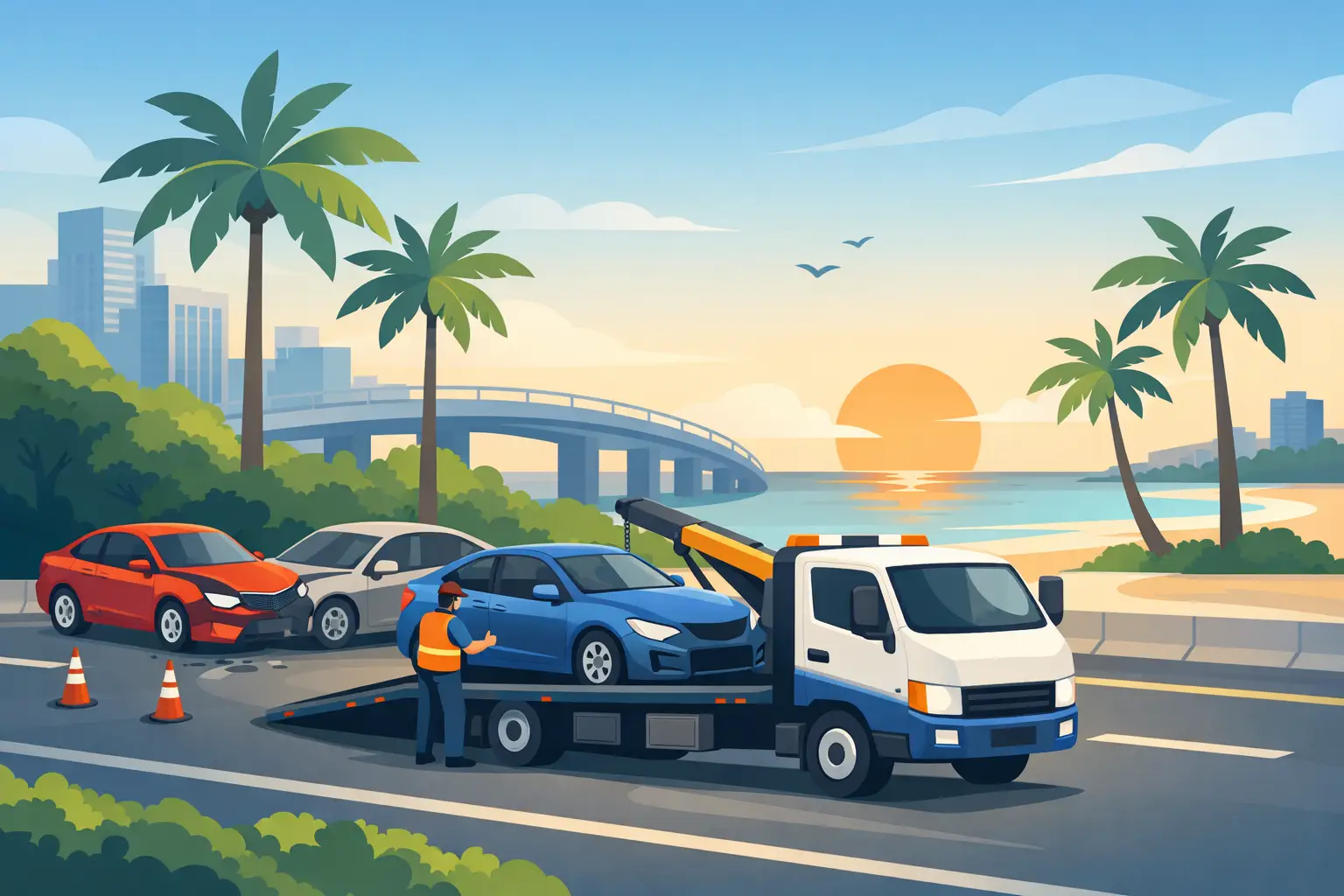
A collision on I-75, the Turnpike, or a busy Broward County intersection can leave your vehicle blocking traffic, leaking fluids, or unable to move. This guide to towing after collisions explains what to do first, how to avoid costly mistakes, and how to get your vehicle moved safely when the pressure is on.
Put Safety Before the Tow
The first decision is not where to tow your car. It is whether you and your passengers are safe where you are. If anyone is injured, call 911 immediately. If the vehicle is in a dangerous traffic lane and can still be driven safely, move it to the shoulder, a nearby parking area, or another safer location. Turn on your hazard lights and stay aware of passing traffic.
Do not attempt to move a vehicle if you see smoke, fire, fuel leaking, deployed airbags that limit visibility, major wheel damage, or parts dragging beneath the car. A vehicle may look drivable after an impact but have hidden steering, suspension, brake, or cooling-system damage. Driving it even a short distance can make the damage worse or put you at risk of another crash.
Once you are in a safer position, exchange information with the other driver, document the scene if you can do so safely, and follow law enforcement instructions. Take photos of vehicle positions, damage, license plates, road conditions, and any relevant signs or traffic signals. These details can help with an insurance claim later.
When Your Vehicle Needs Accident Towing
Collision damage is not always obvious. A cracked bumper alone may not stop a car from being driven, but a hit to a wheel, undercarriage, radiator, or steering component can create a serious problem. If the car pulls hard to one side, has a flat tire from impact, overheats, makes grinding sounds, or shows warning lights, towing is usually the safer choice.
The right tow method depends on the vehicle and the damage. A flatbed is often the best option for an accident-damaged vehicle because all four wheels ride off the ground. This helps prevent additional damage when a wheel is bent, a tire is flat, the drivetrain is affected, or the vehicle is not safe to roll. For all-wheel-drive, luxury, low-clearance, and many electric vehicles, the towing method should match manufacturer recommendations.
Tell the dispatcher what happened. Mention whether the car starts, whether the wheels turn, whether airbags deployed, and whether there are visible leaks or loose parts. Clear information helps the towing team arrive with the appropriate equipment instead of losing time at the scene.
Do not let a damaged car sit in a dangerous location
South Florida traffic moves fast, and shoulders can be narrow. If your car cannot be safely driven away from the roadway, request a tow as soon as possible. Stay out of traffic whenever you can. If you must wait near the vehicle, stand well away from moving lanes and do not remain between your car and another vehicle.
Know Where Your Vehicle Is Going
Before the tow truck hooks up your vehicle, decide on a destination if possible. You may choose a repair shop, dealership, your home, or another secure location. The best choice depends on the time of day, the severity of the damage, your insurance process, and whether the shop can inspect the vehicle promptly.
A dealership may make sense for a newer vehicle, specialty repair, warranty work, or complicated electronic systems. An independent body shop may be a better fit if it is trusted, convenient, and able to work with your insurer. If it is late at night and no shop is open, towing the vehicle to a secure location may be more practical than leaving it at an unfamiliar facility.
If law enforcement directs the vehicle to a specific location or it must be removed quickly from a roadway, ask where it is being taken and get the towing company’s name, phone number, and destination address. Keep all paperwork. Storage fees can add up, so contact your insurer and repair facility as soon as you can once the immediate emergency is over.
Avoid Surprise Towing and Storage Costs
After a collision, you may be approached by a tow truck before you have made a call. In some situations, that truck may have been dispatched by law enforcement or property management. In others, it may be an unsolicited offer. Do not sign paperwork you do not understand, and do not assume a tow is free because another driver caused the crash.
Ask direct questions before authorizing service: Where will the vehicle be towed? What is the towing rate? Is there a hookup fee, mileage charge, after-hours charge, or storage fee? Can you receive a receipt or written authorization? A professional provider should be clear about the destination and charges.
There are situations where you may not have much choice. If the vehicle is disabled on a highway, blocking an entrance, or creating a hazard, it may need to be moved immediately. Even then, documenting the company name, truck number, driver name, and storage location can save time later.
What to Remove Before the Vehicle Is Towed
If conditions allow and you can do it safely, remove essential personal items before your vehicle leaves. Take your wallet, keys, phone, medication, work equipment, garage opener, and important documents. If you need child seats, mobility equipment, or personal belongings from the trunk, tell the tow operator before the vehicle is loaded.
Do not climb into a damaged vehicle or force open a jammed trunk. The towing professional can advise you on the safest way to access belongings. Also take photos of the interior and exterior before the tow. This gives you a clear record of the vehicle’s condition and any items inside.
Avoid leaving valuables in the car, especially if it will be stored overnight. If you cannot remove everything, make a quick written note of what remains. That is helpful for your records and for any insurance discussion.
Call Your Insurance Company, but Do Not Delay Safety
Report the collision to your insurer as soon as you are safe. Your policy may include roadside or towing coverage, and the insurer may have preferred repair networks or documentation requirements. They can also explain whether a rental vehicle is available and what steps are needed to open a claim.
Still, insurance approval should not delay urgent towing from an unsafe location. Your priority is getting people out of danger and the vehicle off the road. Keep the tow receipt, photos, police report number if available, and contact information for everyone involved. These records support your claim and help you track where the vehicle went.
Coverage varies. Some policies pay a set towing amount, while others reimburse only when a certain process is followed. If you have questions, ask your insurer before authorizing non-emergency repairs. But when a collision has left the vehicle unsafe to drive, a prompt tow is often the responsible decision.
Towing After Collisions for Work Vehicles and Fleets
For delivery drivers, contractors, and small business fleets, a collision can stop more than one vehicle. It can interrupt deliveries, delay service calls, and leave equipment stranded. A fast tow helps protect the scene, get the driver to safety, and move the vehicle toward inspection or repair without adding unnecessary downtime.
Fleet operators should keep vehicle information, insurance details, and preferred repair destinations accessible to drivers. Drivers should know who to contact after a collision and should never be expected to keep operating a vehicle with possible safety damage. A quick response can reduce storage charges and make the repair process easier to manage.
Get Local Help When the Road Cannot Wait
After a crash, you need a towing provider that can respond clearly, handle damaged vehicles with care, and transport your car where it needs to go. ITow&Recovery provides 24/7 accident towing and roadside support across Miramar, Pembroke Pines, Hollywood, Weston, Fort Lauderdale, and surrounding South Florida communities.
When you call, share your exact location, vehicle type, damage concerns, and preferred destination. Then focus on the next right step: get yourself to safety, let professionals secure the vehicle, and give yourself room to handle the claim and repairs without making a rushed decision at the roadside.