
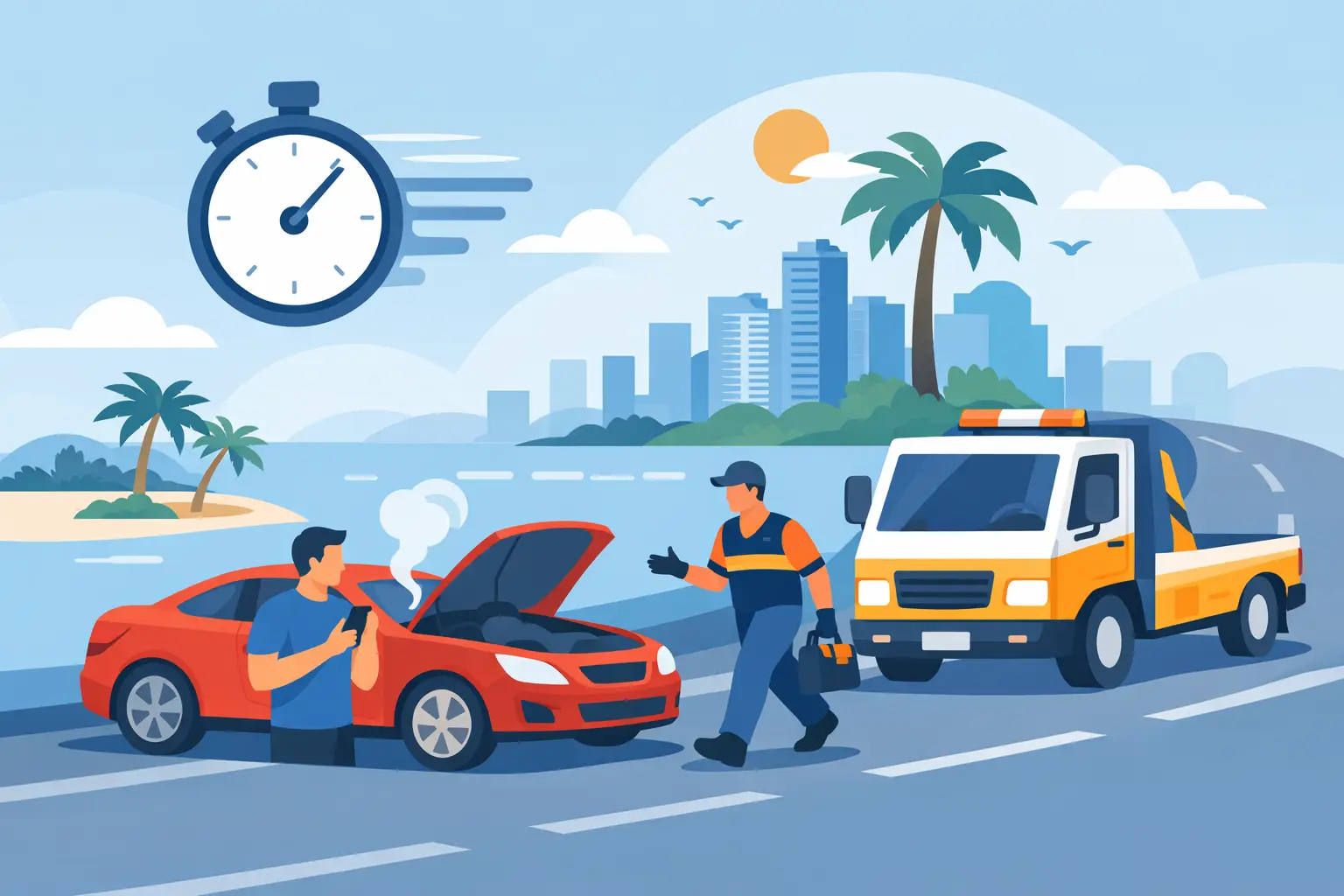
A dead battery in a Pembroke Pines parking lot, a flat tire on the way through Weston, or an overheating vehicle near Fort Lauderdale can turn an ordinary day into a stressful one fast. When drivers ask how fast roadside help arrives, what they really need is a clear answer: help should be dispatched quickly, kept in communication, and sent by a provider that knows the local roads.
For many roadside calls in South Florida, arrival can be as quick as 30 to 60 minutes depending on where you are, traffic, weather, the type of service needed, and truck availability. There is no responsible way to promise one exact arrival time for every situation. A local provider should give you an honest estimated time of arrival, keep you updated if conditions change, and send the right equipment for the job.
How Fast Roadside Help Arrives Depends on the Situation
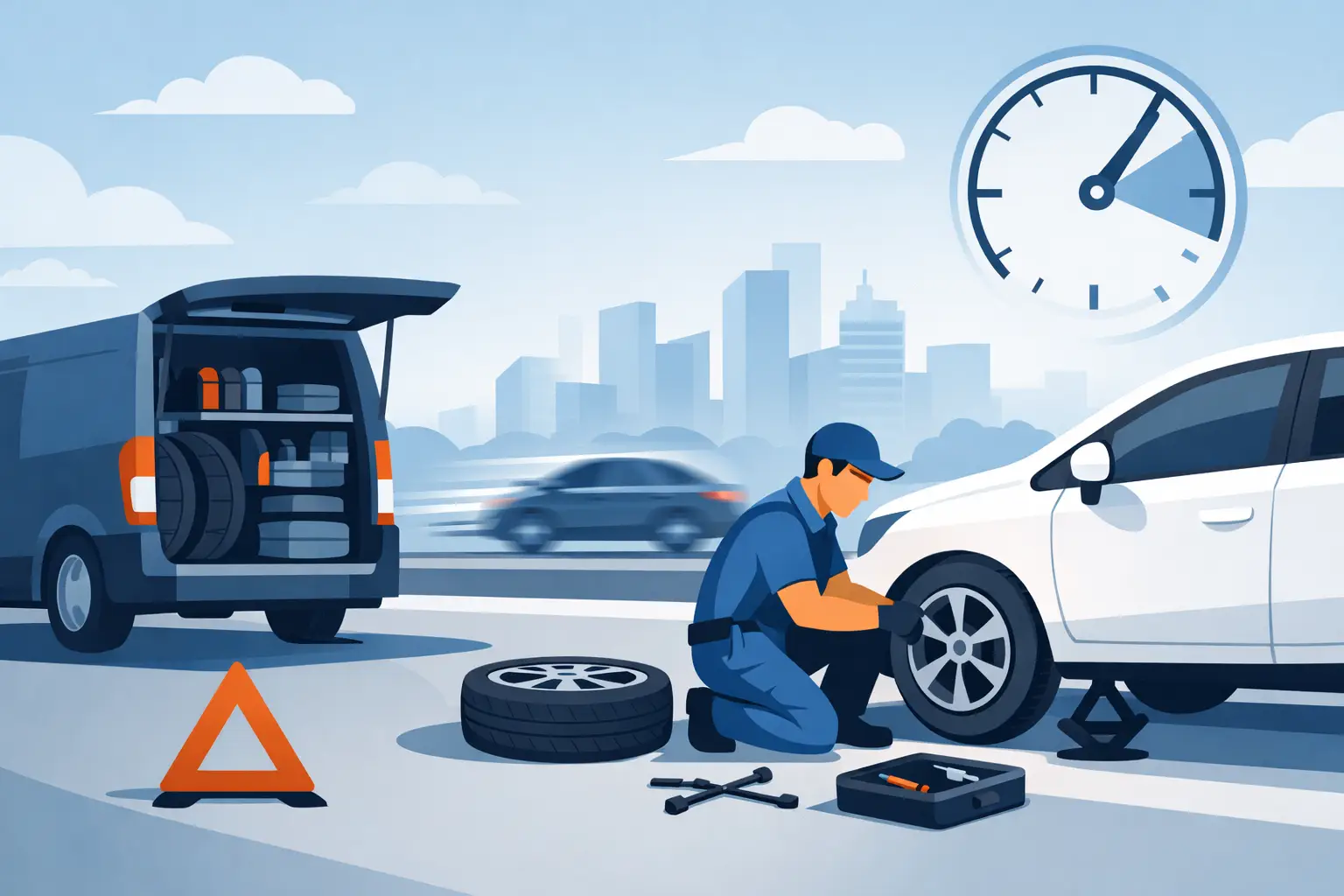
The fastest calls are usually straightforward services where a nearby technician can respond with standard roadside equipment. A jump start, tire change, fuel delivery, or vehicle lockout may be handled sooner than a complicated recovery because the responder does not need a tow truck with specialized gear.
Towing times can vary more. If your vehicle is safely parked in a driveway, garage, shopping center, or neighborhood street, dispatch can often arrange a pickup efficiently. If you are involved in a collision, stuck in a ditch, blocked by another vehicle, or stranded on a busy highway shoulder, the job may require additional planning and the proper recovery equipment.
Your exact location matters, too. A provider based near Miramar, Hollywood, Pembroke Pines, Weston, or Fort Lauderdale can often reach those areas faster than a company coming from another county. Local knowledge helps drivers choose practical routes around congested corridors, construction zones, and rush-hour bottlenecks.
Traffic Can Change an ETA Quickly
South Florida traffic is not predictable. I-75, I-95, the Florida Turnpike, US-1, and major east-west roads can slow down with little warning. A tow truck may be only a few miles away, but a crash, severe congestion, roadwork, or heavy rain can add time to the route.
That does not mean you should accept vague answers. When you call for assistance, ask for an estimated arrival window and whether the driver is already being dispatched. A dependable roadside company will set realistic expectations instead of giving you an unrealistic promise just to get the call.
Weather and Road Conditions Matter
Heavy South Florida rain can create standing water, reduce visibility, and slow traffic across Broward County. During severe storms, roadside service demand can also increase as drivers deal with flooded streets, stalled vehicles, accidents, and battery issues.
A minor tire change in dry weather may be quick. The same service on a narrow shoulder during a downpour takes longer because the technician must work safely. Fast response matters, but safe service matters just as much.
What Happens After You Request Roadside Assistance
A quick response starts with accurate information. The dispatcher needs enough detail to send the right person and equipment the first time. If a caller says only that the car will not move, but the vehicle is actually stuck in mud or has been in an accident, a standard tow truck may not be enough.
Be ready to provide your location, vehicle make and model, vehicle condition, and the service you need. Share the closest cross street, landmark, business name, highway direction, or exit number. If you are in a large parking lot, say which entrance or store section you are near. These details can save valuable minutes.
If your car needs towing, let dispatch know whether it starts, rolls, has damaged wheels, is parked in a garage, or is loaded with tools, passengers, or commercial equipment. For a lockout, tell them if a child or pet is inside the vehicle. That information changes the urgency of the response.
Common Roadside Problems and Typical Response Factors
A jump start is often one of the simplest roadside calls, but it can still take longer when demand is high. Dead batteries are common after long workdays, airport trips, extreme heat, or leaving lights on. If the battery will not hold a charge after a jump, you may need a tow rather than another start.
For a flat tire, the technician needs a safe place to work and a usable spare tire. If the spare is flat, damaged, missing, or inaccessible, towing may be the better solution. Trying to drive on a severely damaged tire can ruin the wheel and create a more expensive repair.
Fuel delivery can get you moving quickly when you have simply run out of gas. However, if the vehicle still will not start after fuel is added, there may be another mechanical issue. A lockout can be resolved quickly in many cases, but modern vehicles with damaged keys, malfunctioning electronic locks, or security system problems may need more attention.
Winch-out and recovery calls require the most flexibility. A vehicle stuck in a ditch, mud, water, sand, or a difficult driveway may need a specific truck setup and a careful recovery plan. The right equipment prevents further damage to your vehicle and protects everyone at the scene.
How to Help Roadside Assistance Reach You Faster
Once you have called, stay reachable by phone. If your location changes or you move to a safer nearby area, notify dispatch immediately. A driver cannot help quickly if they arrive at the original location and cannot find you.
Turn on your hazard lights if it is safe to do so. At night, use your interior light or phone flashlight only when it helps the tow operator identify your vehicle without putting you in danger. If you are on a highway, do not stand between your vehicle and traffic or attempt repairs near active lanes.
Keep the details simple and accurate. Saying you are “near Fort Lauderdale” is less useful than providing the street, direction of travel, nearby exit, or a recognizable landmark. If you can safely send a photo of the vehicle position or damage when requested, that can help confirm the proper equipment before the truck arrives.
When to Call for a Tow Instead of Waiting It Out
Some drivers wait because they hope the vehicle will restart or because they do not want the cost of a tow. That choice can create more risk, especially on a busy roadway or in extreme heat. Call for towing when the vehicle is not safe to drive, has collision damage, overheats repeatedly, will not shift properly, has a damaged wheel, or displays warning signs you do not understand.
Commercial drivers and small fleet operators should also act early. One disabled work vehicle can delay deliveries, appointments, and payroll-producing work. Fast fleet towing helps get the vehicle off the road and into a repair plan before a small issue becomes a full-day disruption.
ITow&Recovery provides 24/7 towing and roadside assistance for drivers across Miramar, Pembroke Pines, Hollywood, Weston, Fort Lauderdale, and nearby South Florida communities. Whether you need a jump start, tire change, lockout service, fuel delivery, accident tow, local tow, or recovery, the goal is straightforward: dispatch the right help quickly and treat your vehicle with professional care.
Stay Safe While Help Is on the Way
If your vehicle is drivable enough to move out of traffic, pull into a well-lit parking lot, shoulder, or safe side street when possible. If it is not safe to leave the vehicle, stay inside with your seat belt fastened unless remaining inside creates a greater danger, such as fire, rising water, or a hazardous location.
Do not accept help from an unverified person who approaches you and offers towing. Confirm the company and vehicle sent by dispatch before handing over keys or allowing anyone to load your car. A legitimate provider should be able to identify the service call and explain what they are there to do.
The best way to reduce the wait is to call as soon as you know you cannot safely continue driving, give a precise location, and choose a local company prepared for the type of emergency you have. A fast response can get you out of danger sooner, but a calm, accurate call helps make that response even faster.