
A crash on I-75 or a busy Miramar intersection can turn normal traffic into a dangerous backup in minutes. If you are searching for an accident scene towing example, you are probably trying to understand what actually happens after a collision, who moves the vehicle, and how to get help fast without making a bad situation worse.
At the scene of an accident, timing matters. A damaged car left in a travel lane creates more risk for you, your passengers, and everyone approaching the area. That is why accident towing is not just about moving a vehicle from point A to point B. It is about safety, traffic control, damage prevention, and getting the right equipment on site before a small problem turns into a bigger one.
A real-world accident scene towing example
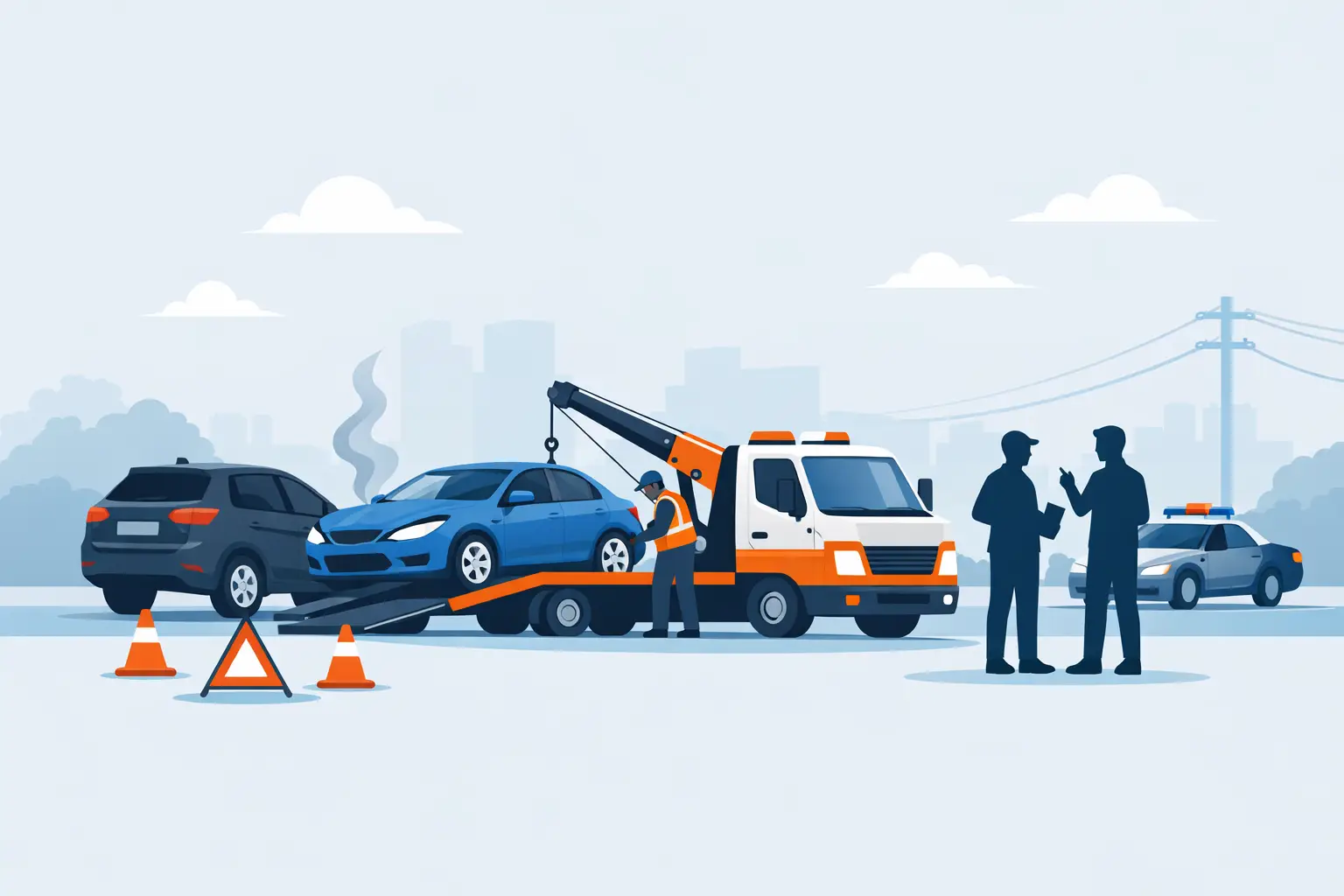
Picture a two-car crash at an intersection in Pembroke Pines during evening traffic. One vehicle has front-end damage and cannot move under its own power. The second car has a bent wheel and is partially blocking the turn lane. Drivers are shaken up, traffic is stacking behind them, and there may be leaking fluid on the pavement.
In that situation, the first priority is immediate safety. The drivers move to a safe area if possible, call emergency services if anyone is hurt, and wait for law enforcement to secure the scene. Once the situation is stable, a tow truck is dispatched based on the condition of the vehicles. If one car can roll but is not safe to drive, a standard tow may work. If another has suspension damage, a locked wheel, or heavy front-end impact, a flatbed is often the better choice.
When the tow operator arrives, the job starts with an assessment. The operator checks vehicle position, visible damage, traffic exposure, and whether the car can be safely loaded without causing more harm. If debris is scattered across the roadway, that may also affect how the recovery is handled. In some crashes, the car is easy to access. In others, it may be angled against a curb, stuck in a median, or too damaged to pull normally.
This is where experience matters. Accident towing is different from picking up a disabled car in a parking lot. The operator may need to winch the vehicle into alignment, use dollies for damaged wheels, or carefully load from a position that protects both the vehicle and the roadway. Done right, the vehicle is removed quickly and the scene clears faster.
What happens during accident scene towing
Most drivers have never had to think about the process until they need it. A typical accident scene towing example follows a practical sequence, but the exact steps depend on the crash, the location, and the vehicle condition.
First comes dispatch. The towing company needs the location, the vehicle type, and a quick description of the damage. On busy South Florida roads, accurate location details can save valuable minutes. Saying you are near Fort Lauderdale is not enough if you are actually on a shoulder, under an overpass, or at a blocked turn lane with limited access.
Next comes arrival and scene coordination. If police or fire rescue are already there, the tow operator works around their direction. If the roadway is active and dangerous, the tow truck may need to position in a way that protects the scene while still allowing a safe load. That setup is not random. It is part of reducing risk while keeping traffic moving where possible.
Then comes vehicle recovery and loading. Some cars only need a simple hook-up and transport. Others need more careful handling because of broken axles, steering damage, airbag deployment, or low-clearance body damage. A rushed or careless tow can add damage to a vehicle that was already hit, so equipment choice matters.
After loading, the vehicle is transported to the destination requested by the driver, insurer, body shop, or another approved location. Sometimes the vehicle goes home. Sometimes it goes directly to a repair facility or storage lot. It depends on the extent of the damage and whether the car is safe to release to the owner immediately.
Why fast accident towing matters in South Florida
In Broward County, traffic does not wait. A disabled vehicle on a major road in Hollywood, Weston, or Fort Lauderdale can create a secondary hazard very quickly. Fast towing helps reduce lane blockages, lowers the chance of another crash, and gets drivers out of an exposed position sooner.
There is also the issue of heat, weather, and local traffic volume. South Florida drivers deal with sudden rain, slick roads, rush-hour congestion, and high-speed traffic corridors. A car that is stuck after an accident is more than an inconvenience. It becomes a roadside risk.
That is why local response matters. A company that already operates across Miramar, Pembroke Pines, Hollywood, Weston, and nearby areas can often dispatch faster and arrive with equipment suited to the situation. Not every accident call is the same, and not every truck is the right fit.
One accident scene towing example does not fit every crash
A lot of drivers expect towing to be simple, but real accident scenes vary. A rear-end collision in a parking lot is different from a highway crash with disabled steering. A compact sedan with cosmetic damage is different from a work van carrying tools or inventory. A small commercial fleet vehicle may need more planning than a personal car, especially if cargo access or business downtime is involved.
That is the trade-off. The fastest possible pickup is important, but so is sending the right truck and operator. If a damaged SUV needs a flatbed and wheel dollies, sending the wrong setup first can delay the whole job. Good dispatch is about speed and fit.
There is also the question of where the vehicle should go. Some drivers want it taken to their home. Others need it delivered to a collision center. In some cases, insurance instructions shape the next step. If the car is badly damaged, storage and release procedures may also come into play. The best towing response is the one that solves the actual problem, not just the immediate removal.
How drivers can make the process easier
After a crash, most people are dealing with stress, adrenaline, and confusion. That is normal. Still, a few simple details can help speed things up.
If you are able to speak safely, give the exact location, including nearby cross streets, lane position, or landmarks. Describe the vehicle and what kind of damage you can see. Let the dispatcher know whether the car rolls, whether a wheel is broken, or whether fluids are leaking. If law enforcement is on scene, mention that too.
You do not need to diagnose the vehicle perfectly. Just describe what you see. A practical dispatcher and experienced tow operator can take it from there.
It also helps to know your destination preference early. If you already have a body shop in mind or need the vehicle brought to a specific address, say so upfront. That can prevent delays later.
Choosing the right local towing help after a crash
When you need help after an accident, you are not looking for a lecture. You want a company that answers, dispatches fast, shows up prepared, and handles the vehicle with care. That is especially true if you are stranded on a busy road or trying to get your family out of a stressful roadside situation.
A dependable local provider should offer true 24/7 service, clear communication, and experience with accident recovery, not just basic towing. The difference shows up in how quickly they understand the scene, how safely they load the vehicle, and how smoothly they move the job forward.
For South Florida drivers, local knowledge is a real advantage. Roads, traffic patterns, apartment access, commercial areas, and highway shoulders all affect response. A provider familiar with Miramar, Pembroke Pines, Fort Lauderdale, Hollywood, and Weston is usually better positioned to get there without wasting time.
ITow&Recovery serves drivers in exactly these high-stress moments, when a damaged vehicle needs to be removed quickly, safely, and without adding more hassle to the day. That kind of response is what people remember after the crash itself is over.
If there is one thing to take from any accident scene towing example, it is this: the right towing help does more than move a car. It helps restore order, protect the scene, and get you one step closer to being off the road and back in control.